

Meta Muse vs Hermes Agent: Closed Cloud or Open-Source Agent in 2026?
Both promise an assistant that works on your life while you sleep - the difference is who owns the computer it thinks on. Meta Muse shipped in September 2026 as a hosted, consumer-first agent that topped the US App Store within ten days; Hermes Agent is the open-source, self-hosted counterpart you install on your own machine with your own model keys. This page walks the closed-versus-open axis step by step: where each agent runs, what setup and money it asks for, where its abilities start and stop, and who each reviewer says it fits. Every frame is checked against three 2026 walkthrough videos - Taha El Harti's Muse deep dive, Andy's design essay on why Muse exploded, and The AI Architects' seven Hermes systems - and every judgment is attributed to the reviewer who made it. As of October 2026 both products iterate fast; the page sets out the decision axis, not a verdict.
Source & credits
Screenshots in this guide are captured from Taha El Harti's public walkthrough video. Every step links back to the exact moment it shows, so you can follow along.
Taha El Harti ↗Two premises, one request: do it for me
- 1
Start from the moment Muse went mass market
Meta released Muse on September 8, 2026, and ten days later it sat above ChatGPT on the US App Store free chart - Andy's video puts the chart itself on screen, date stamp and all. That landing spot is the closed side's premise: an agent handed to hundreds of millions of existing accounts overnight. Hermes Agent has no chart position; it spreads repo by repo.
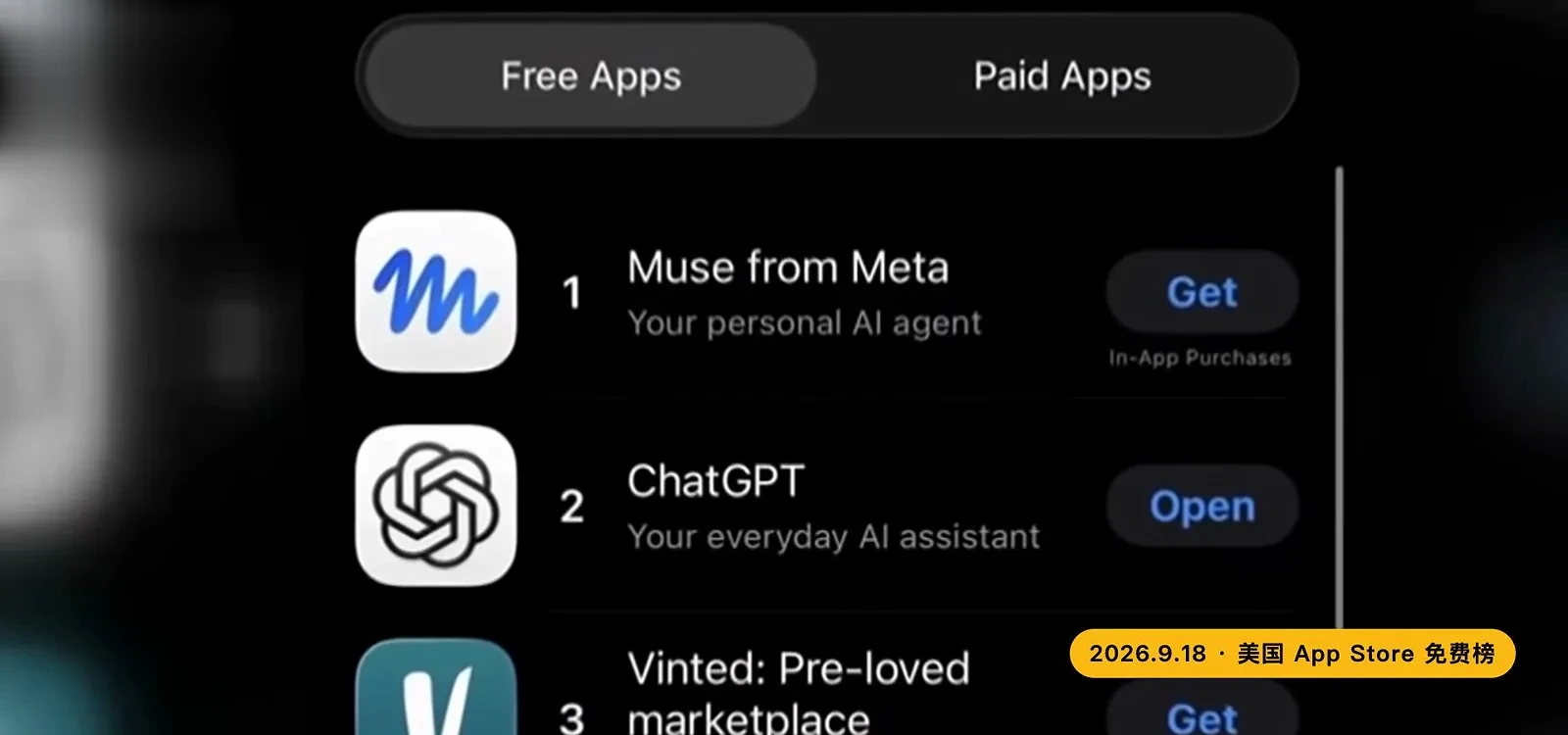
Number one in ten days - the hosted premise arrives with a ready-made audience.Watch at 0:30 - 2
See what the closed side is built on
Taha's walkthrough pauses on the card that says it outright: Muse lives where you already are, deeply integrated with WhatsApp, Facebook and Instagram. The model matters less than the plumbing - the agent sits inside apps billions of people keep open anyway. Hold that reach in mind when you weigh the open side's flexibility.
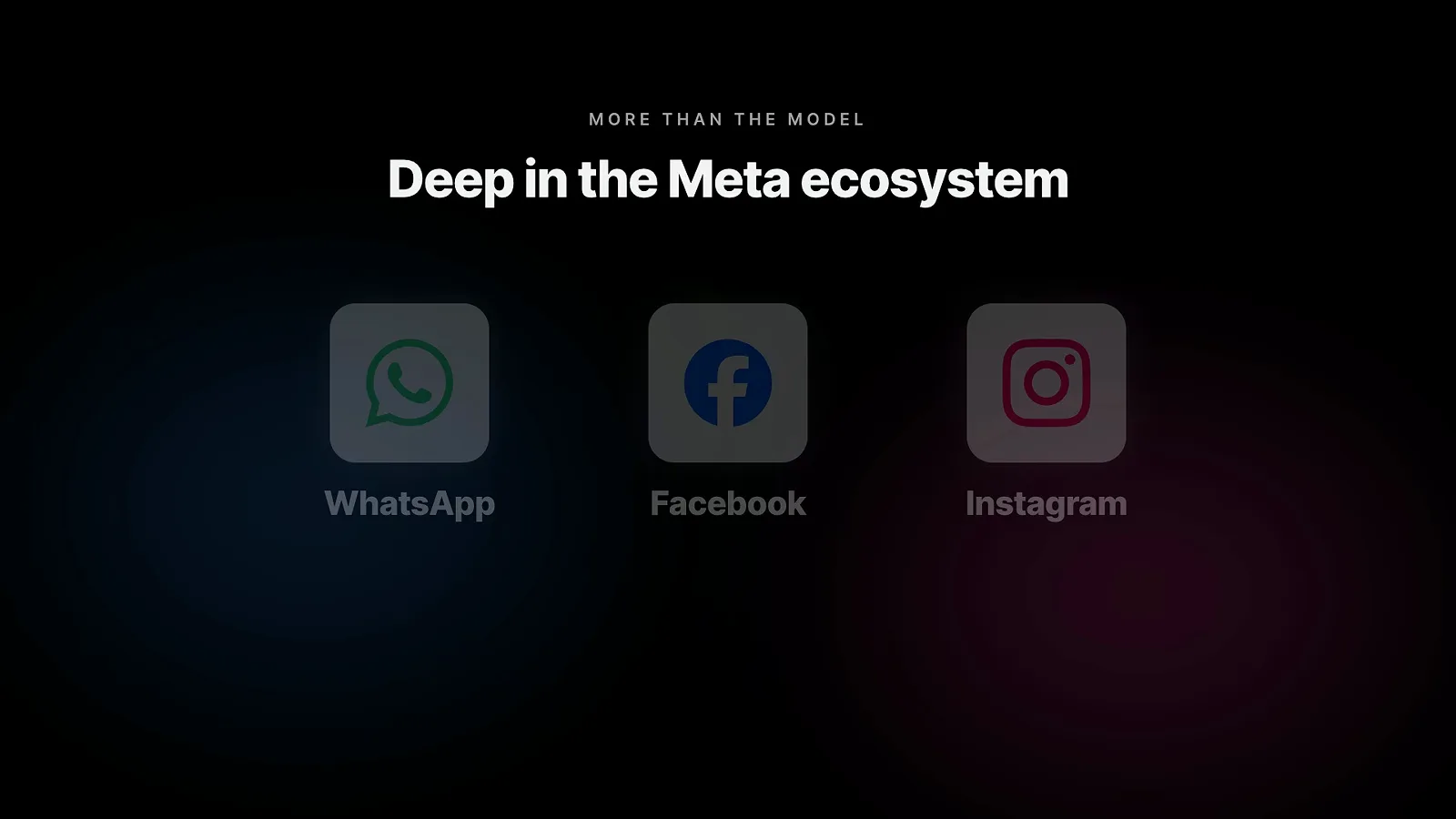
The moat is the ecosystem, not the model.Watch at 7:50 - 3
Open the other premise: your machine, your task
The Hermes side starts from the opposite shore. In The AI Architects' video the agent lives in a desktop window on his own computer, and he simply types a request: how are the three leading competitors in my market positioning and pricing their coaching programs. No chart, no store listing - a tool you install yourself and brief like a member of staff.
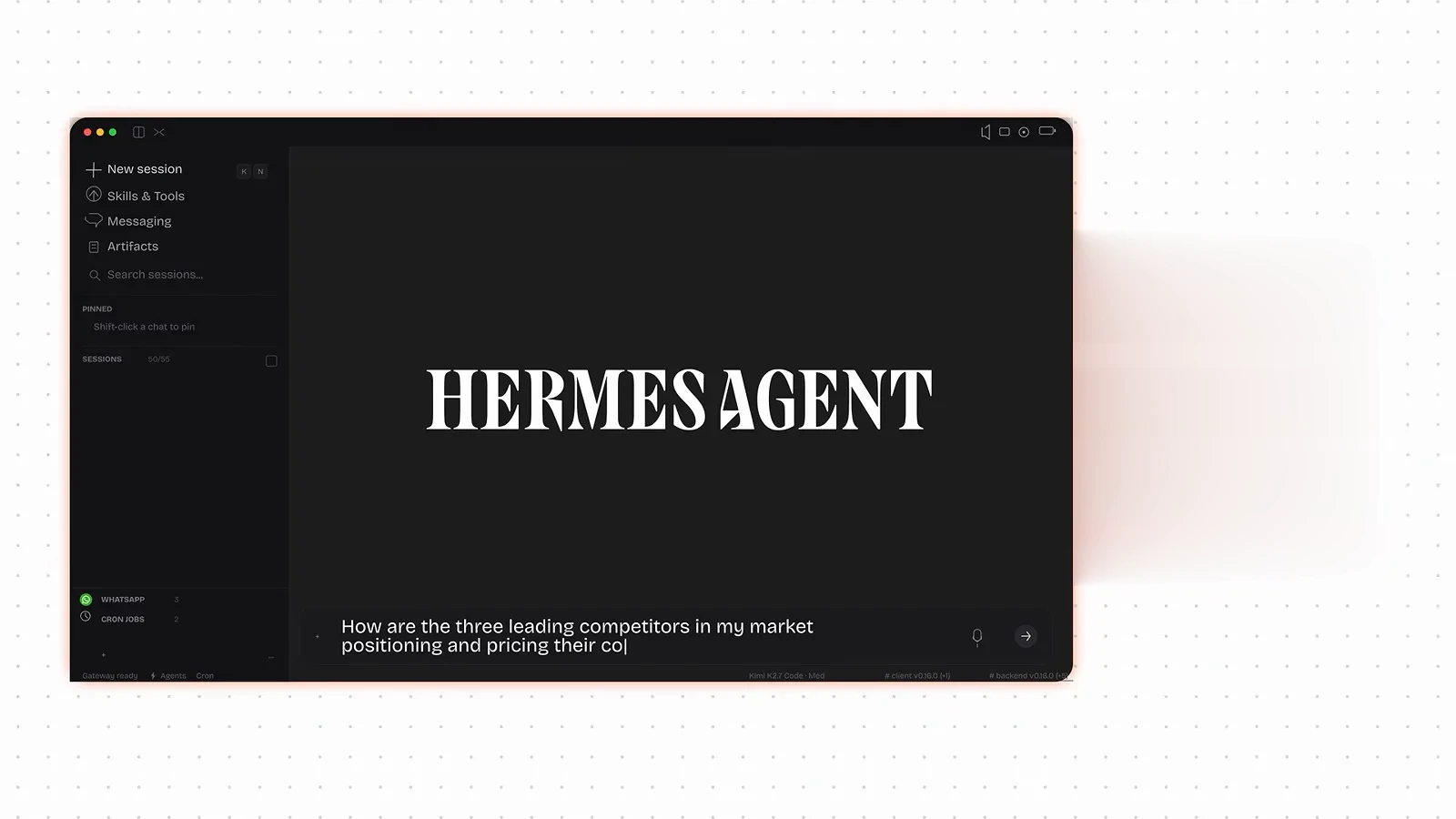
The open premise: software you installed, briefed in plain text.Watch at 8:25
Where the computer actually sits
- 4
Count Meta's computers, then count yours
Andy's walkthrough shows Muse's own onboarding card, where the agent introduces itself as having its own computer with a web browser so it keeps getting things done while you are away. That machine lives in Meta's cloud, provisioned per user. You never see it, never patch it, and never decide where its data sits.
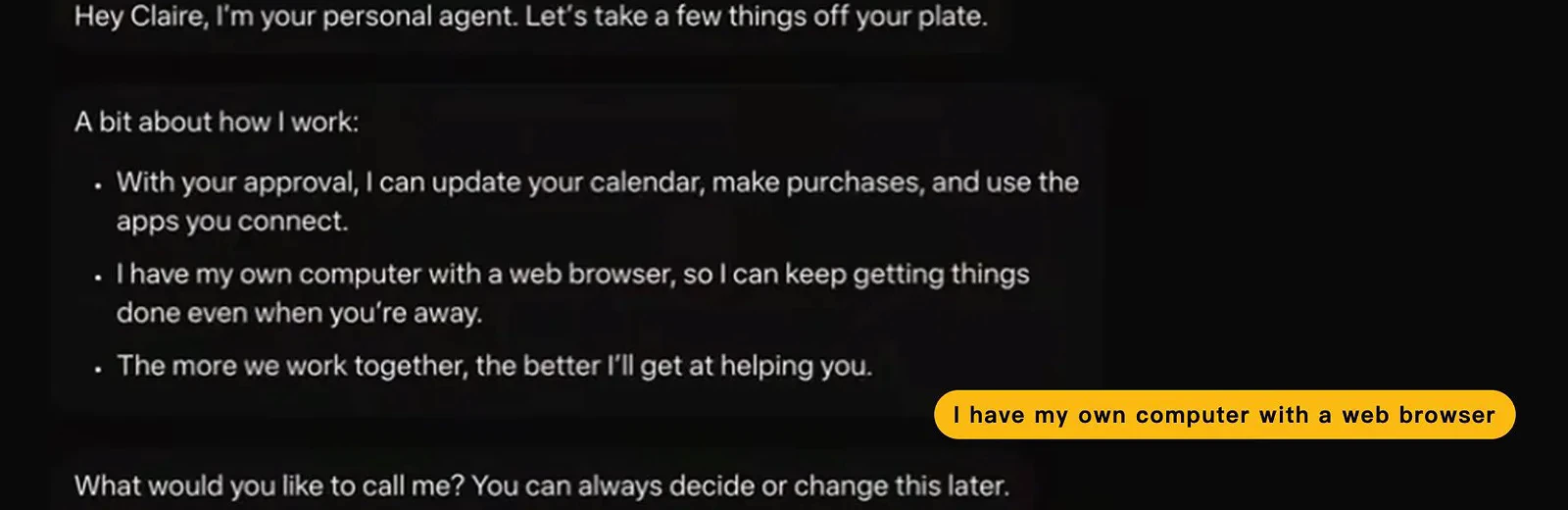
The closed deal: a computer you rent by default.Watch at 1:30 - 5
Ask where your data lands
Taha's review raises the question the hosted side has to answer: your finances, sent to Meta? He fed Muse a deliberately flawed financial report and got a sharp audit back - then pointedly declined to say how much financial data anyone should hand over. The privacy debate around Muse was still live as of October 2026; treat it as part of this axis.
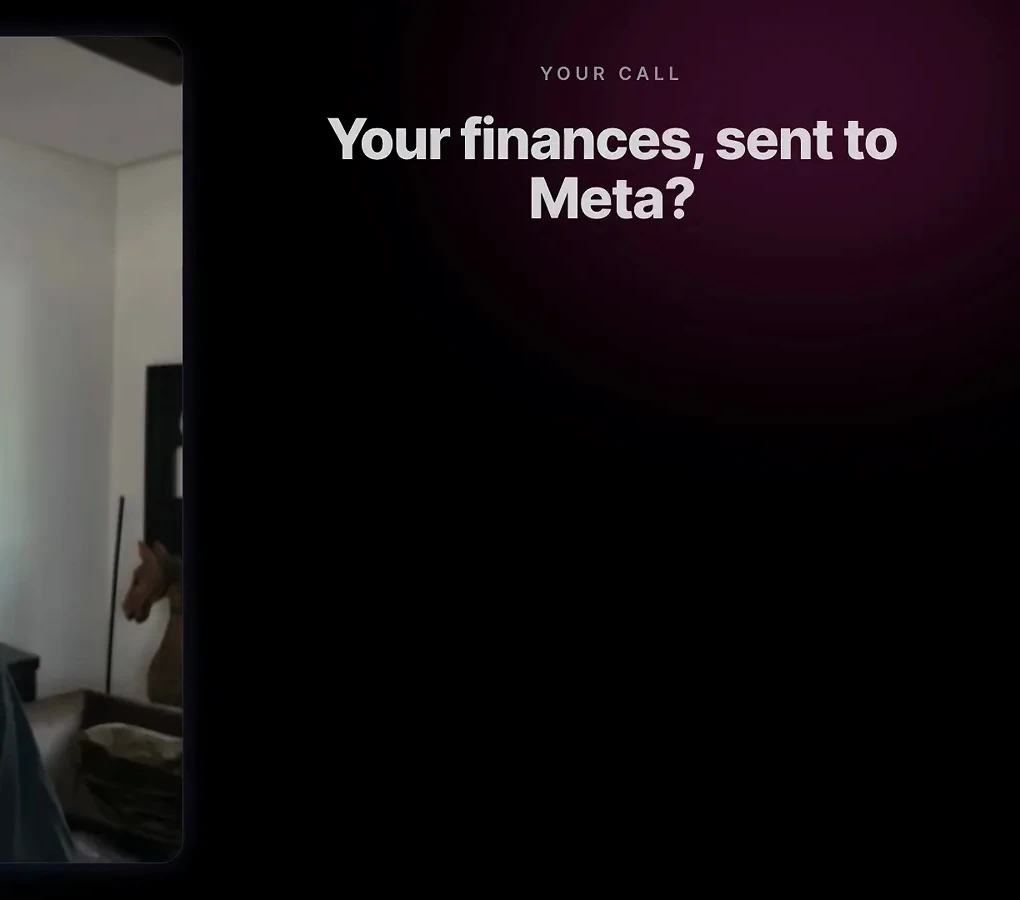
Hosted convenience bills you in data - the reviewer leaves the sum to you.Watch at 12:02 - 6
Watch the open side keep data at home
The AI Architects builds Hermes a second brain: a file structure on his own disk where raw transcripts land and wiki pages cross-link - his screen connects copywriting for VSL to copywriting for emails so one note leads the agent to the other. The agent reads context from files you own. The instinct that self-hosts the model self-hosts the memory too.
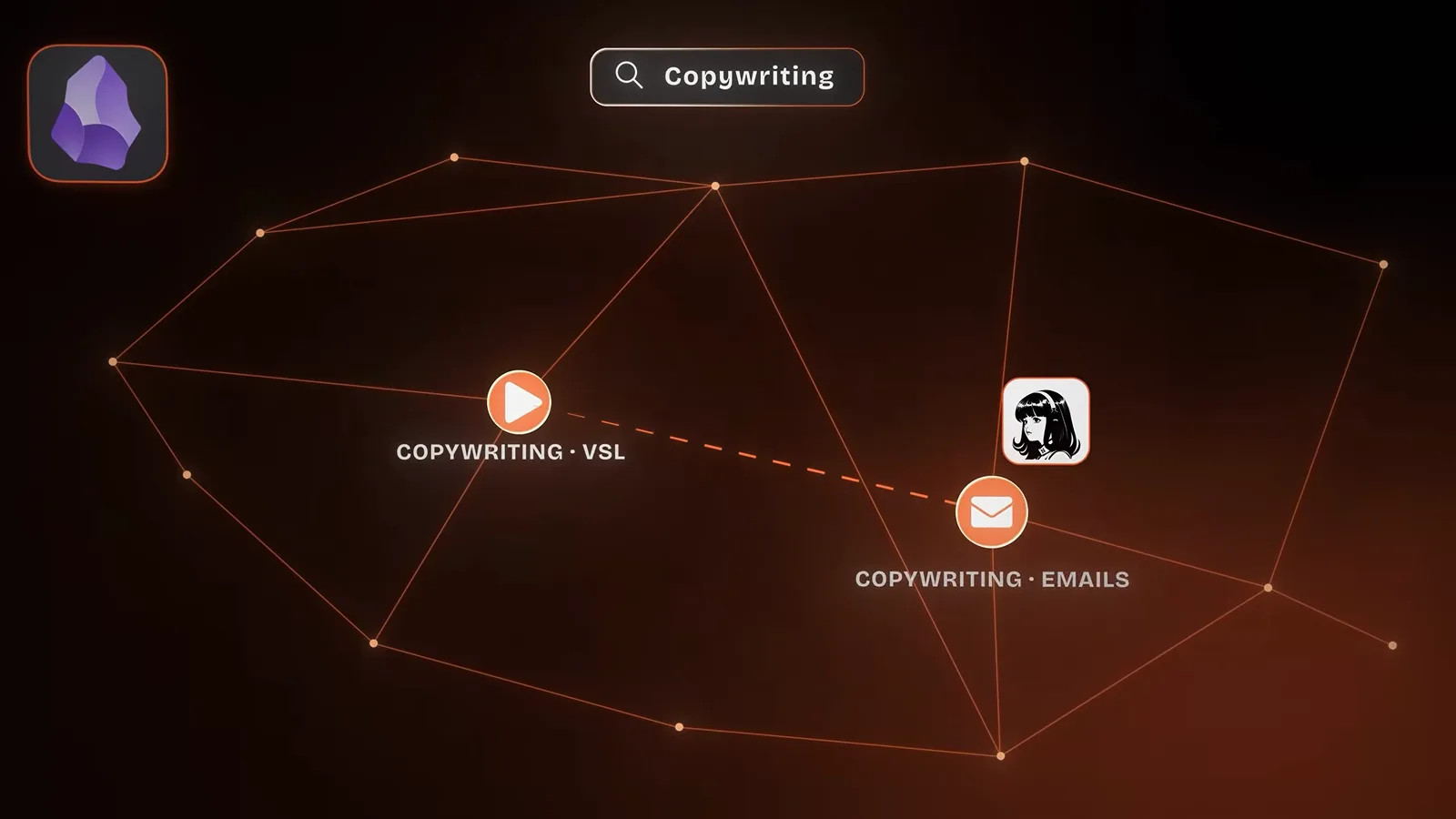
Open-source memory: files on your disk, links you can read.Watch at 18:20 - 7
Compare the surfaces you drive them from
Muse meets you in a consumer app and inside WhatsApp; Hermes meets you in a desktop application like this one - sessions and cron jobs down the left, files and skills on the right, with Telegram wired in as a channel. Same category of agent, entirely different cockpit. The surface is a proxy for the audience each product chose.
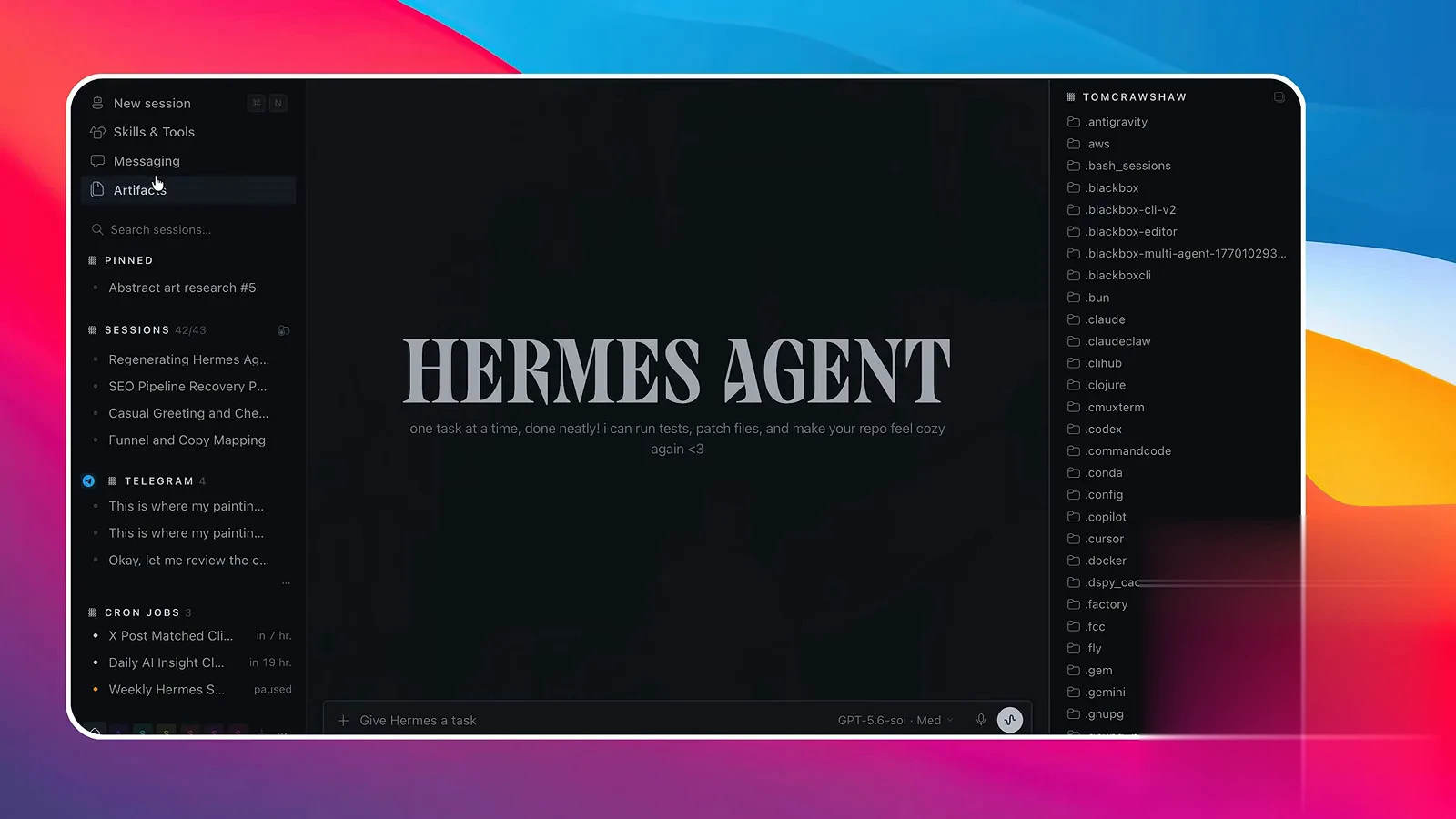
A cockpit, not a chat app - the open side assumes an operator.Watch at 11:40
What setup and money it asks of you
- 8
Walk Muse's five-minute onboarding
Signup is deliberately frictionless: open the site, log in with your Facebook account, and this first chat begins - Muse introduces itself, asks your name, and offers to connect Gmail or your calendar, each step skippable. Taha goes from download to a working agent without touching a terminal. That is the cost shape of closed: almost none, plus the account you already have.
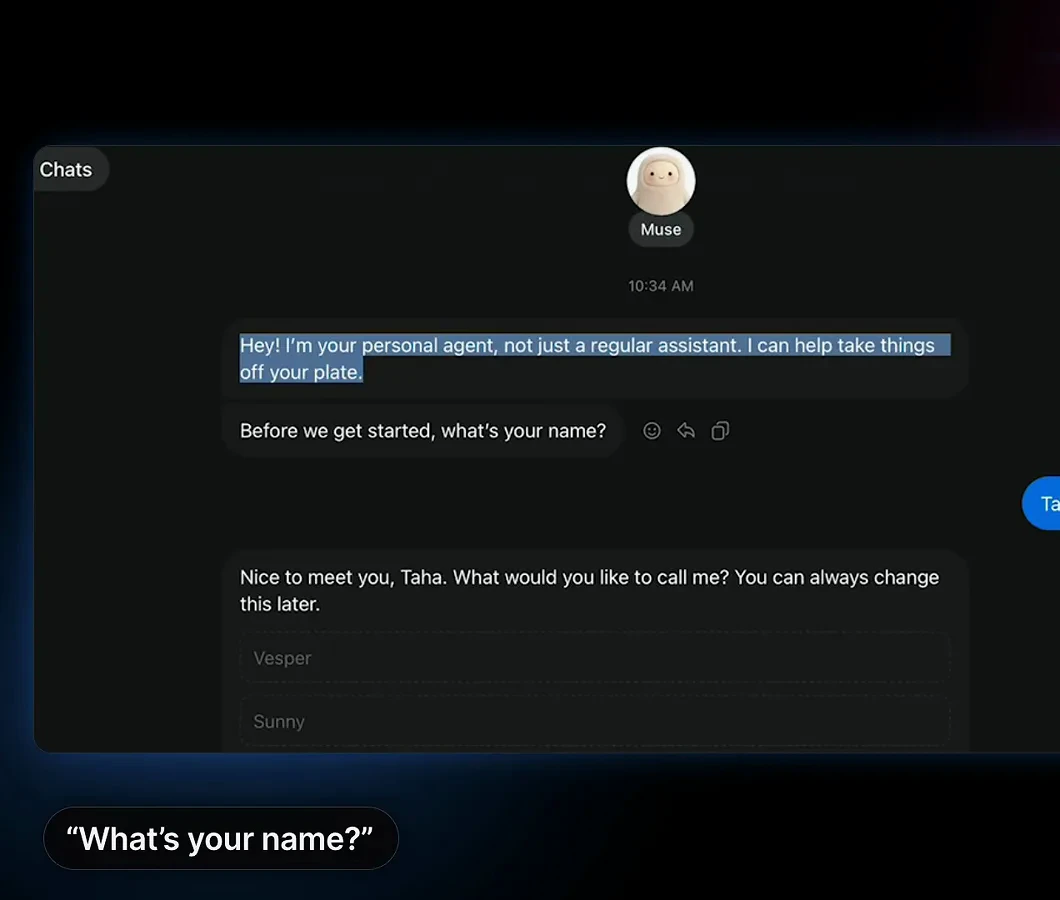
Onboarding as small talk - closed removes every step it can.Watch at 0:50 - 9
Read the price column on both sides
Taha's card lays out Muse's plans as of October 2026: Free at $0 with about 100M tokens a week, Power at $20 a month with 500M, Max at $100 with 3B - and paid plans only raise the limits. Hermes' software is free, but the walkthrough makes you count the rest yourself: an always-on machine or VPS plus your own model subscription, which he runs on his Claude plan overnight.
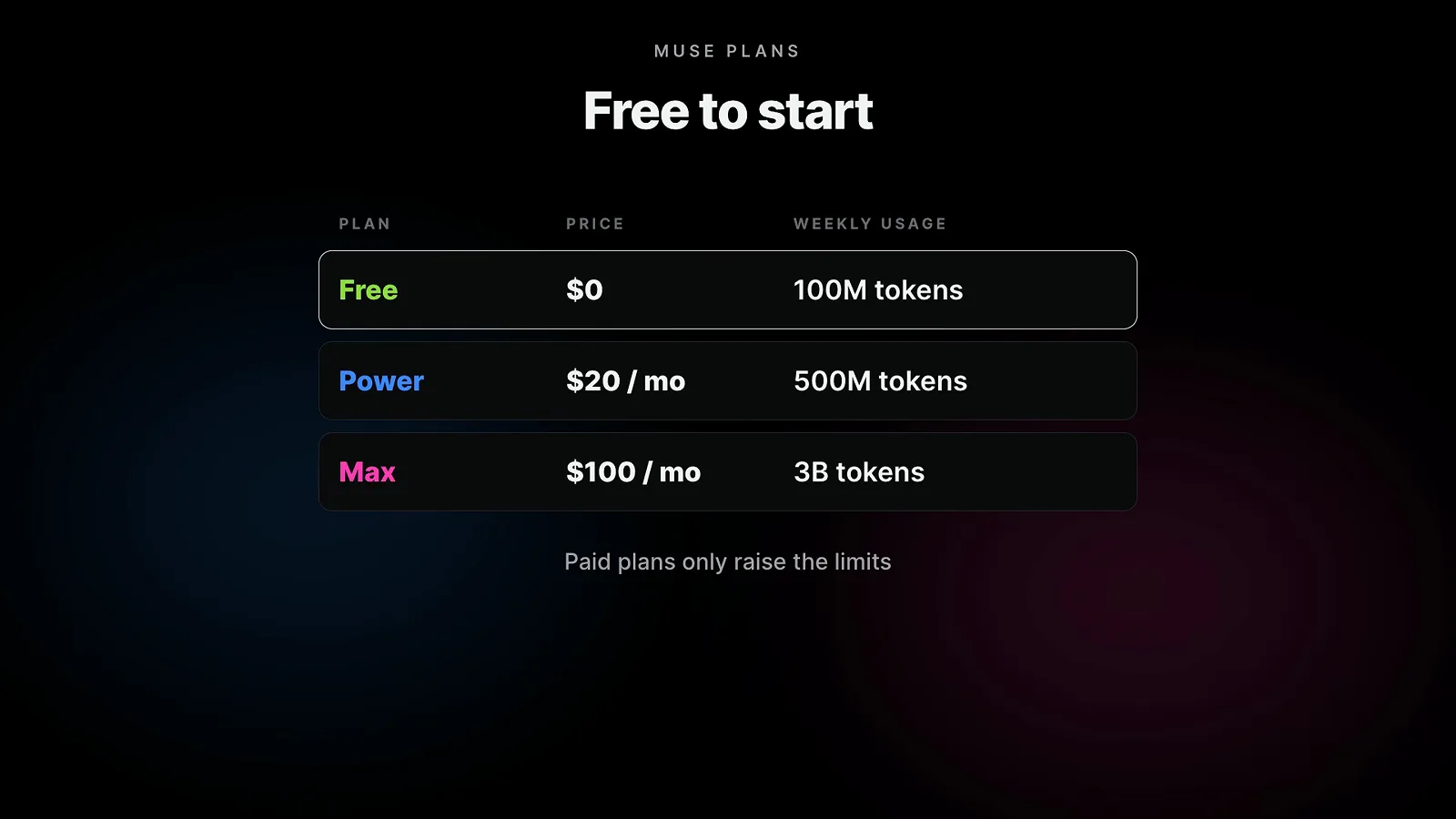
Subscription versus parts bill - both sides say free somewhere.Watch at 16:32 - 10
Assemble what Muse ships bundled
On the self-hosted side, integrations are work you do once and own. The walkthrough wires Stripe through its API, drops bank statements into an exports folder, and schedules a monthly financial report covering revenue, expenses, average order value, customer lifetime value and margins. No store does this for you - the assembly time is the real price of open.
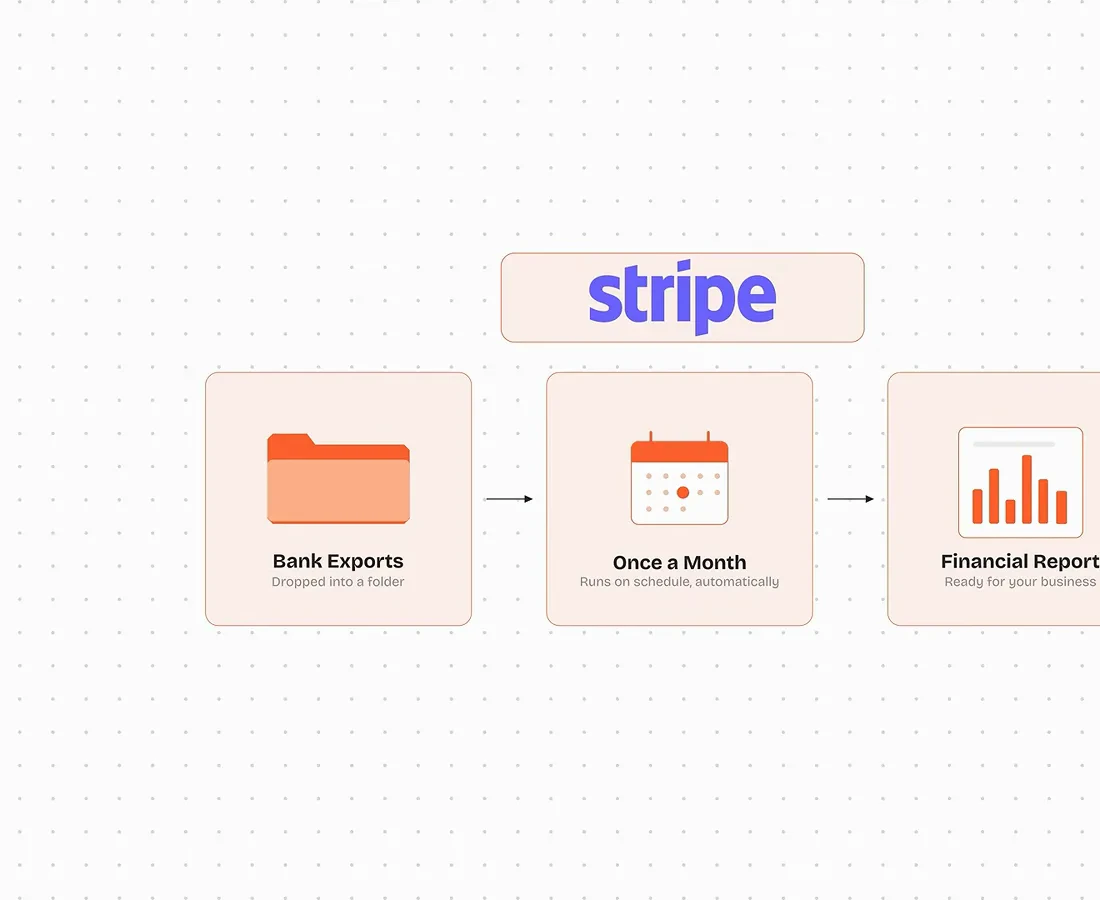
Open-source setup: you are the store, the installer and support.Watch at 6:00
Where each one is actually good
- 11
Watch Muse plan a consumer goal end to end
Give Muse a goal - Taha asks it to make him a 5 a.m. riser - and it does the maths on screen: his current 11:30 p.m. to 8 a.m. rhythm runs 8.5 hours, so a 5 a.m. wake time means an 8:30 p.m. bedtime, moved 15 minutes earlier every few days. Consumer tasks, personal data, gentle coaching - the daily-register side of this comparison.
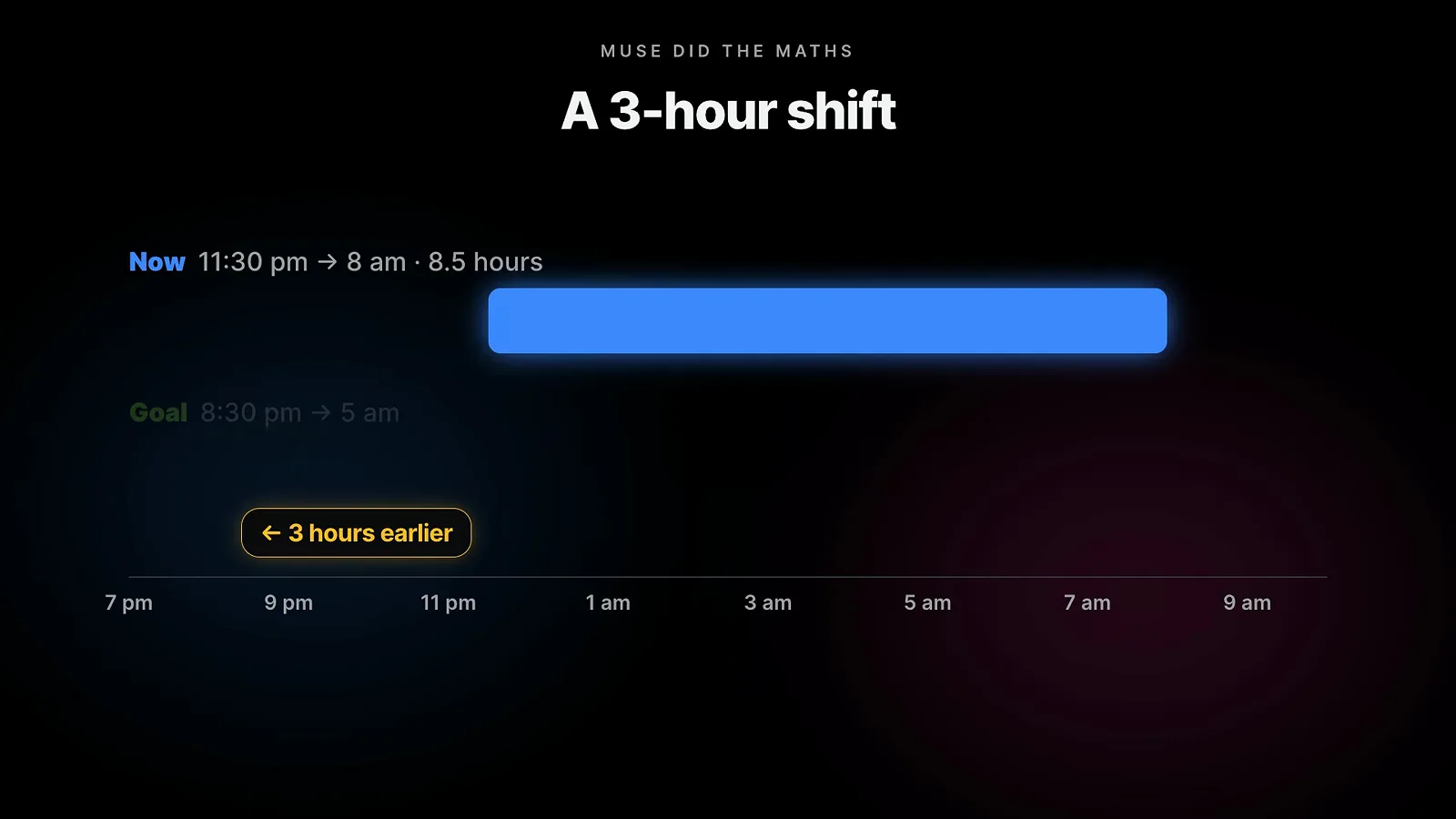
Life-admin fluency - the hosted agent's home turf.Watch at 4:42 - 12
Send Muse on a real errand
Taha asks for a Casablanca to Los Angeles round trip in February and Muse returns four priced options - KLM from $1,068, Qatar Airways at $1,103 - each with dates laid out and booking one tap away. He calls the interface better than the flight site he already uses. Errands like this are what the hosted agent is tuned for.
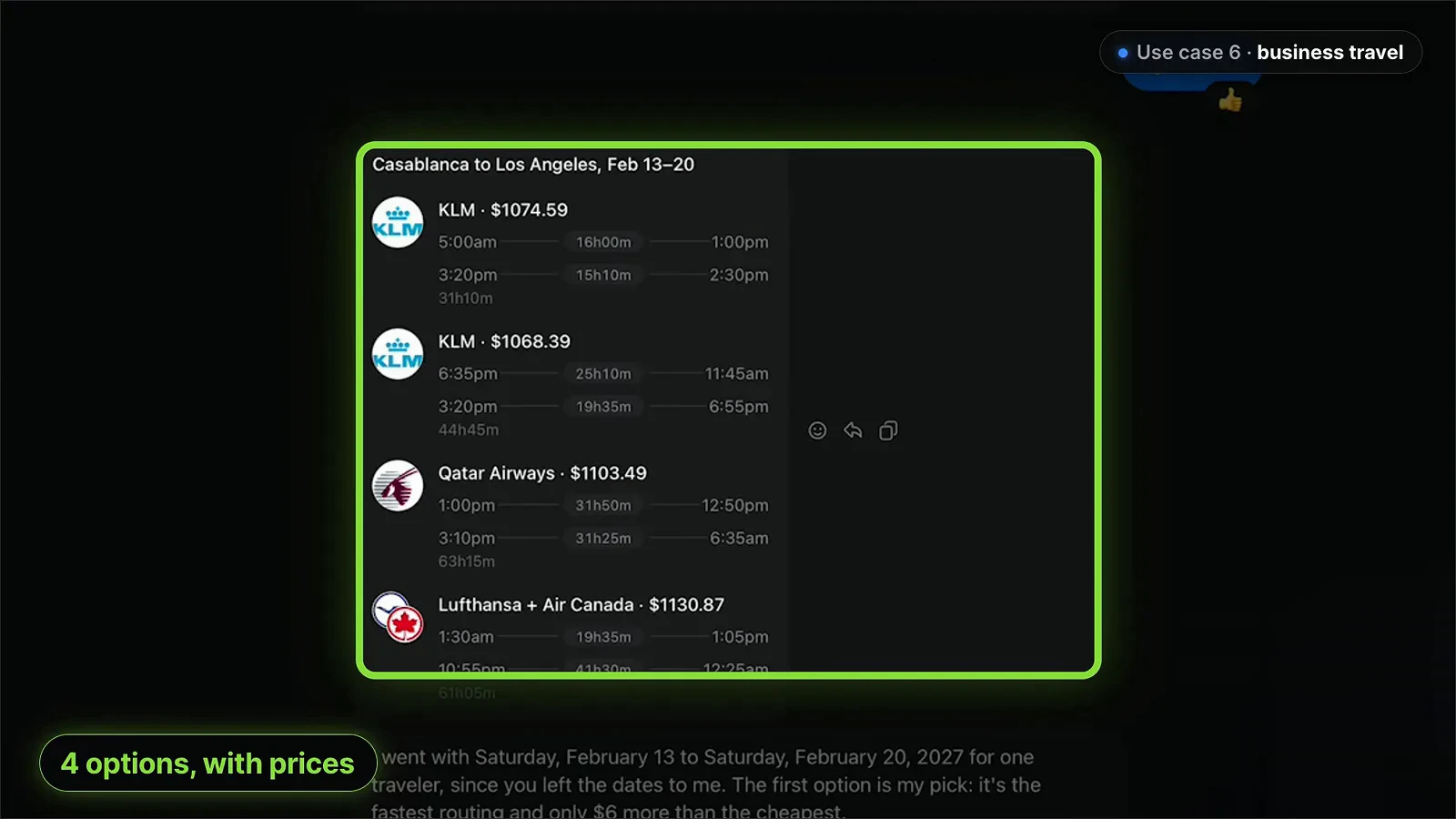
One prompt, four itineraries - errand mode is the product.Watch at 9:40 - 13
See where Hermes goes beyond chat
The AI Architects runs whole pipelines on Hermes' desktop Kanban: tasks move through todo, scheduled, ready and in progress, each assigned to a named agent - SEO editor, copywriter, strategist - with its own agents.md file. He warns in the same breath that several parallel sessions ran erratically and crashed on him. The chat is the interface; the system is the product.
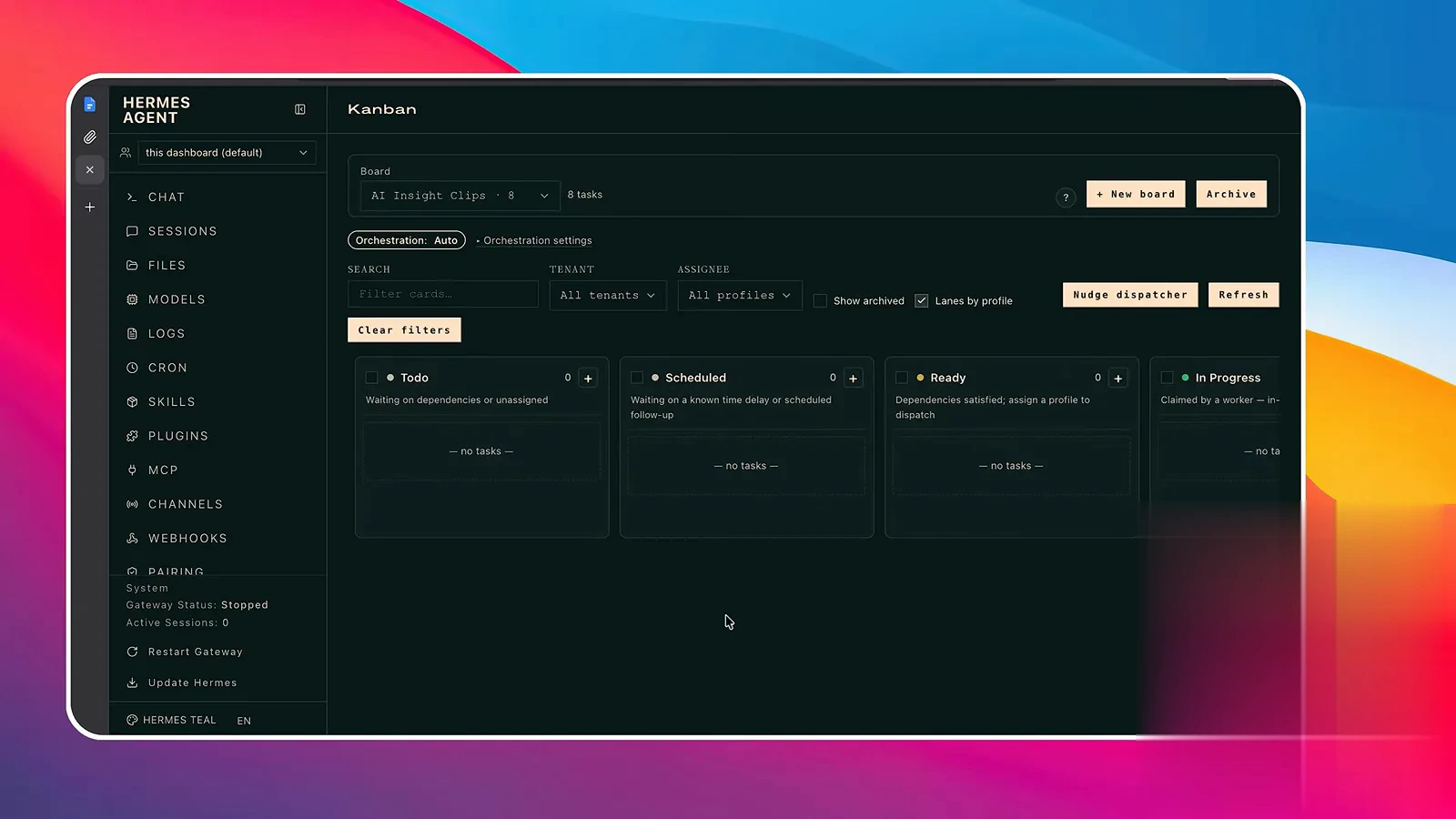
Multi-agent orchestration - with the reviewer's own crash warning attached.Watch at 12:25 - 14
Use Hermes as a research analyst
Ask how rivals position and price their offers and Hermes returns a sourced comparison - Competitor A at $2,997, B at $8,500, C at $497 a month - separating confirmed facts from assumptions, with a reference back to the original source on each conclusion. The walkthrough's point: research is only as good as the context you feed it. Muse shops for you; Hermes briefs like an analyst.
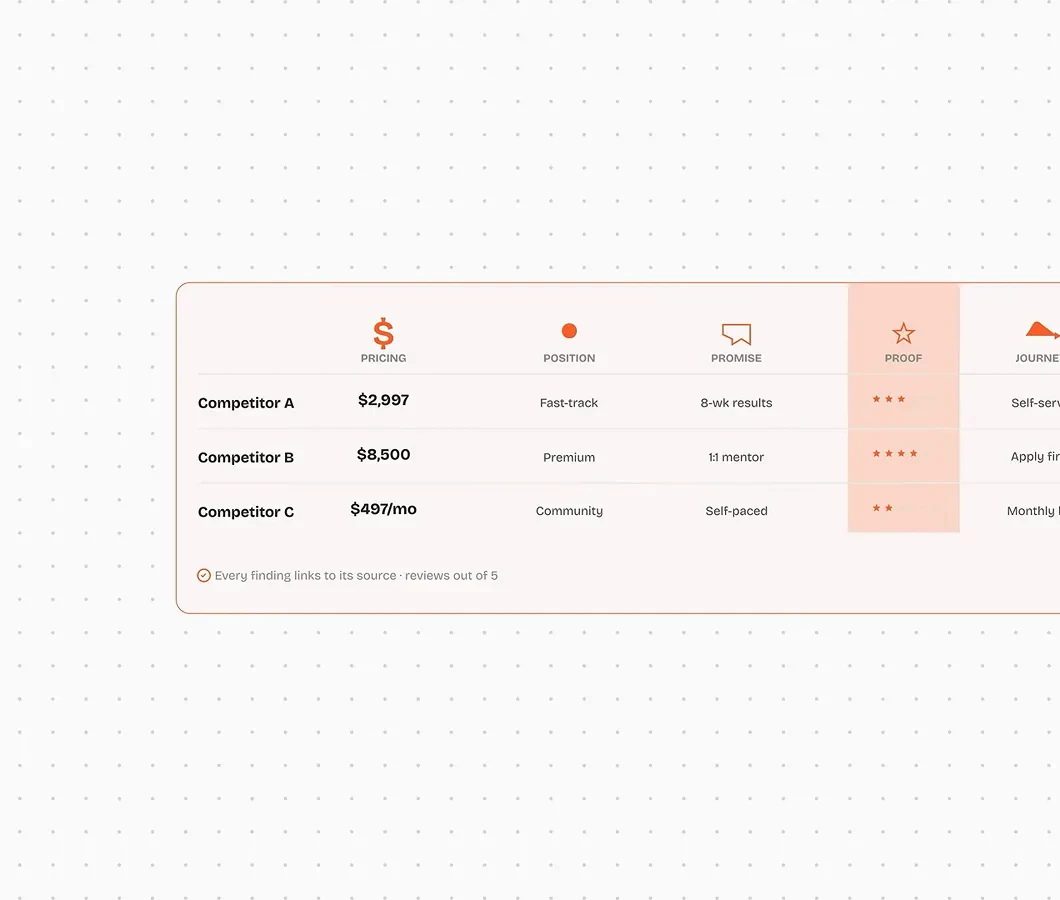
Research with citations - the open side's answer to consumer polish.Watch at 8:48
Reviewers' filters, not this page's verdict
- 15
Borrow Taha's rule of thumb
Asked to pick, Taha splits by user rather than by product: if you're not technical he points to Muse - easiest access, lowest friction, you already have Facebook - while technical users see the field open up to Grok Bot, Dots, Hermes and OpenClaw. He adds that Muse's paid plans only raise the limits, so the free tier is a real option. His split, his words - this page adopts the axis, not the verdict.
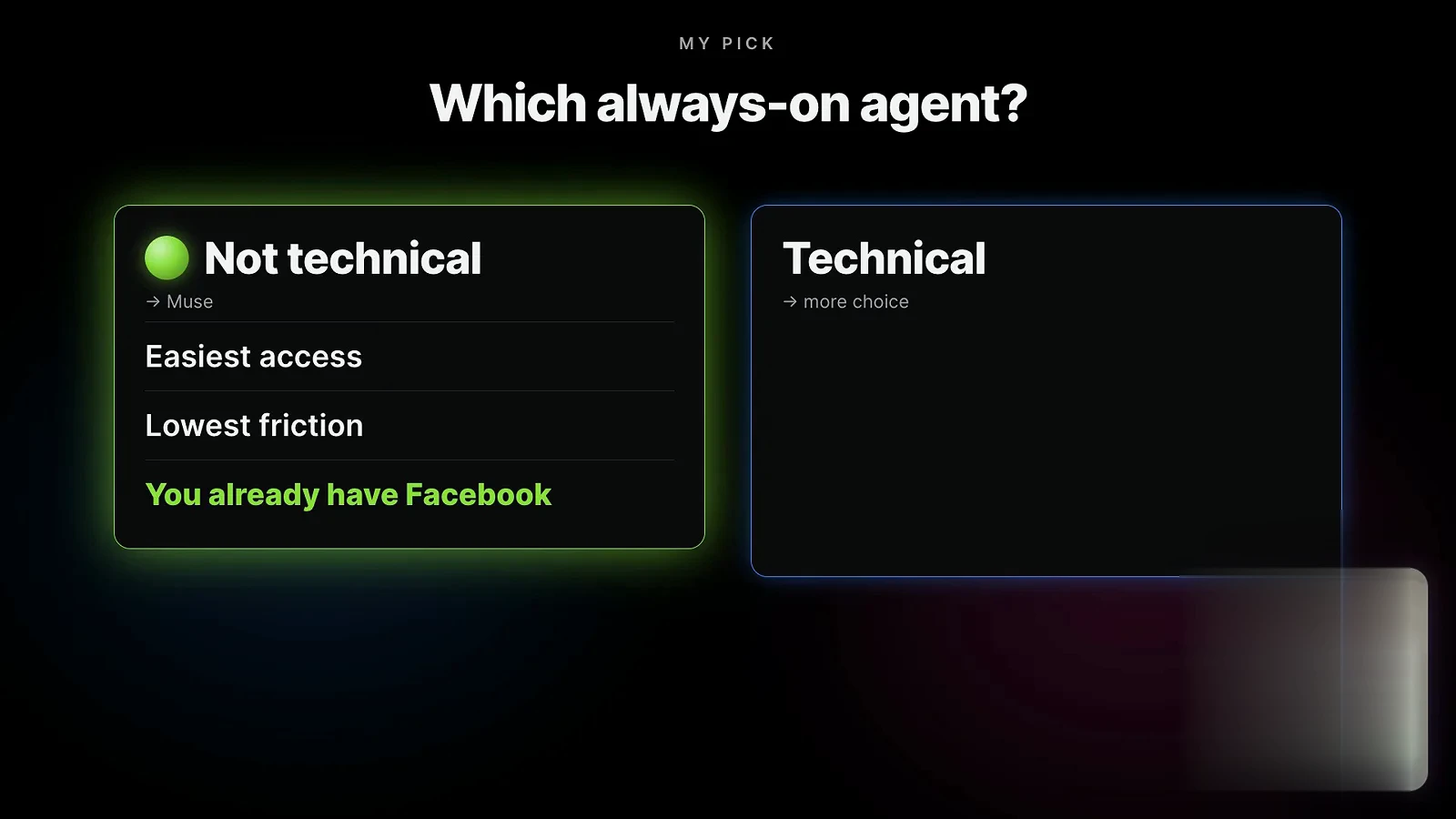
The reviewer's filter: your technical level picks the column.Watch at 16:58 - 16
Carry the reported limits into the decision
Andy's video quotes the Reuters reporting: a Meta employee who set Muse to monitor fast-selling tickets hit many failure modes - the page stopped refreshing after about fifteen minutes and monitoring disabled itself for no apparent reason. CTO Andrew Bosworth described being logged out repeatedly, and Amazon blocked the agent in late September. Whichever column you pick, price in how young both products are as of October 2026.
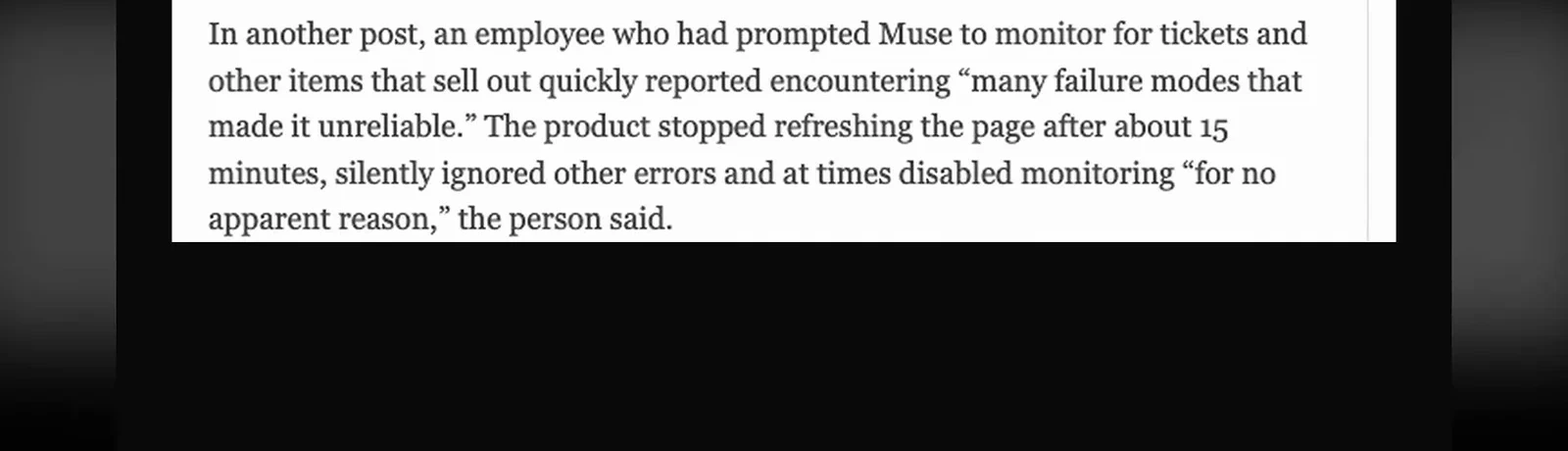
Both agents are months old - the reviews carry expiry dates.Watch at 4:42
Frequently asked questions
Keep exploring
- Meta Muse tool page: the hosted agent's full profile
- Meta Muse vs OpenClaw: the hosted-vs-self-hosted comparison next door
- Meta Muse vs OpenAI Dots: the other hosted matchup
- How to use Hermes Agent: the setup walkthrough
- OpenClaw vs Hermes Agent: choosing between two open-source agents
- Meta Muse tips: getting more from the hosted agent