

Meta Muse vs OpenAI dots: Which Agent Fits Your Life in 2026?
Meta Muse and OpenAI dots pulled the same trick in one launch season: a resident cloud agent with its own computer that keeps working after you close the app. This page walks the pair step by step - where each one lives, what the bill really is, how memory and connectors differ, what the model numbers say - with every frame checked against three hands-on recordings: Nate Herk's dots-vs-Muse test (the primary source most frames come from), Leslie Samuel's tried-both verdict, and Johnny Nel's price-dated breakdown (the fact source). Their conclusions belong to them and do not agree; this page carries all three and crowns nobody. As of October 2026 the honest answer to 'which one wins' is: it depends on where your work already lives.
Source & credits
Screenshots in this guide are captured from Nate Herk | AI Automation's public walkthrough video. Every step links back to the exact moment it shows, so you can follow along.
Nate Herk | AI Automation ↗Same category, opposite bets
- 1
Three always-on agents in seven weeks
Johnny Nel's launch card sorts a crowded season: Grok Bot came August 11 as named teammates you assign work to, Meta Muse landed September 8 as one agent for your day, and dots shipped September 29 on OpenAI's flagship model inside ChatGPT. The shared base barely differs: cloud computer, connectors, memory, a stop-and-ask guard before money moves. What separates them, he argues, is how each hands work around and where it lives - the filter this page keeps returning to.
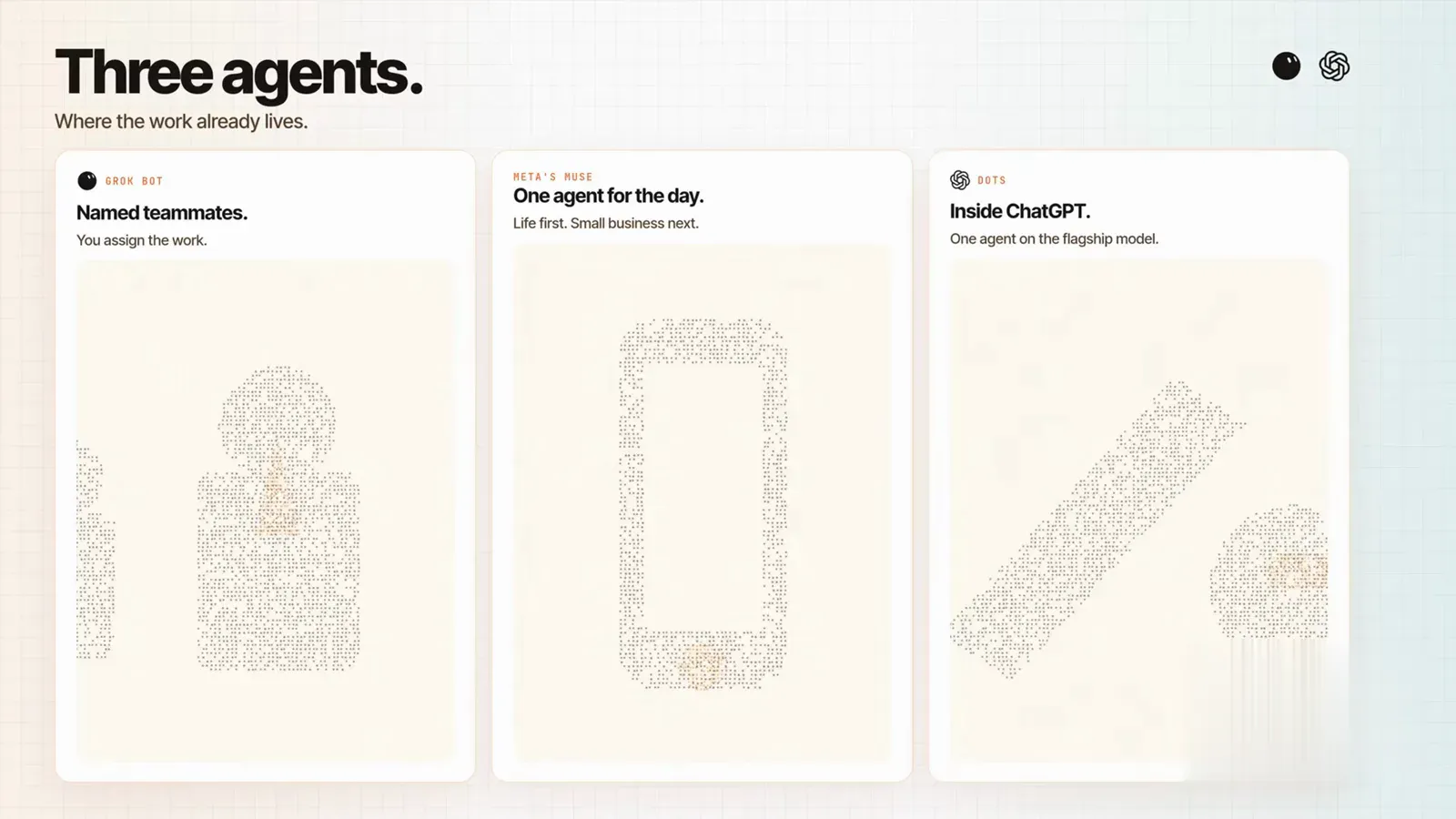
Three agents, three jobs - the board before the pairwise decision.Watch at 1:37 - 2
Muse: a personal agent aimed at your life
OpenAI shipped dots three weeks after Muse, so start with what each is for. Leslie Samuel opens with Meta's own demo: Muse messages like a person - a Saturday tee-time reminder at Pasatiempo - then answers "which hole is hardest?" from your own playing history. Work continues after the app closes, and Meta's research team says tasks launch swarms of sub-agents - which, Johnny Nel cautions, is Meta describing its own design.
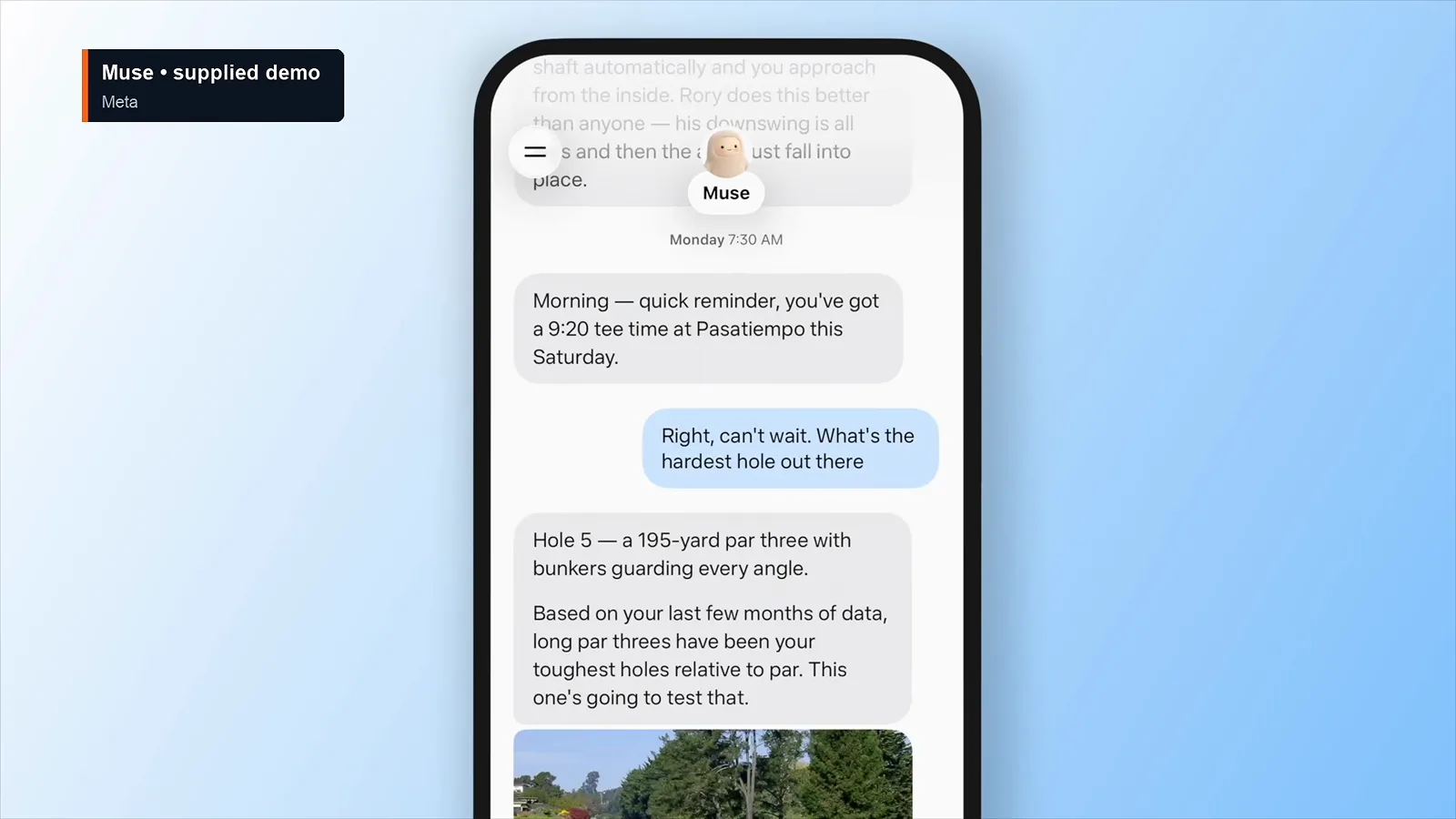
The supplied demo Leslie opens with - a reminder that reads like a caddie.Watch at 0:28 - 3
dots: OpenAI's answer, three weeks later
Leslie's frame is from OpenAI's DevDay on September 29, where dots launched and the press made the Muse comparison on day one. Nate Herk's read is blunter: a rushed catch-up, built on the belief that OpenAI has the better model and a huge ChatGPT ecosystem. This slide claims 4K+ apps through ChatGPT; The Verge's figure in Johnny's card says above 4,000. You get one primary dot on GPT-6 Astra, whose cloud computer touches your own machine only after you switch that on.
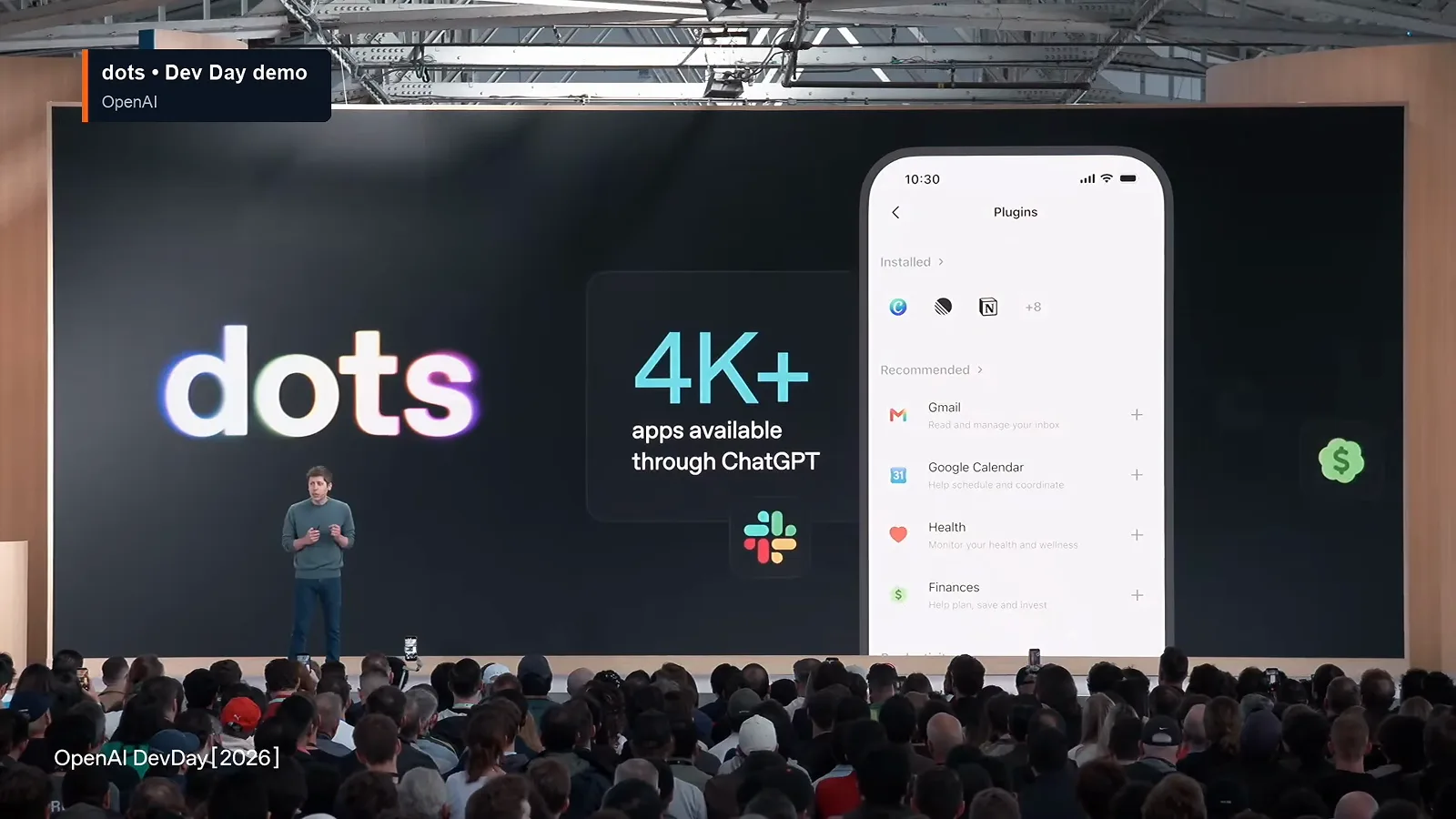
Launch-day framing: one named agent on the flagship model, inside ChatGPT.Watch at 4:05
Where each agent lives
- 4
Muse lives in its app and your WhatsApp
Home base is the first hard fork. Nate Herk's recording shows Muse's app with a main chat plus extra chats per project, and a built-in WhatsApp connector that hands the same agent to your phone - "Hey Nate, I'm here." The Muse app shows that thread view-only; replies come from WhatsApp itself. Leslie runs his Muse, Tasha, this way. Next come Ray-Ban glasses and a Muse Charm keychain - the charm ships in December, Leslie notes.
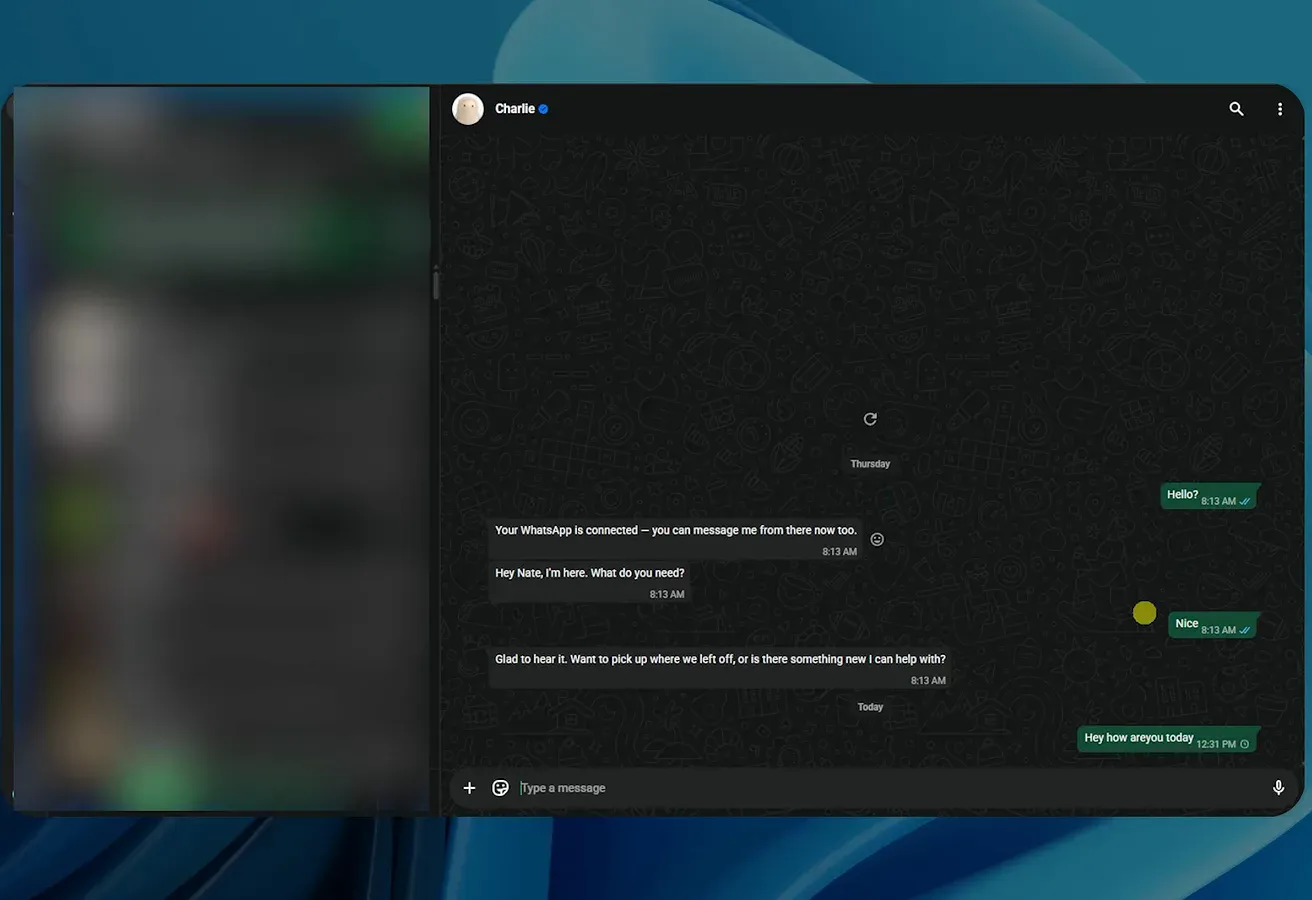
Your agent in your messaging app - the Muse side of that thread stays read-only.Watch at 5:45 - 5
dots lives inside the tools you already use
dots is not a new app to adopt. Nate's recording shows it inside the ChatGPT desktop app he already opens, one click from his Codex threads, starting from his existing ChatGPT memory - his dot knew his business before he taught it anything. The Slack add is his favorite: three clicks to install the Dotty app, then the dot answers DMs and channel messages, teammates' included. Leslie's difference card adds Microsoft Teams. Muse follows your life; dots reports to work.
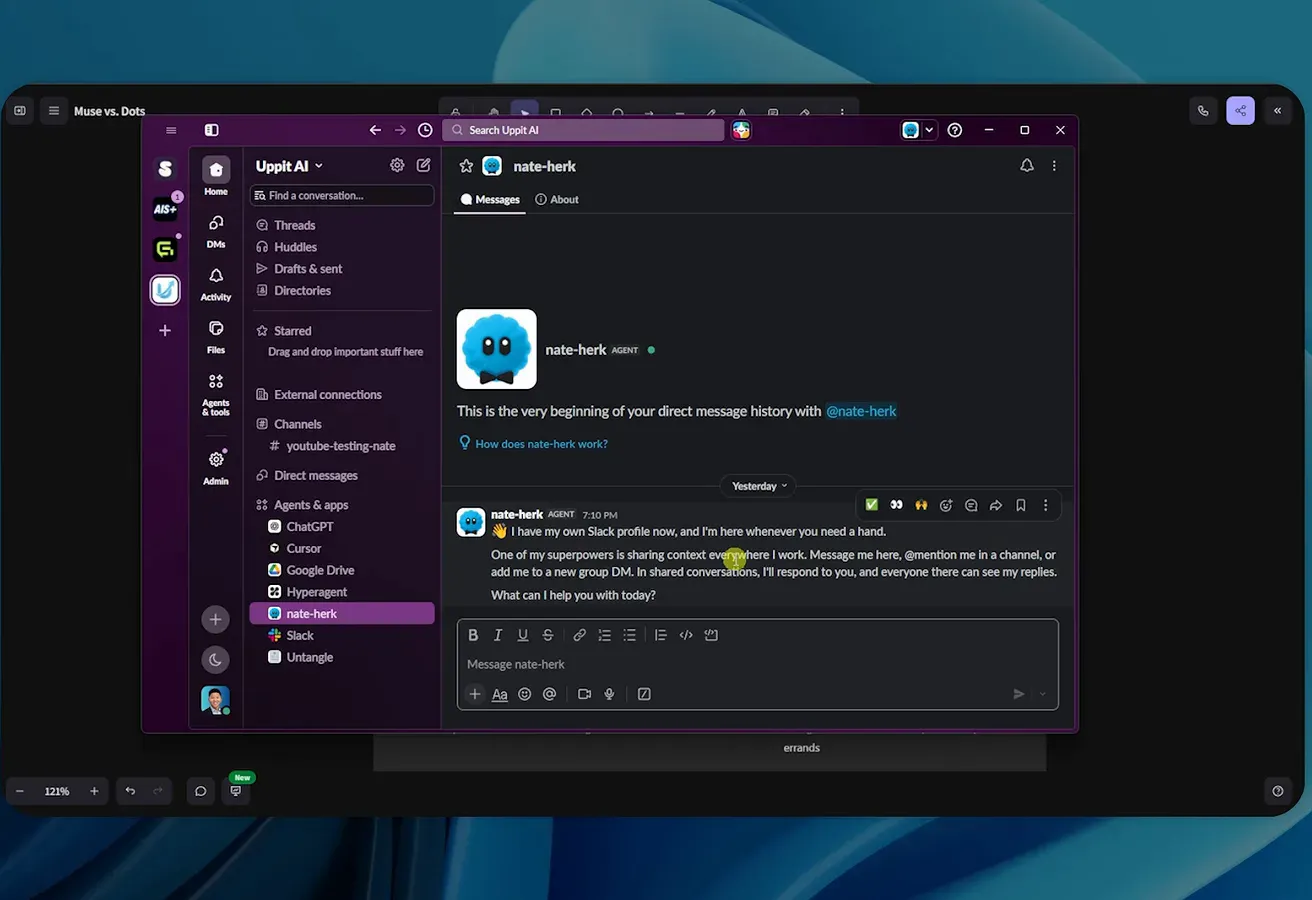
Three clicks to Slack - the dot answers where the team already talks.Watch at 4:45 - 6
The four-words-per-column difference
Leslie Samuel's second-difference card compresses deployment into one line: Muse runs in its app plus WhatsApp; dots runs in ChatGPT, Slack and Teams. It doubles as the on-ramp answer. Muse is the only one here with a free tier - name it, connect email and calendar, and Leslie's Tasha put a family club's events on his calendar from one PDF. dots requires a desktop app for setup, and the first dot does not exist until a paid ChatGPT plan does. Different doors, different keys.
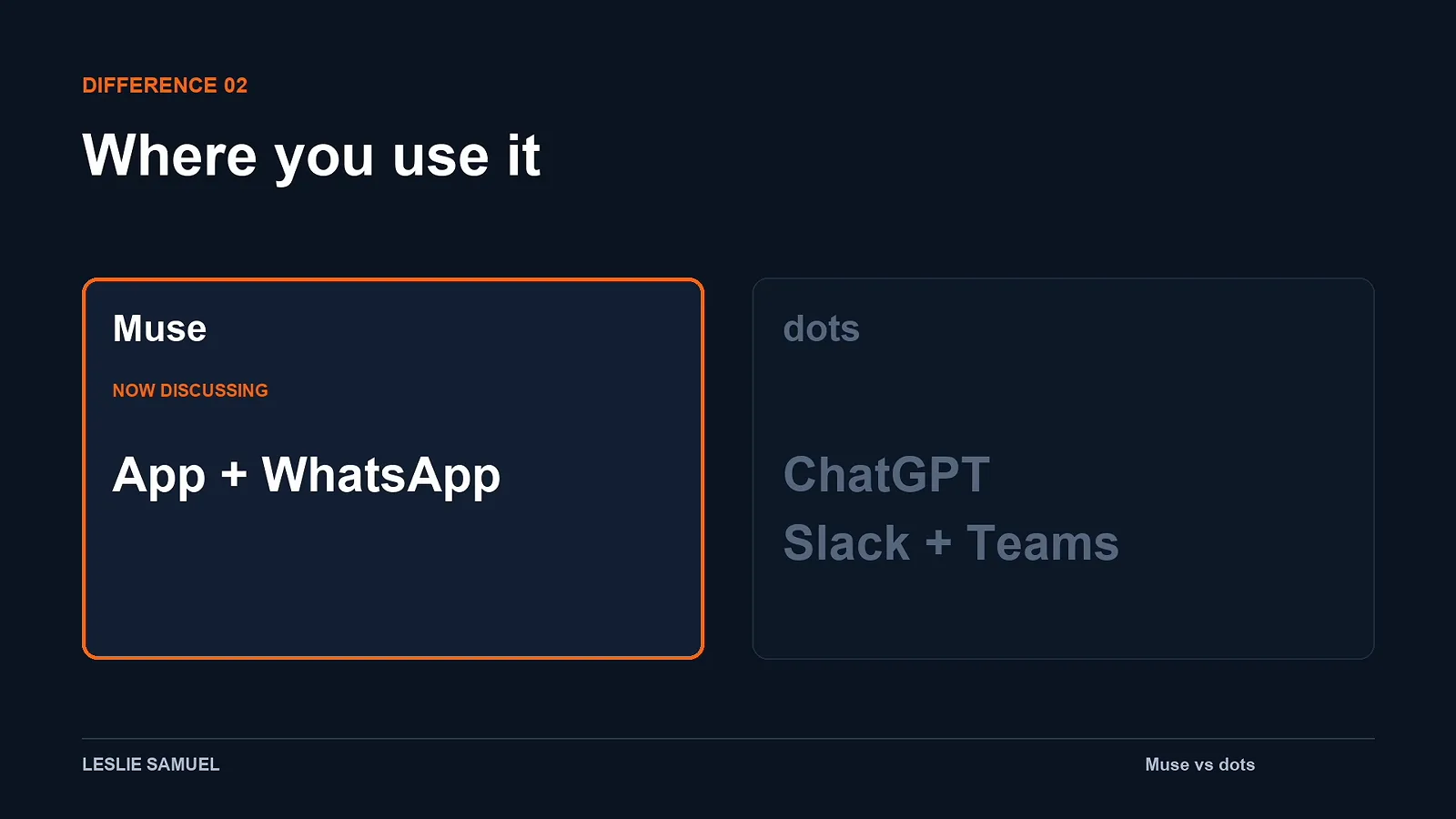
Muse follows your life, dots sits where you work - Leslie's difference number two.Watch at 7:57
Pricing, with the dates attached
- 7
Two price lists, two different meters
Nate Herk's pricing card puts both plans on one screen. Muse: Free with up to 100 million tokens a week - the number Meta announced at launch; Nate still has not paid - then Power at $20 with 500 million, Maximum at $100 with 3 billion. dots has no price of its own; it ships inside ChatGPT Pro 100, 200 and 500, from $100 a month, with a plan-dependent work allowance instead of published tokens. Meta meters tokens; OpenAI meters your plan.
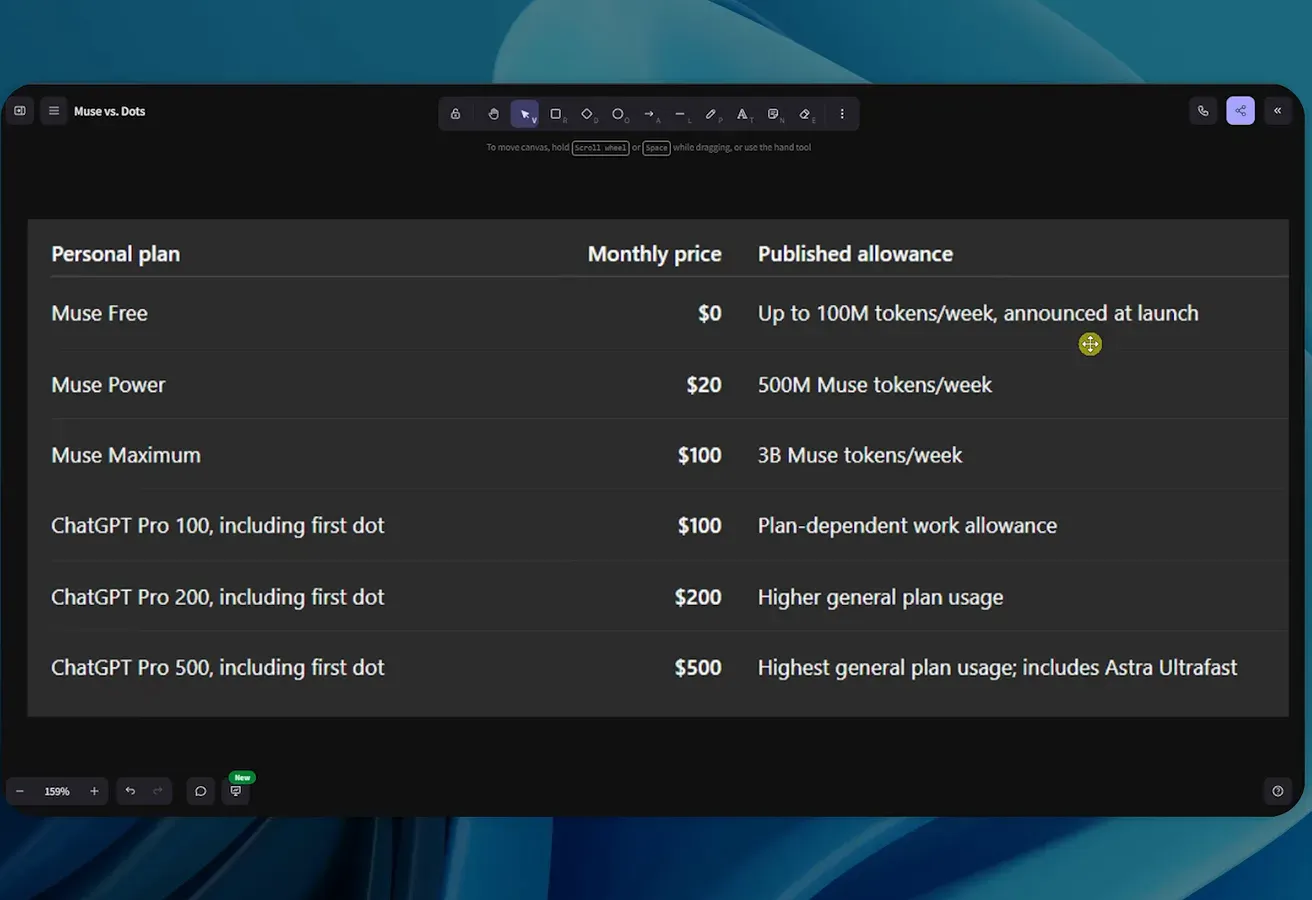
Token allowances against plan allowances - pick your meter before your tier.Watch at 7:06 - 8
What 'free to start' actually buys
Johnny Nel's fact card is the cautious buyer's version, every price dated October 1. Muse starts free with a weekly limit, then $20 or $100 - but the token size of a typical task is unpublished, so you cannot compute what $20 covers. The same card carries the caveats: Muse for Small business now connects Shopify, QuickBooks and HighLevel, and Amazon has blocked Muse since September 20, saying Meta never notified them.
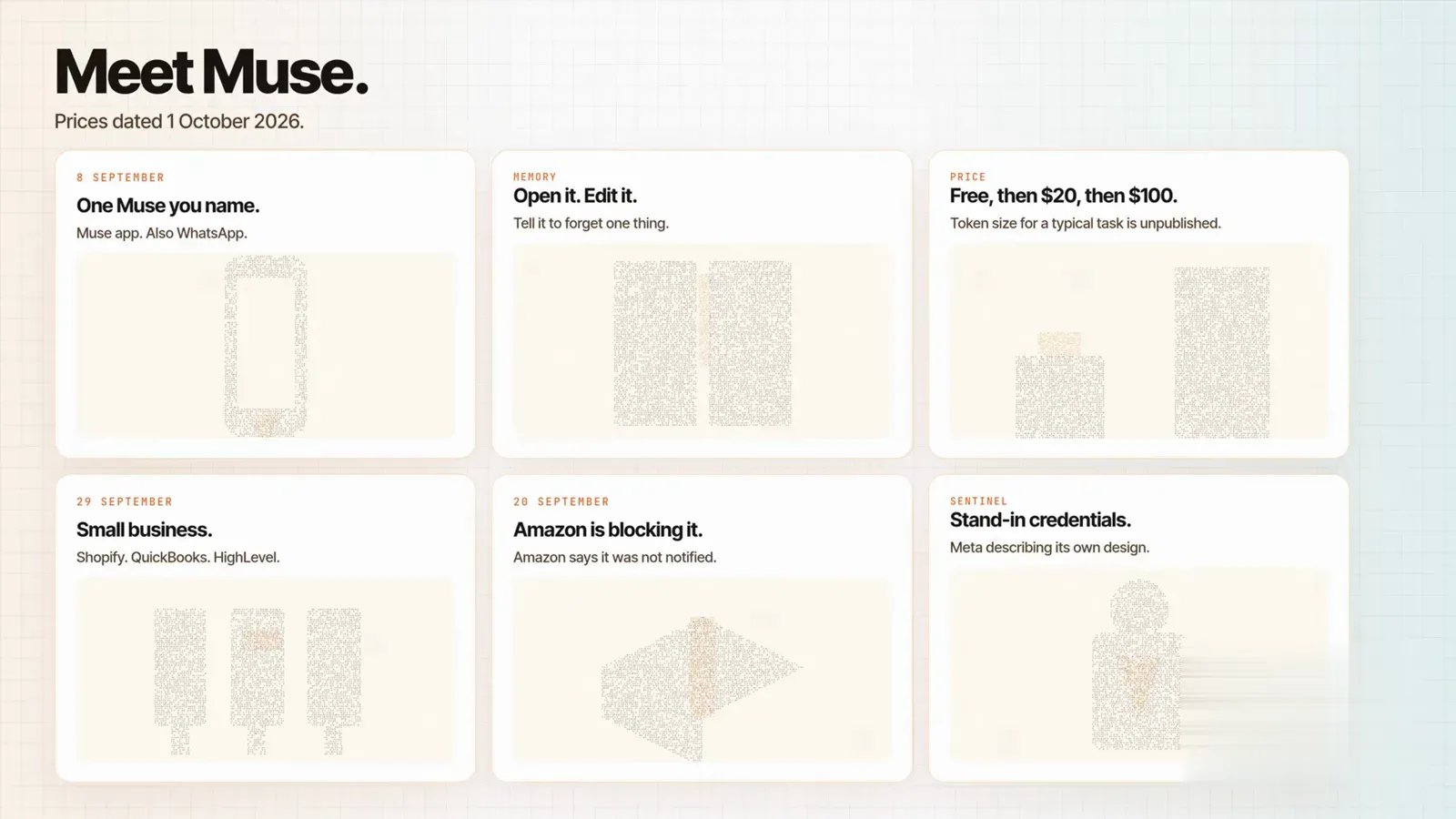
Prices dated, caveats attached - the card the launch posts skip.Watch at 5:00 - 9
The $100 gate on the dots side
The Meet Dots card prices the other column bluntly: ChatGPT Pro from $100 a month, and the $20 Plus plan does not include a dot. Business workspaces need at least two seats, so the cheapest door is one $125 premium seat plus a standard one - the most expensive entry Johnny found. Two softeners: a promo currently excludes dots usage from plan limits - DataCamp reported the first month uncounted - while Teams of Dots is flagged as OpenAI's road-map promise, not today's product.
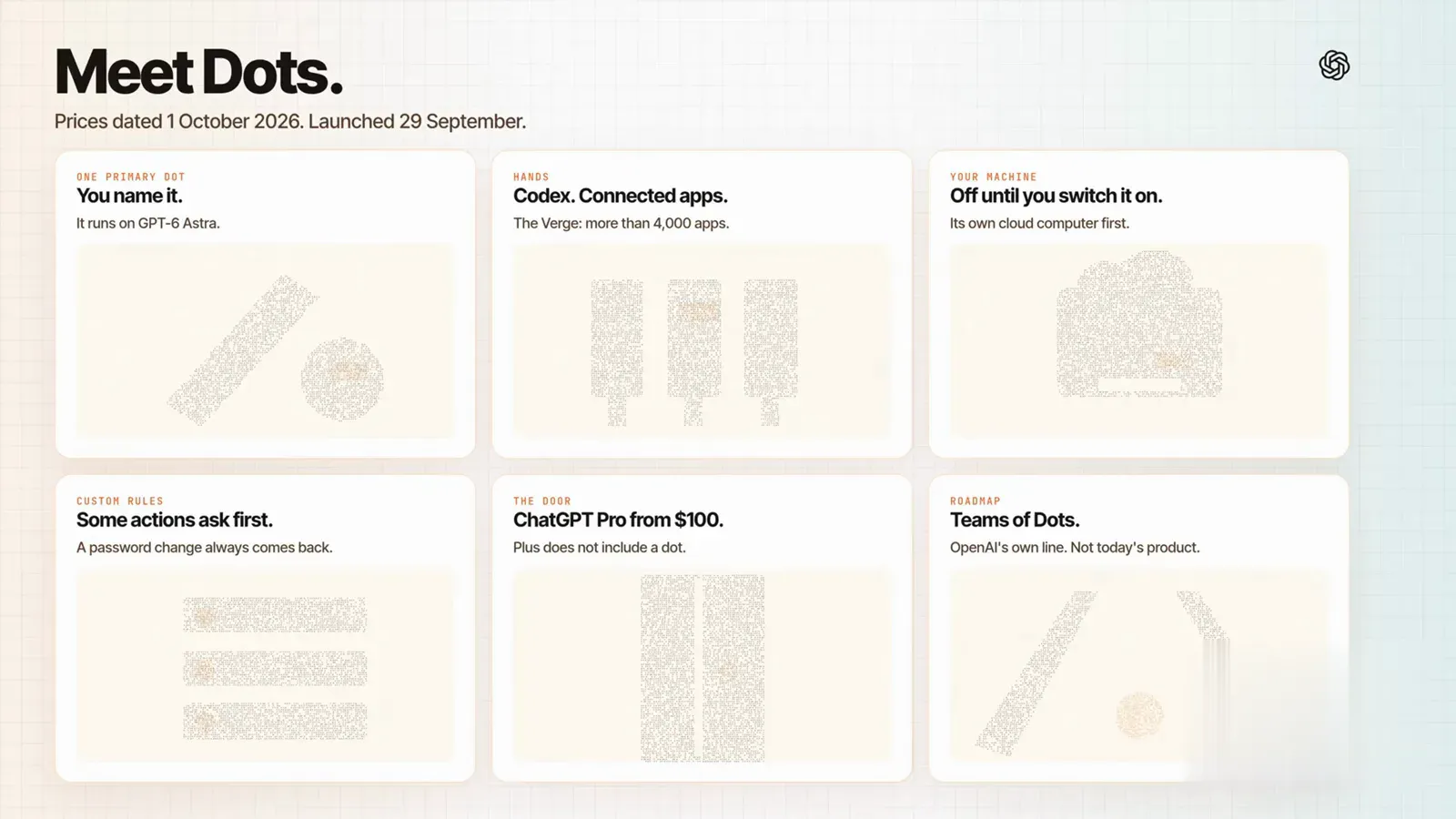
The gate, the promo, and the road-map line - on one dated card.Watch at 11:25
Where capabilities actually split
- 10
Always-on work, the Muse way
Both agents run unattended; Muse shows more of the machinery. Here a dashboard build that hit a provider error retried itself and reported back in chat, a scheduled-task card sits in the thread, and an Approvals tab holds anything needing a yes - empty, which is the point. Nate's tour adds a heartbeat checking Google Docs and email every 30 minutes, a Goals tab for health targets, a Feed tuned by liking, and an artifacts library it fills unprompted.
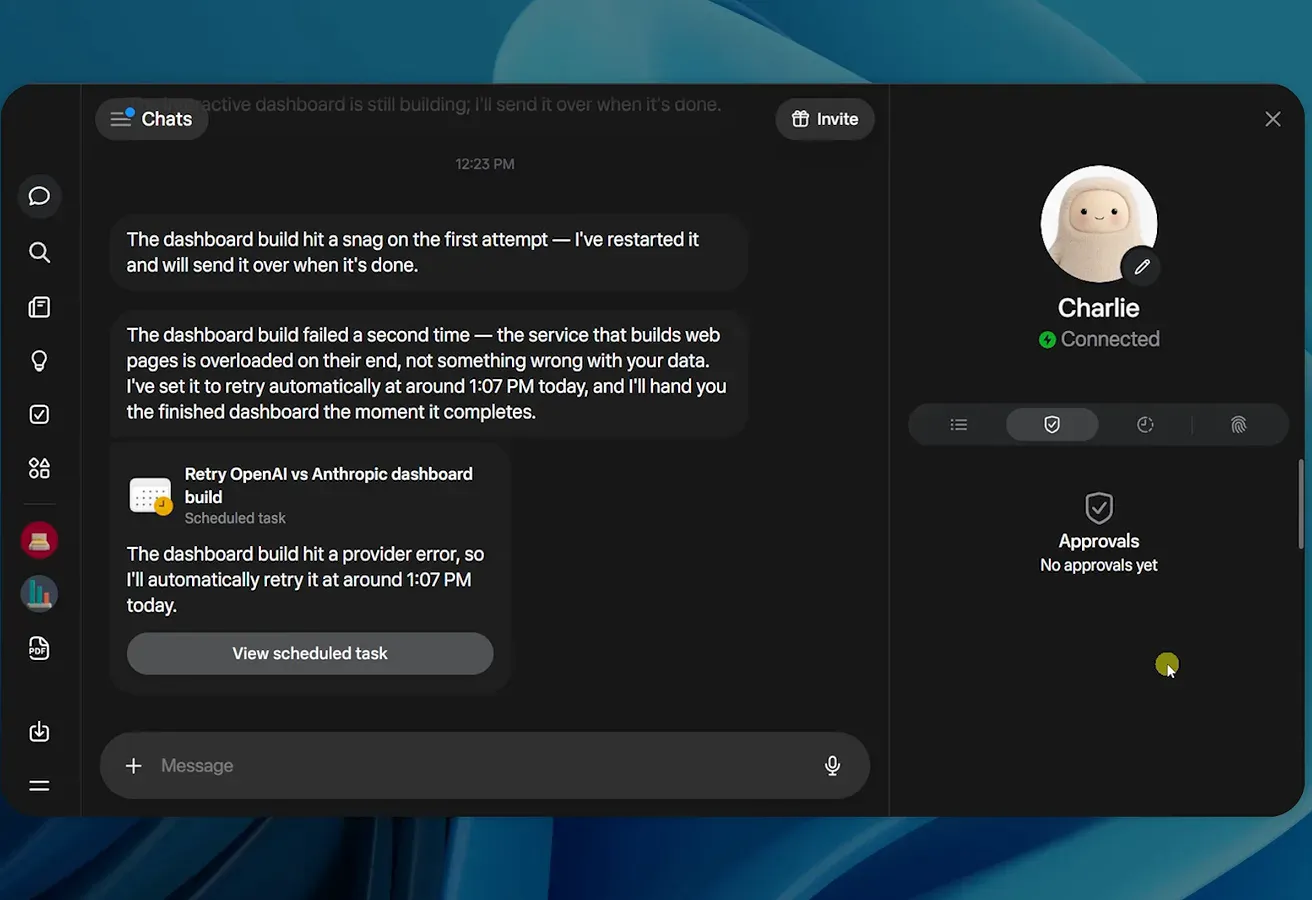
A failed build, an automatic retry, an approvals queue with nothing waiting.Watch at 8:45 - 11
Memory you can open, edit, and correct
Muse opens memory for editing: an identity tab holds a SOUL file for personality and a memory file of facts, preferences and commitments, both editable in the panel. Johnny Nel calls read-and-correct memory the app's most useful control; you can also tell it to forget one specific thing. dots starts from your ChatGPT memory instead and grows its own context. One warning from Johnny: deleting a dot's saved memories deletes the dot itself.
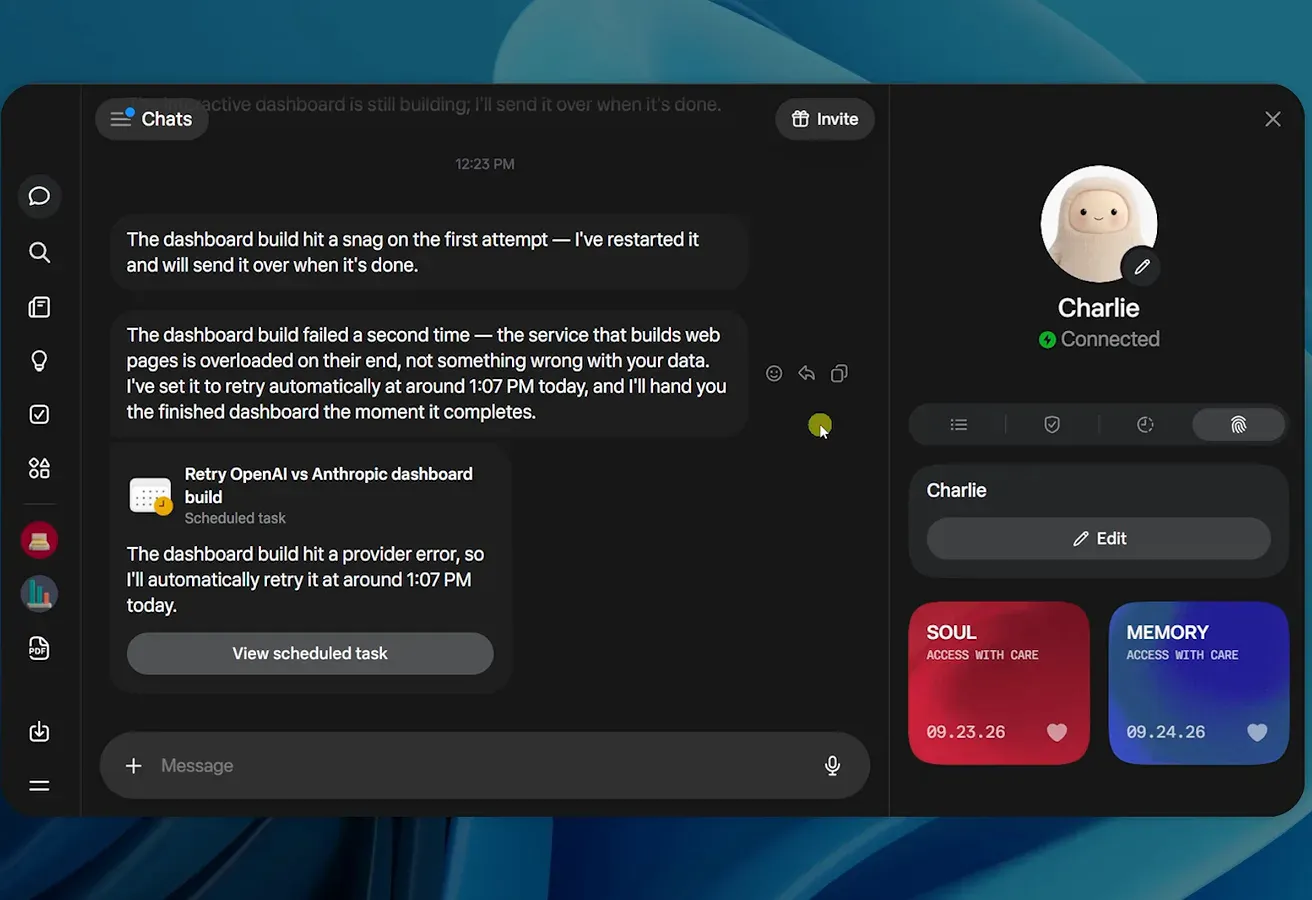
Soul and memory as editable cards - the control Johnny rates highest.Watch at 8:25 - 12
The Codex handoff is dots's moat
The capability Muse cannot copy: dots commands Codex. Leslie Samuel's dot Regina ran his video edit through a Codex session - notes applied, then thumbnail, title, description and tags; a friend's 22-minute video and a one-minute trailer followed. Nate's frame shows the same pattern: the dot's tasks become Codex threads. Asked how to manage scheduled tasks, dots described a section that does not exist, and its threads never filed back into his project.
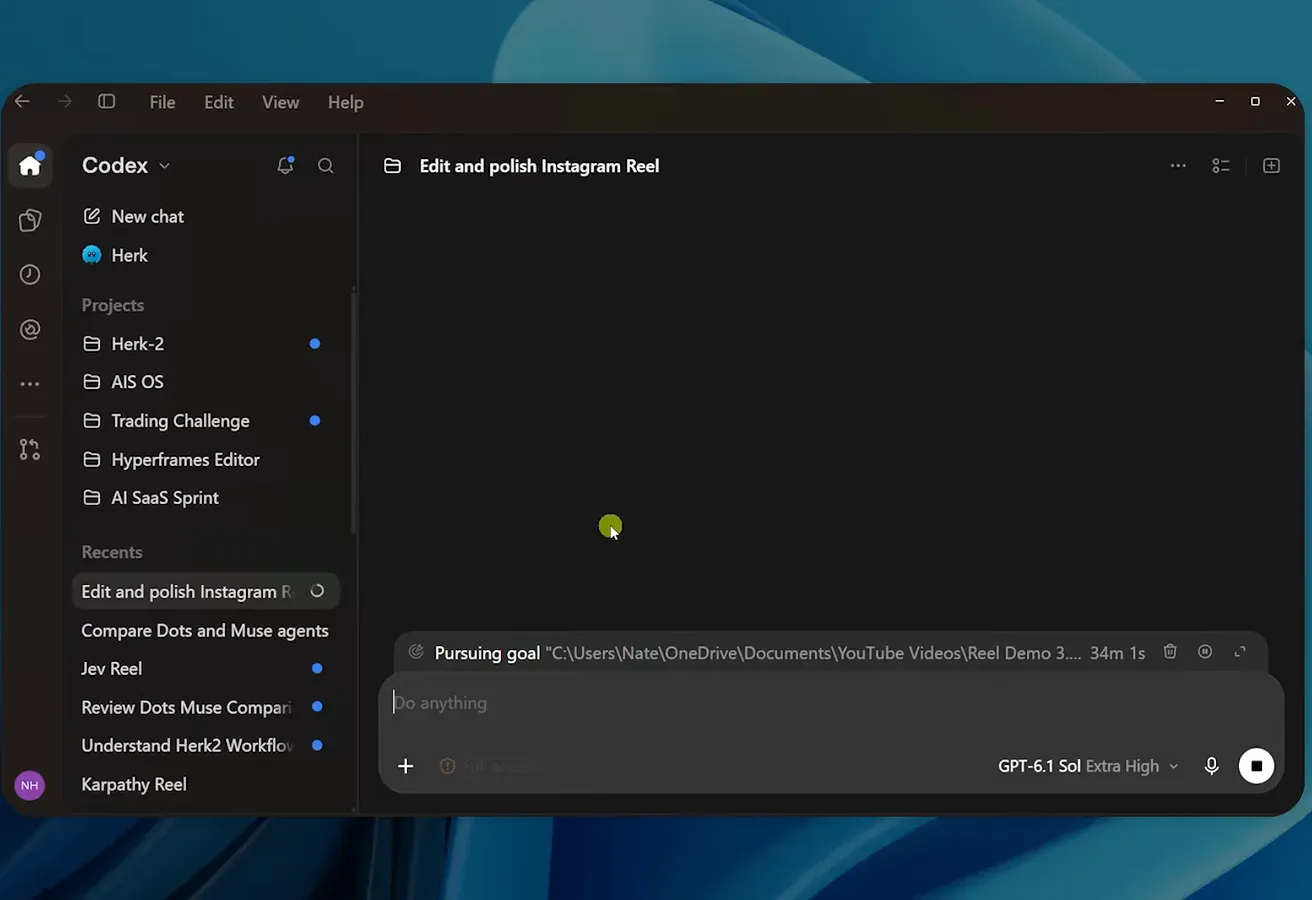
The Codex pipeline Leslie's video ran on - with Nate's bookkeeping caveat attached.Watch at 12:25 - 13
Astra vs Spark 1.3, numbers included
Nate's card is the only head-to-head model data in the three videos. Astra leads intelligence (53 vs 48), SaaS automation (68% vs 58%) and the coding benchmark (59% vs 33%). Spark 1.3 answers: a higher professional-work rating (1,672 vs 1,542), a hair above on knowledge work (1,586 vs 1,569), and 3.6x faster output (184 vs 51 tokens per second). His read: Astra for building things, Spark fine for assistant work - and Muse feels quicker day to day.
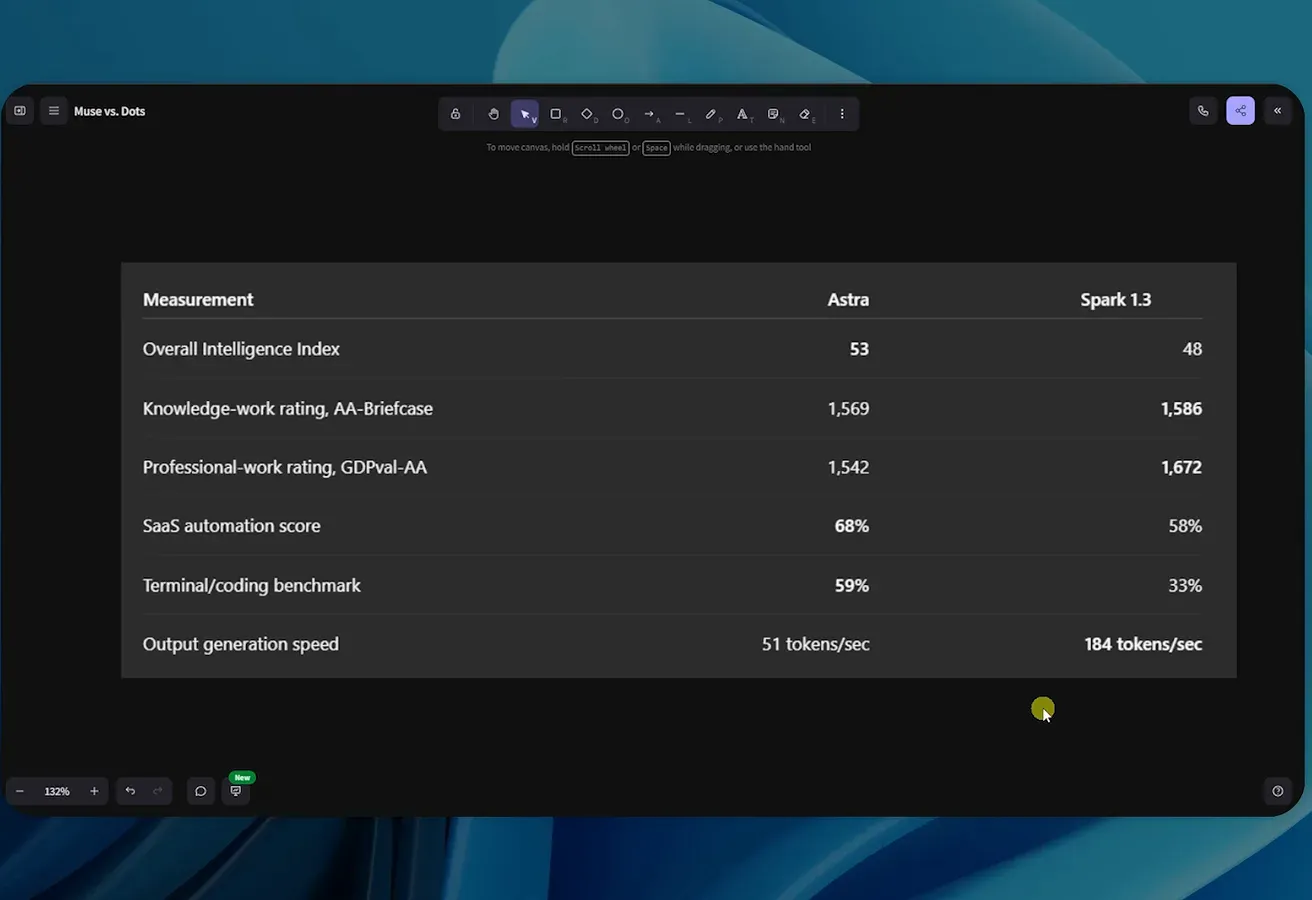
Coding and automation to Astra; professional work and throughput to Spark.Watch at 8:10
Three verdicts, no referee
- 14
Nate's scorecard after a day with each
Nate Herk's closing slide is his own ledger: Muse's interface advantage is meaningful; Astra is the better model; Grok Bot's organizing model may scale better; dots feels like a rushed "catch up" play. The receipts exist - the DevDay call demo froze, his apps failed on day one, and he tweeted that dots "should've been called Bugs." Yet his pick still lands on dots: he works in Codex and Claude Code all day. For parents and non-technical users he would hand over Muse instead.
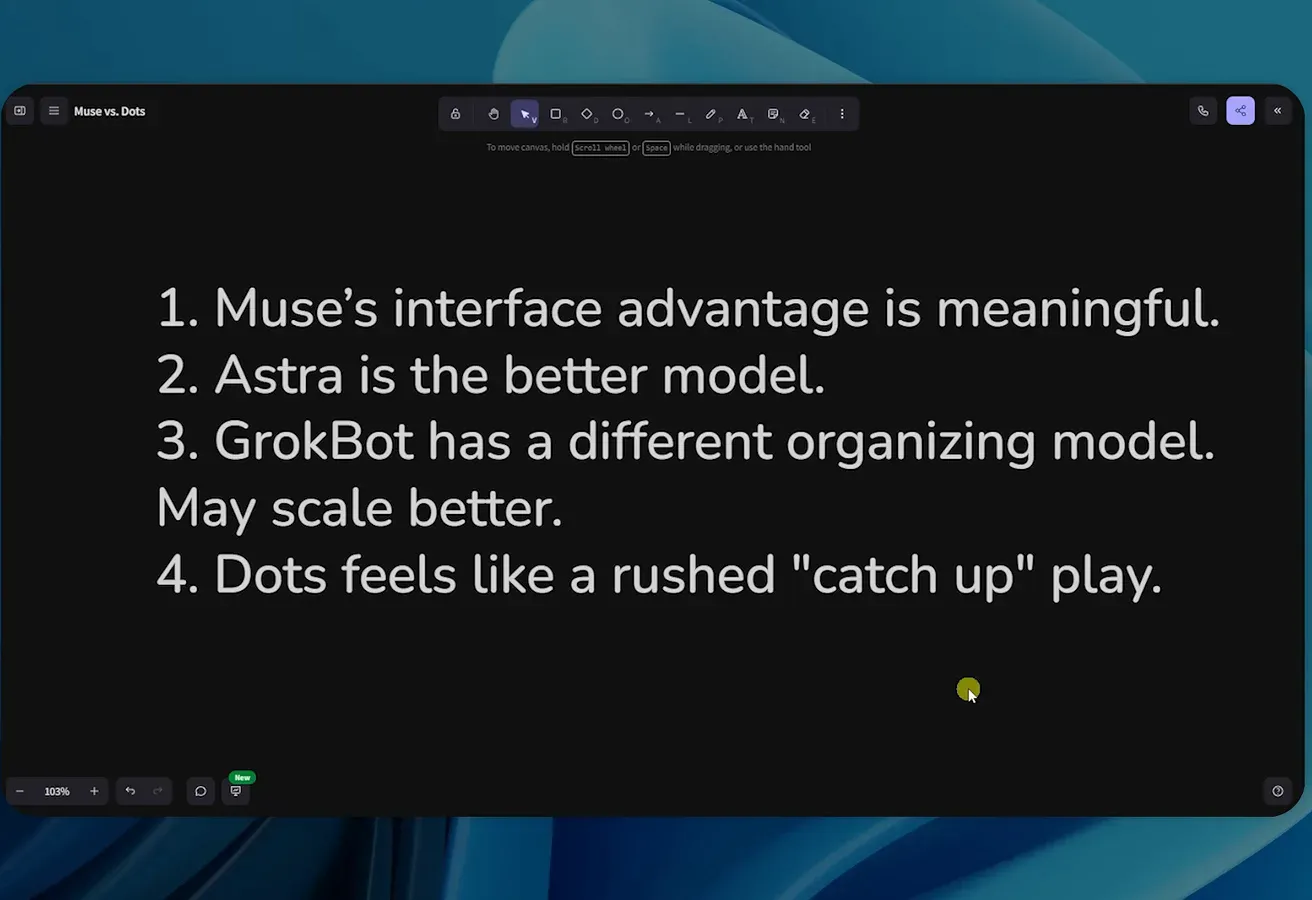
His ledger, his words - including the pick his own workflow forces.Watch at 15:08 - 15
Leslie's verdict: keep both, split the jobs
Leslie Samuel declined the either-or. Tasha, his Muse, stays the personal assistant - family calendar, health goals, Meta-platform content. Regina, his dot, runs his YouTube channel's creative work through ChatGPT and Codex. His one-liner: Muse wants to be a personal assistant; dots wants to be a member of your team. His fails teach the same lesson - generic briefs produced generic text, out-of-order clips a jumbled story - so fix the inputs, not the tool.
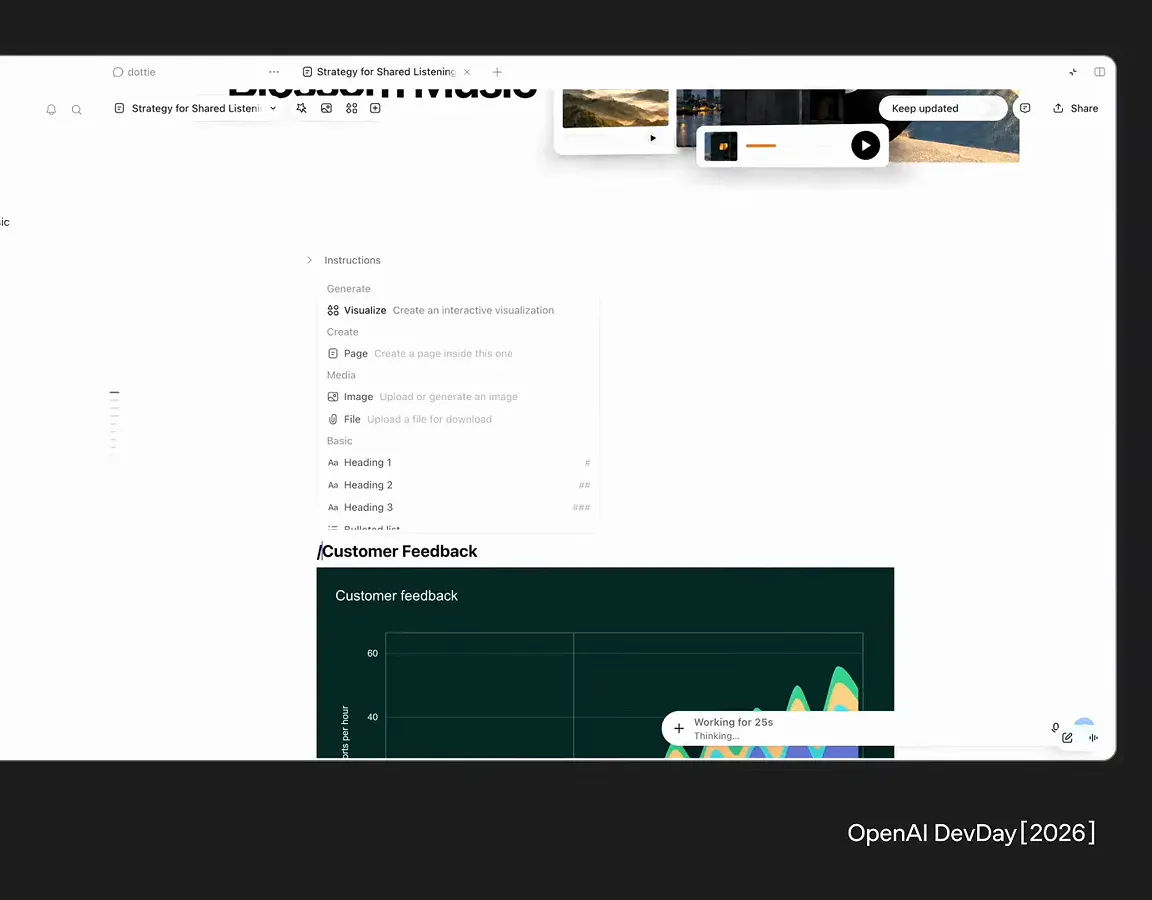
The build demo rolling behind Leslie's both-not-either verdict.Watch at 15:14 - 16
No referee - just the filter
Nobody in the three videos crowns a winner, and Johnny says the quiet part: a published comparison he cites finds no performance winner in the public evidence. His card turns the decision into six questions - one stream of work or several lanes; where your customers live; whether the day is spent in Codex; and the budget check - Muse starts free, dots asks $100 before the first task. He runs Muse and Grok Bot himself and prescribes nothing.
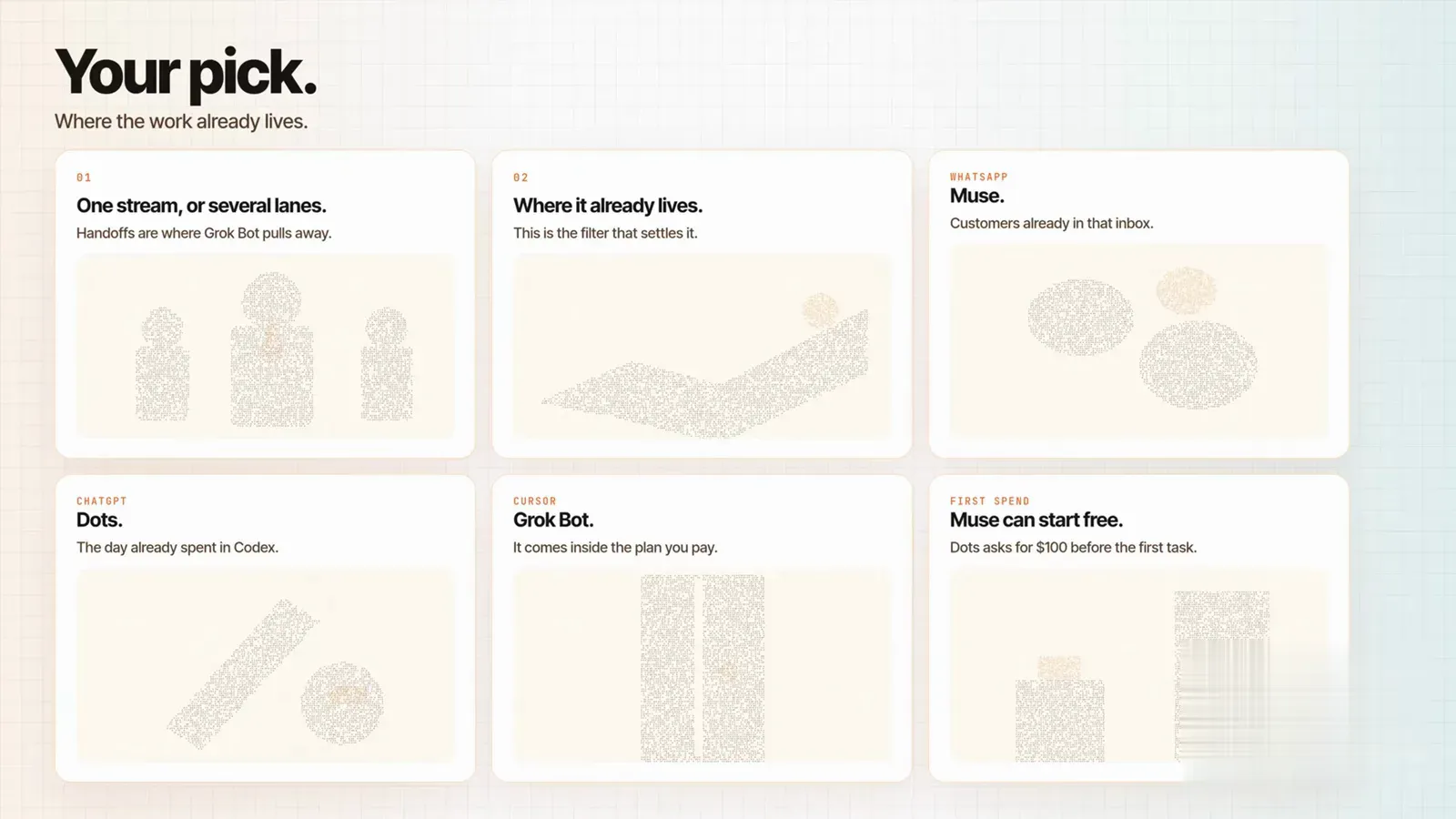
The six-question card Johnny ends on - the nearest thing to a conclusion here.Watch at 12:42
Frequently asked questions
Keep exploring
- Meta Muse tool page: specs, pricing and where to start
- OpenAI dots tips: setup habits for the other hosted agent
- Meta Muse vs OpenClaw: the hosted-vs-self-hosted version of this fight
- Meta Muse tips: from first run to daily delegation
- What Is OpenClaw: the self-hosted agent Muse keeps being measured against