

Meta Muse vs Grok Bot: Which Agent Fits Your Life in 2026?
Zuckerberg and xAI shipped the same pitch within weeks: an agent with its own computer in the cloud that keeps working after you close the tab. Meta Muse gives you one assistant with a generous free tier - now on iPad as well as web, Mac and phones - while Grok Bot puts a shareable team of bots behind Cursor's $20-a-month door. The ground is moving: on October 7, 2026, reporting by Gizmodo, The Information and Dealroom described Grok Bot shifting to a model-router architecture that hands tasks to third-party models such as Claude Opus 5.5, Midjourney and Suno, and revisited a Slack leak incident. This page walks the decision axis frame by frame - what each product is, where its computer sits, what it costs, what it can do, and who each reviewer says it fits. Every frame is checked against three 2026 videos: James Layne's head-to-head, The Next New Thing's three-agent test and Zero Burn Rate's security breakdown. Every judgment stays attributed to the reviewer who made it; as of October 2026 both products iterate weekly, so this page sets out the axis, not a verdict.
Source & credits
Screenshots in this guide are captured from James Layne's public walkthrough video. Every step links back to the exact moment it shows, so you can follow along.
James Layne ↗Two contenders, one paywall question
- 1
Grok Bot's door is a Cursor subscription
James Layne puts pricing first because it decides most cases. Grok Bot has no free tier of its own: the cheapest way in, he explains, is Cursor's Individual plan at $20 a month, whose feature list literally includes Grok Bot access - and Cursor does not publish how much use that buys. His takeaway: you pay before you ever try Grok Bot, while Muse hands out a working free tier from day one.
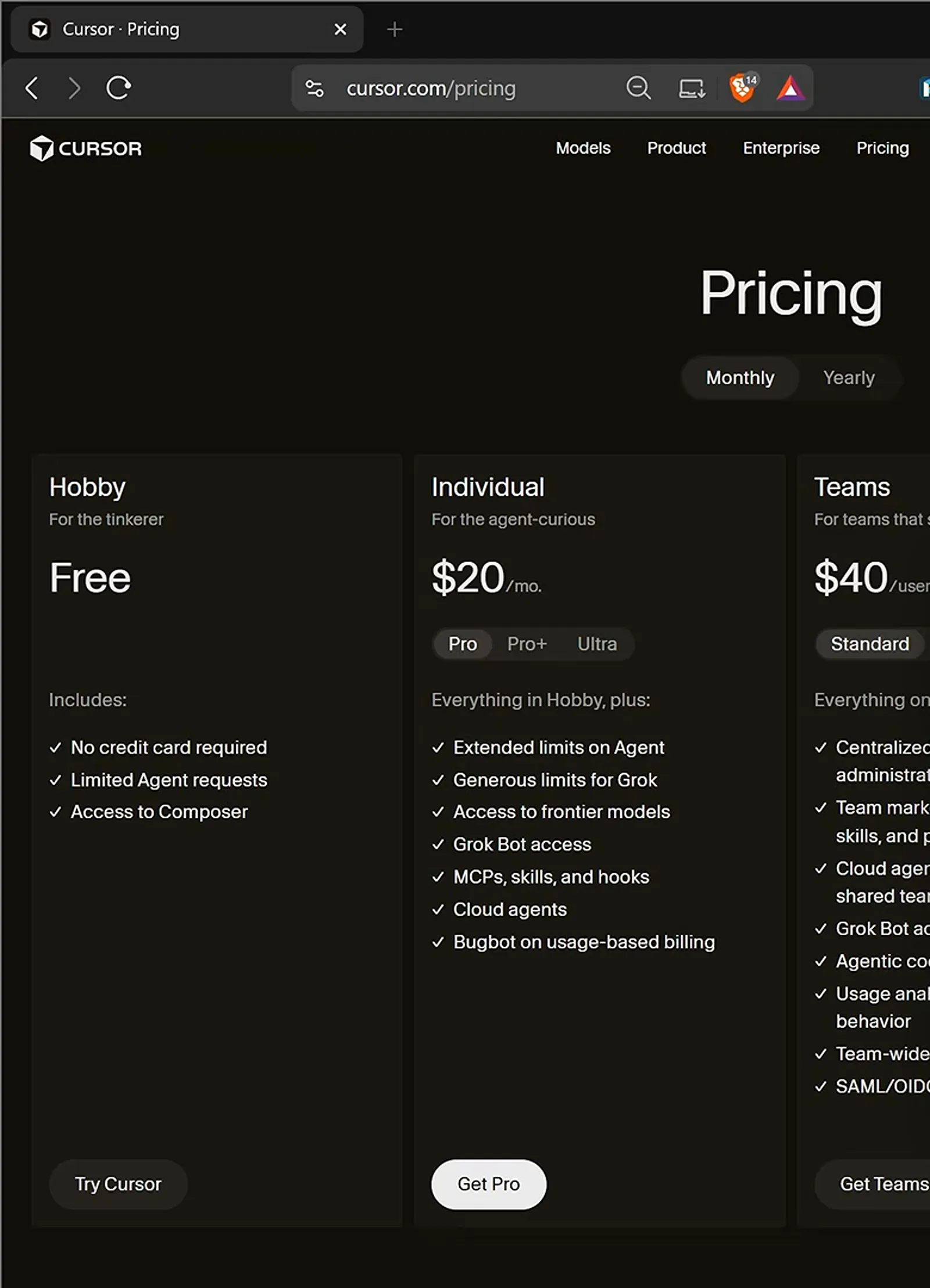
No free tier: the $20 Cursor Individual plan is the door to Grok Bot.Watch at 1:12 - 2
Meta Muse starts free and says so in settings
Muse's General settings panel shows a Free plan meter - James's screenshot catches it at 57% used with the weekly limit resetting on September 27. Upgrades in his walkthrough run $16 a month for 500M weekly tokens or $80 for 3B when bought on the web or PC app; buying through the mobile apps costs $20 and $100 because of store fees. His tip: subscribe on the web, not your phone.
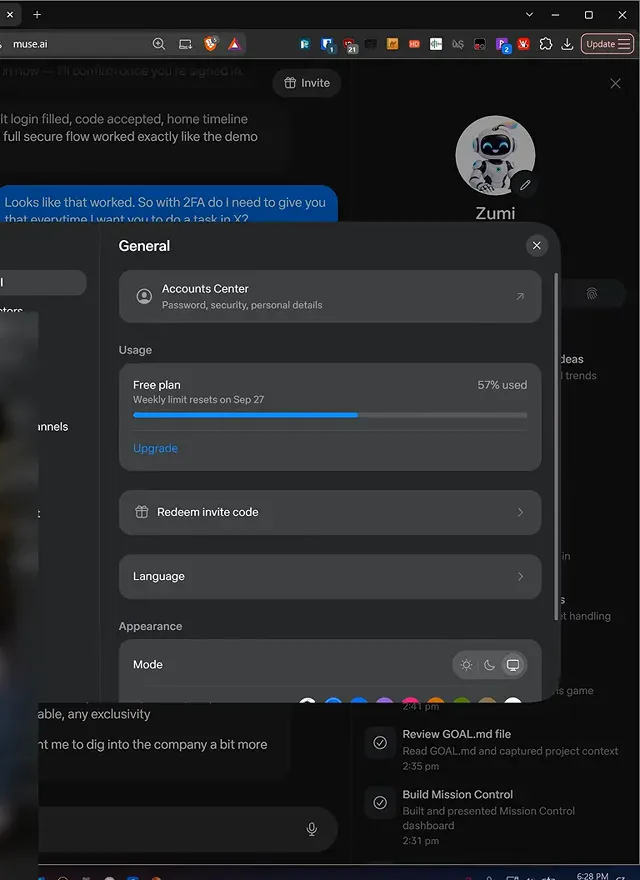
Muse's free weekly allowance, caught mid-week at 57% used.Watch at 1:28 - 3
A team of bots versus one assistant
James's own pros card frames the structural difference. Grok Bot gives you custom bots you can share, with separate instructions and memory, that coordinate in parallel work and group chats - he runs a head of staff bot that delegates to named developer and researcher bots. Muse is deliberately one user-facing assistant; you can open side chats, but there is no second persona to hand a task to.
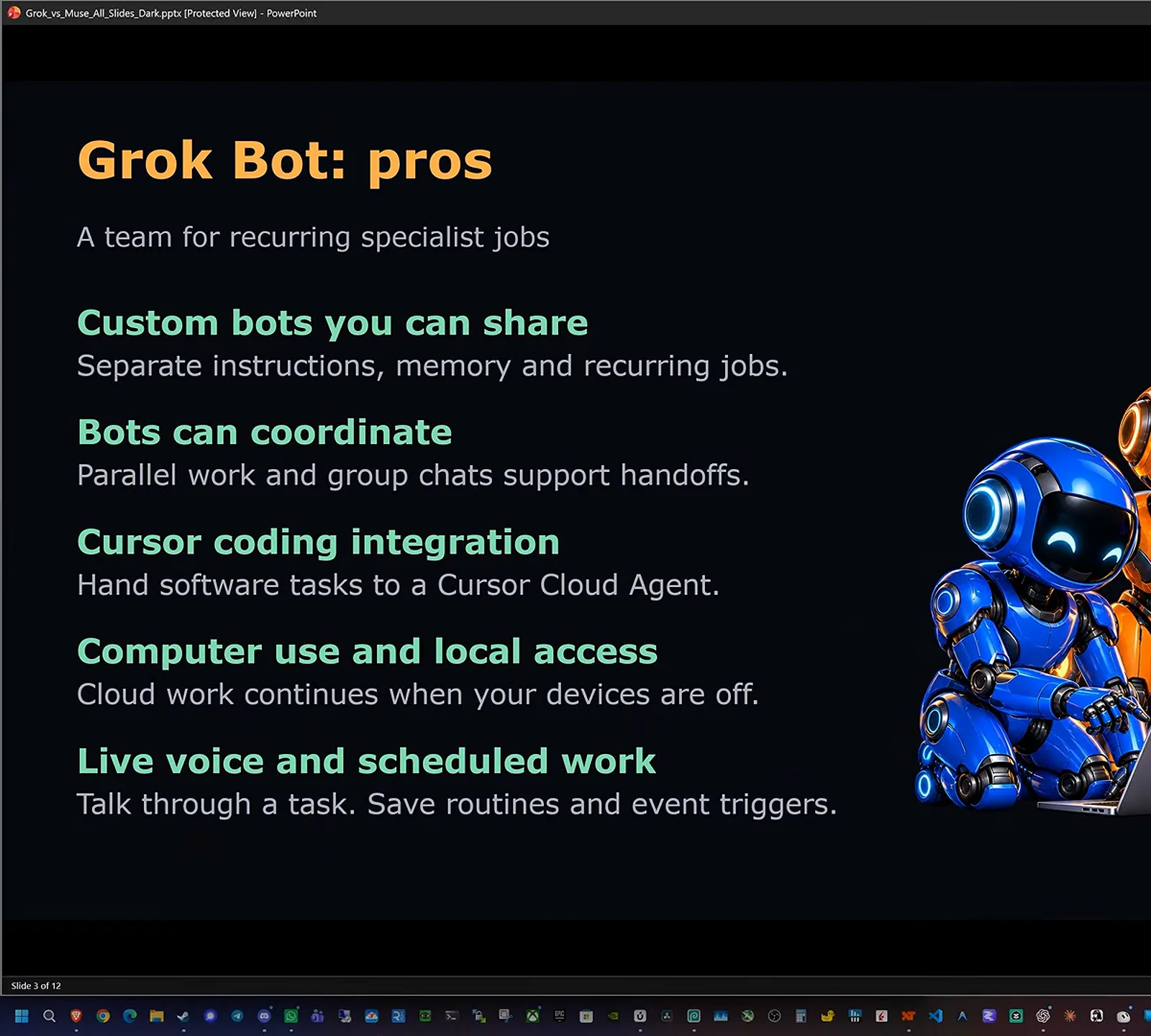
James Layne's own scorecard for the bot-team approach.Watch at 3:10
Where the computer actually runs
- 4
Grok Bot's cloud computer, seen full screen
Both agents ship a cloud computer; the difference is how willingly they use it. When James opens Grok Bot's machine fully, it is deep in a shoe hunt - a dozen shopping tabs and a product page for On Cloud 5 runners at 29% off. His caveat from the same test: Grok Bot does not always reach for the computer unless you insist, and he had to nag it mid-task before it kept browsing.

Grok Bot's cloud computer, a dozen tabs deep into shoe hunting.Watch at 32:32 - 5
Muse hunts retailers without being told twice
The same sneaker request on Muse shows a Selecting option panel working through bestbuy.com and zappos.com while Zumi reports findings in chat - sale Cloud 6 options at $135 and $160, with a promise to verify sizes across Dick's and Road Runner. James calls this test a tie on results: Muse finished faster and more proactively, Grok Bot dug up cheaper prices on less familiar sites.
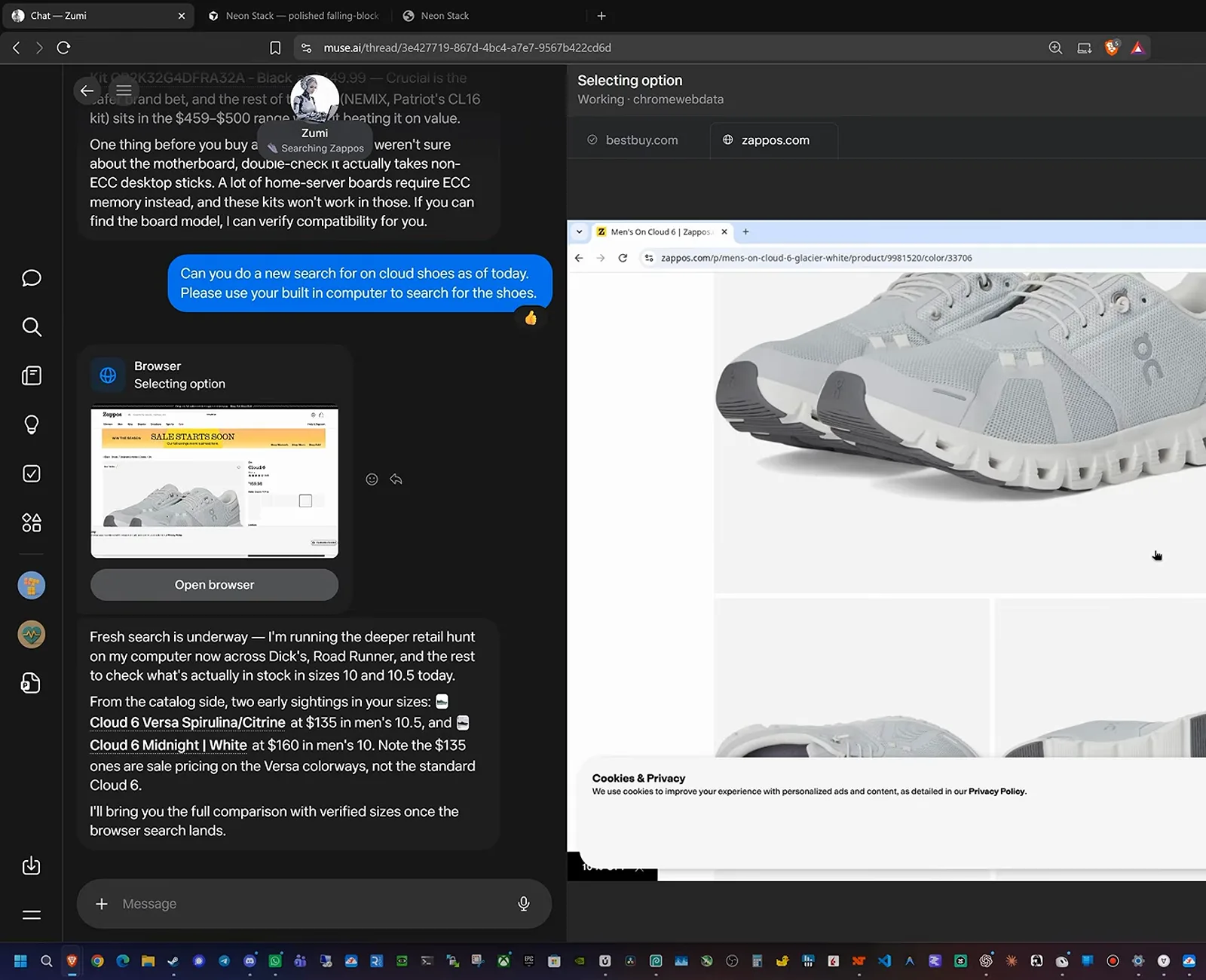
Zumi crawls retailers on its own computer while you watch it work.Watch at 34:56 - 6
Ask, approve, and Muse installs programs
Muse's computer is a dedicated cloud VM, and a newer trick shown here: ask for a program and it asks permission, then installs. The FastFetch output confirms a real Ubuntu 24.04 machine on a cloud hypervisor, and the cowsay banner greets from Zumi's computer. James notes you cannot watch the install happen live - you see the before and after - but the VM is yours to extend.
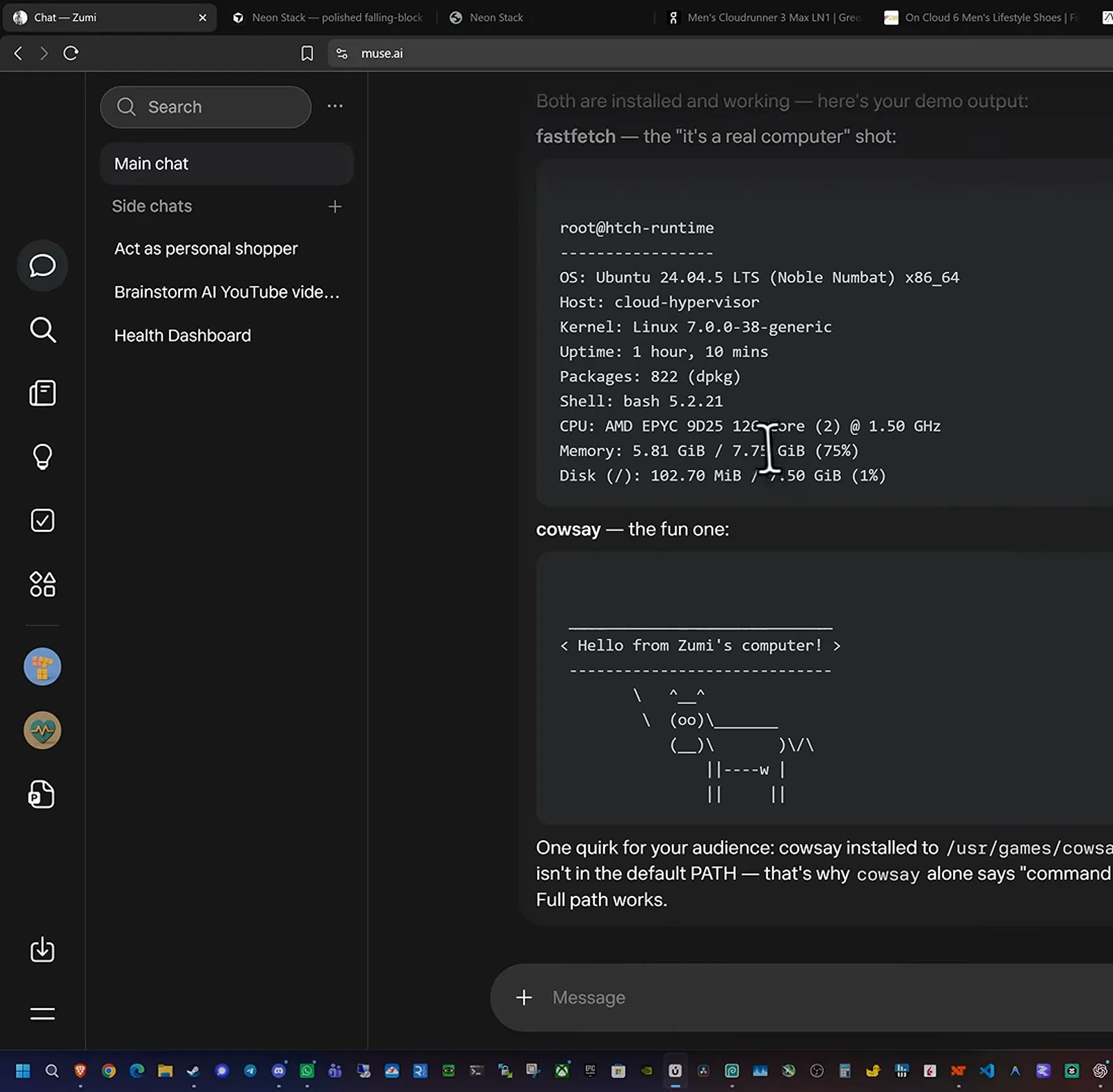
Install proof: FastFetch and cowsay running on Muse's Ubuntu VM.Watch at 38:20
What you pay and what you connect
- 7
One tier up: $60 for higher Grok limits
The upgrade ladder for Grok Bot runs through Cursor, not xAI. James clicks over to Pro Plus at $60 a month - the plan he reads out as tripling Agent limits and raising Grok Bot usage - and points at Ultra at $200 beyond it. He adds that a $300 SuperGrok plan exists but that xAI does not say whether it buys you anything more, so treat the top of the ladder as unadvertised.
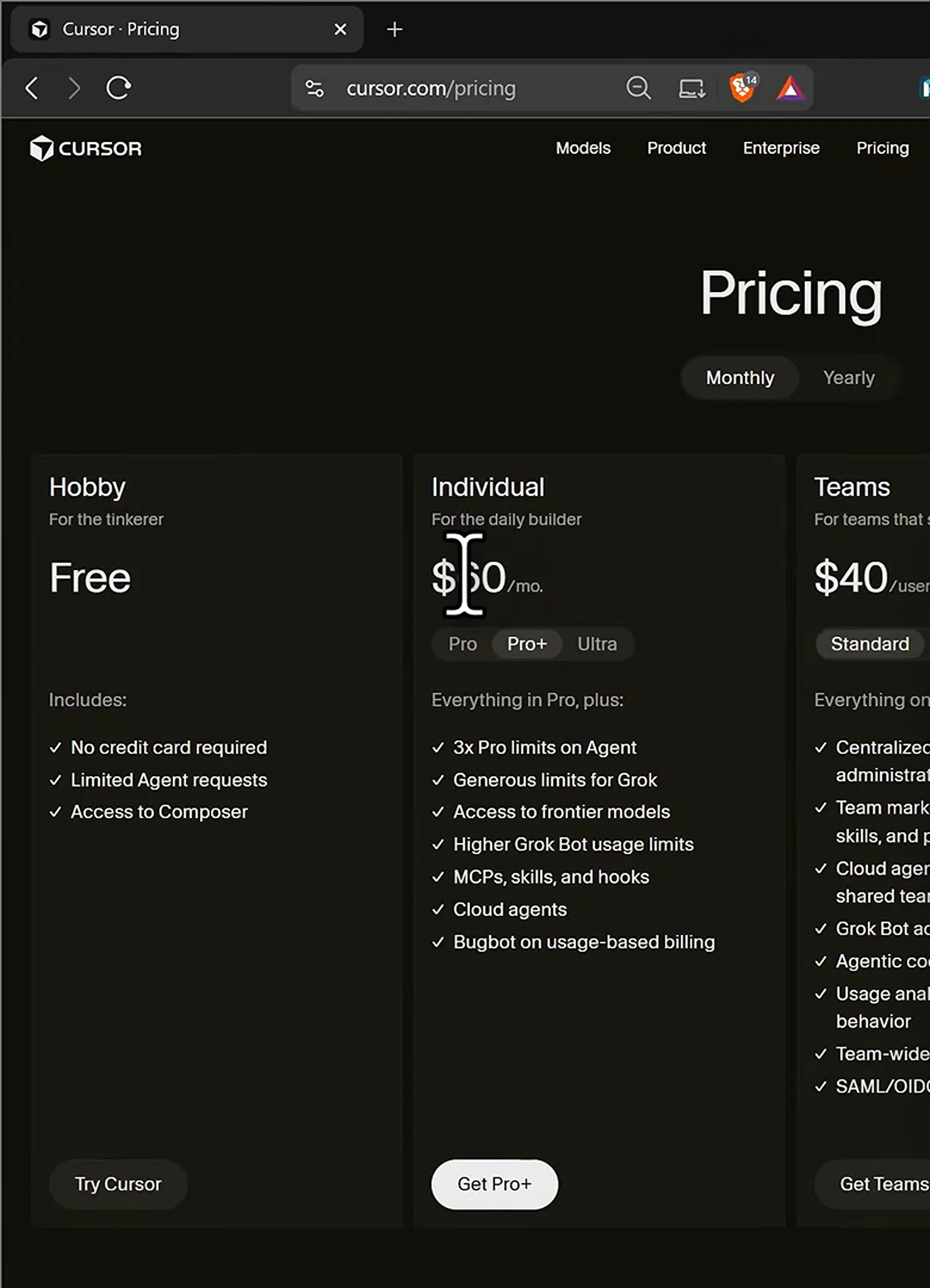
One tier up, Pro Plus triples Agent limits for $60.Watch at 2:12 - 8
Muse's card: free tier, errands, and a wallet
The Muse half of James's slide deck lists what the free tier covers - everyday tasks within the cap - plus proactive personal help, bookings and shopping, artifacts and dashboards, and a built-in payment wallet where Link by Stripe keeps card details hidden. In his testing Muse could research flights, come back with an option, and ask approval to book it with the card on file.
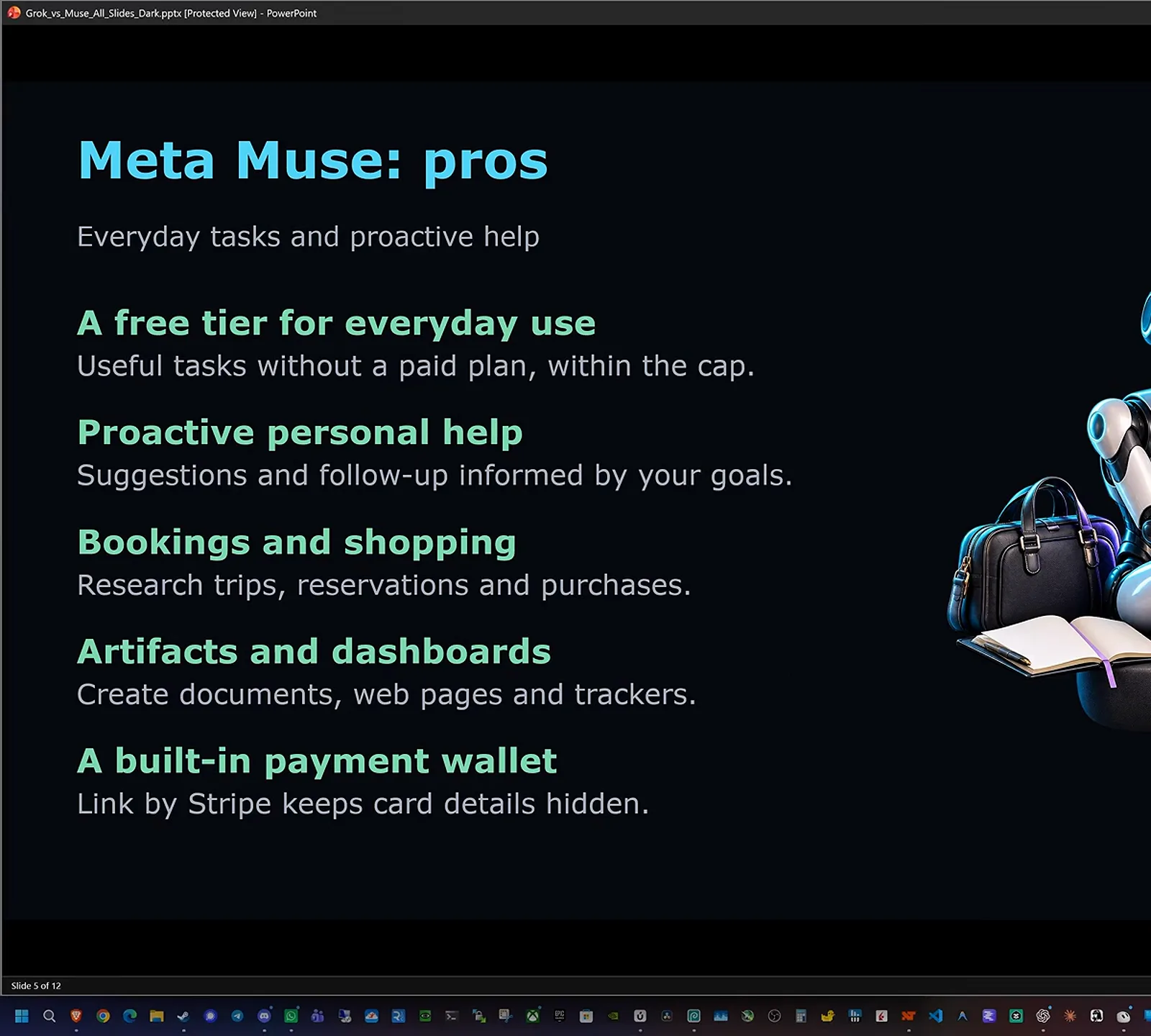
The Muse side of the same card: free tier, errands, wallet.Watch at 8:40 - 9
Connectors and ready-made bots to hire
Both connect Gmail and Google Calendar, but the ecosystems differ: Grok Bot talks to your X account, Muse to Instagram, Facebook and Threads. Grok Bot's marketplace is the deeper bench - featured plugins like Gmail and 1Password sit beside community bots you can add, including dr eggbot, a bot whose job is designing other bots. The Next New Thing adds that Grok Bot personalities and skills travel by shareable link.
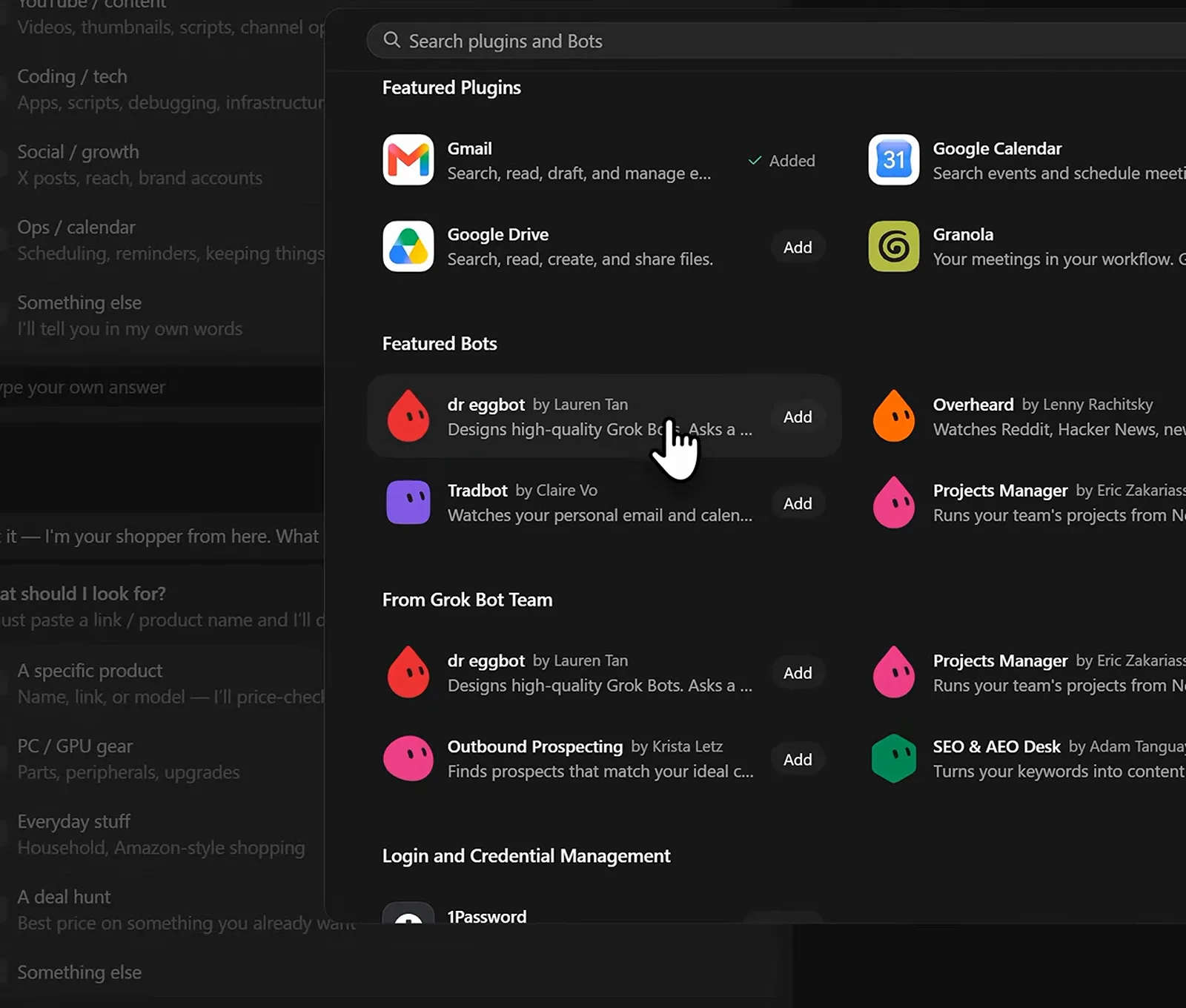
Add-ons and ready-made bots: the ecosystem you plug into.Watch at 19:00
Where each one is actually good
- 10
Live voice, one persona per bot
James's favorite Grok Bot advantage is round-trip live voice: each bot carries its own voice, and here his Money Penny executive assistant answers mid-walk questions through a call HUD with its own timer and controls. Muse, in his words, cannot answer by voice at all yet - you can dictate to it, but replies arrive as text - something his bot roster of named specialists makes daily use of.
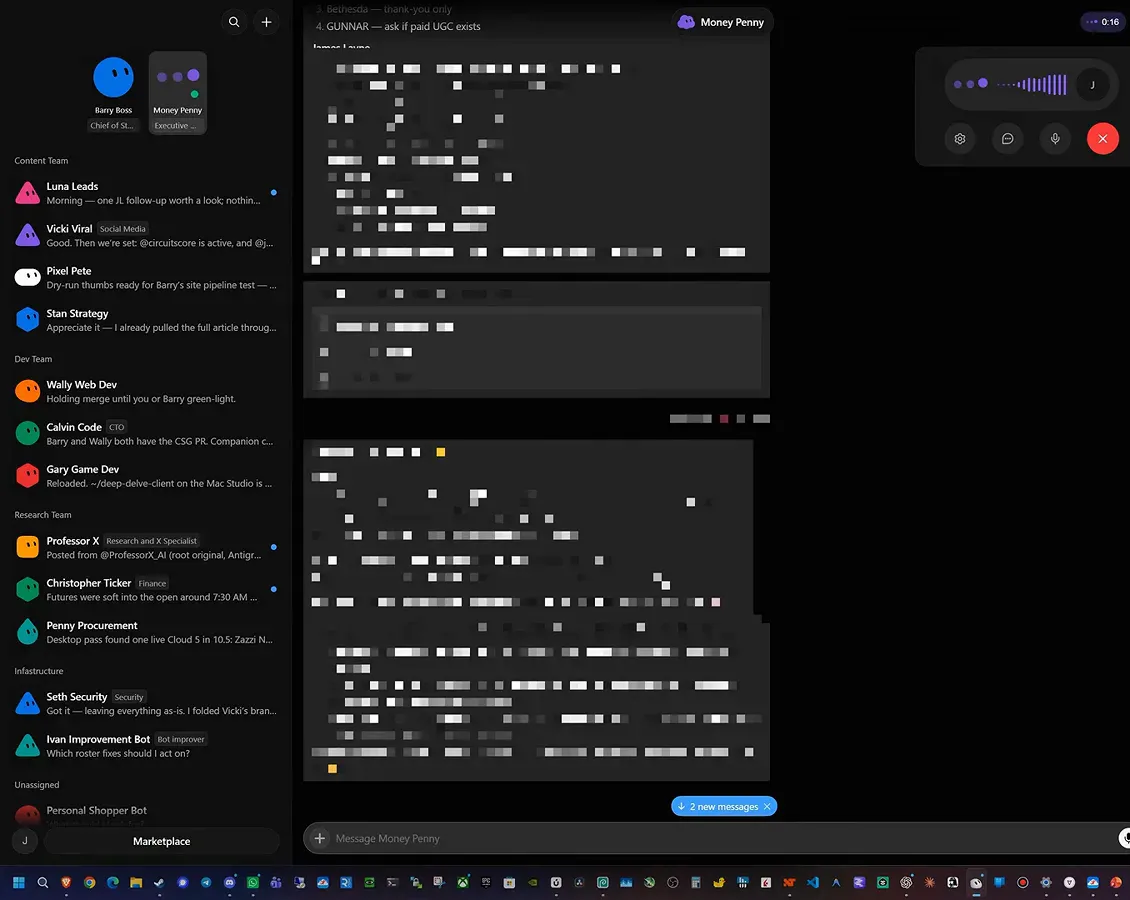
Round-trip voice, per bot - Muse can only take dictation.Watch at 20:30 - 11
Muse reads the inbox and ranks what matters
Asked to check his inbox, Muse returns a ranked digest: a NinjaTrader margin warning flagged as the urgent one, an unrecognised Claude trusted device, Google security alerts it recognises as self-inflicted. James's same test on Grok Bot surfaced the right email too, but he stresses the behavioral gap - Muse watches mail as it lands, while his Grok Bot sponsorship agent scanned on a once-a-day schedule.
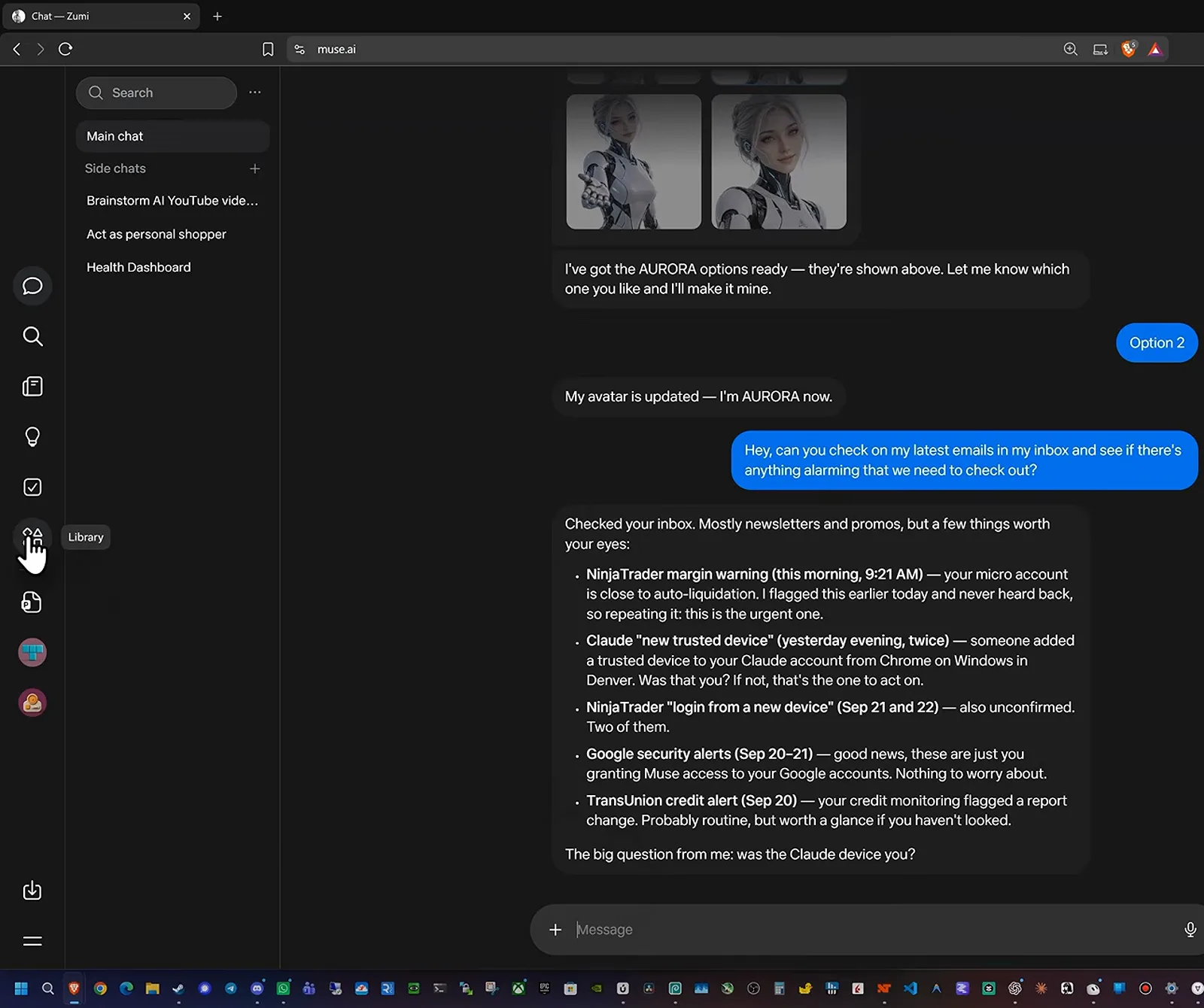
Muse reads the inbox and surfaces the alerts that matter.Watch at 22:20 - 12
Dashboards Muse builds about your life
Muse's artifacts library holds things it built to order: a health dashboard syncing his steps toward a 10,000-a-day goal, a mission-control panel reporting the cloud computer's own RAM and CPU, even a PowerPoint. The Next New Thing's tester reached for Muse again for exactly this - tables and reports came back formatted and fast enough to keep the conversation going.
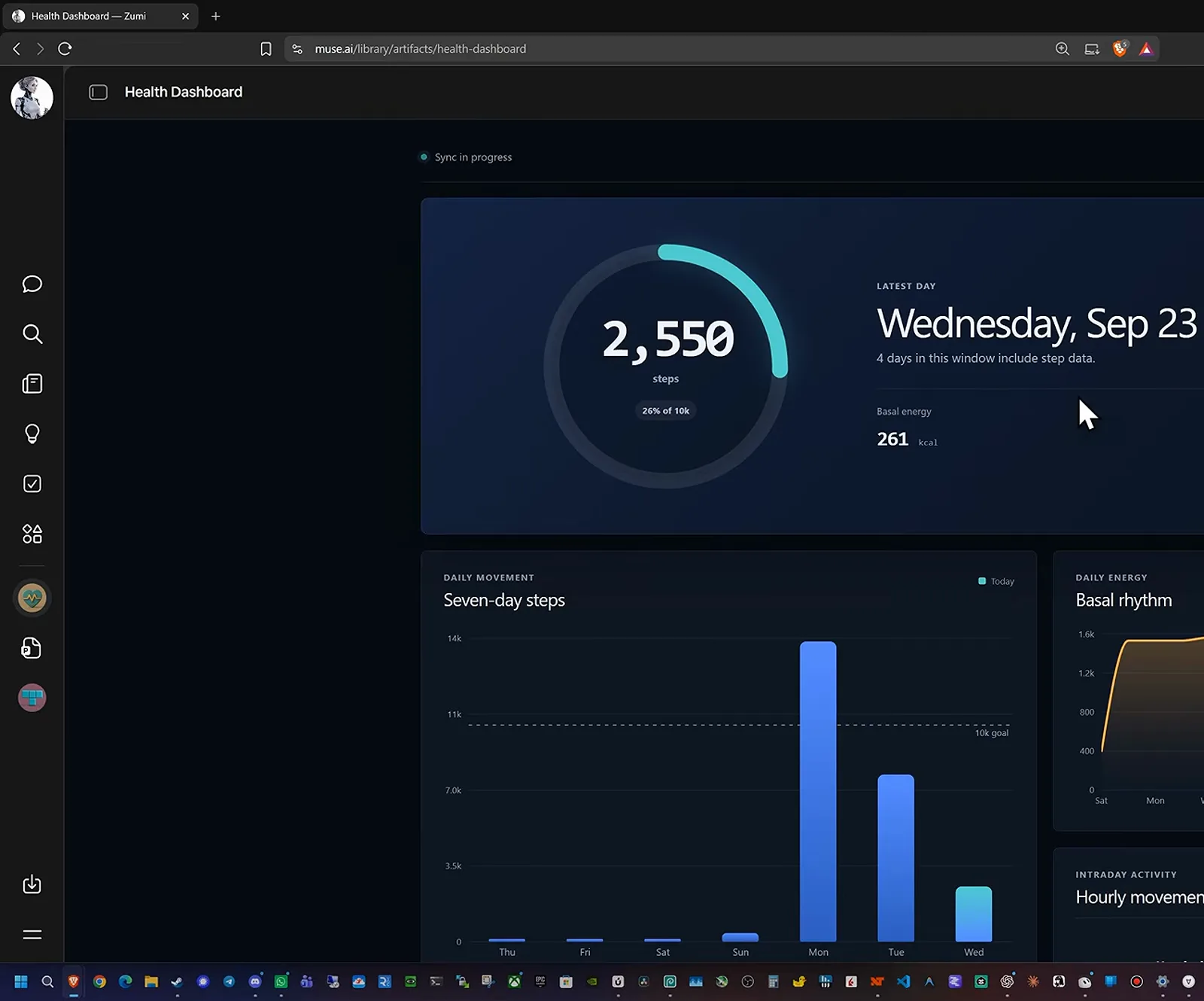
A dashboard Muse built itself, syncing steps toward the 10k goal.Watch at 23:18 - 13
The coding upset: Muse's Tetris ran
The same build-a-Tetris-with-amazing-graphics request went to both. Muse delivered a playable artifact in minutes - James plays it to a score of 320 on screen. Grok Bot's Cursor agent overthought the job for roughly twenty minutes, shipped a Neon Stack build that would not start, and he finally shut it down, calling the round a big L for Grok Bot while conceding his earlier Cursor coding tests had gone well.
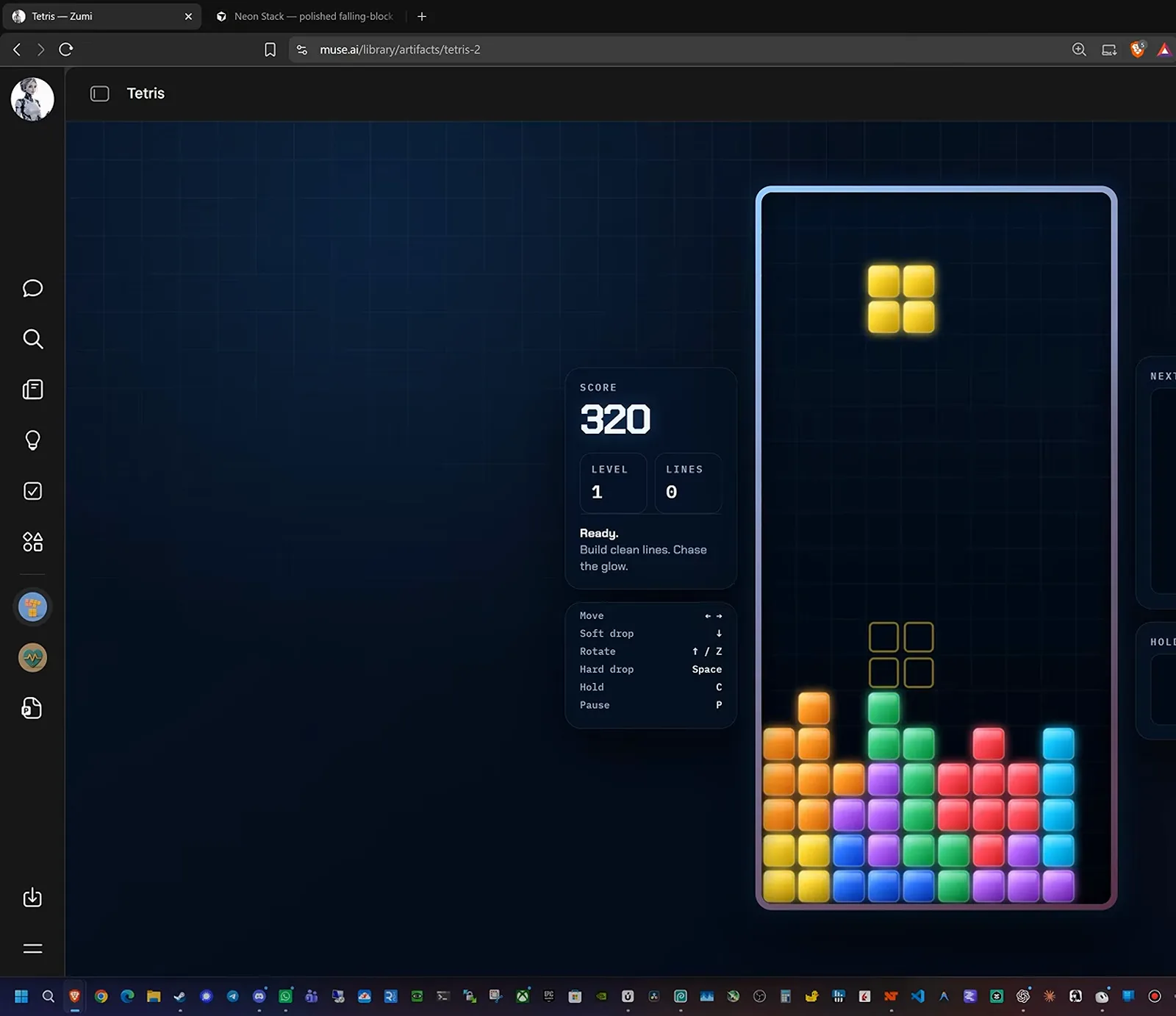
The coding upset: Muse's Tetris ran; the Cursor entry never started.Watch at 27:20 - 14
Who can stop it: three permission designs
Zero Burn Rate's security breakdown compares the brakes. Muse routes everything leaving its machine through a second agent, Sentinel, and never shows the model your real credentials; its machine is a dedicated per-user VM. Grok Bot asks allow once, deny, or allow always, runs every bot on one shared computer - xAI's own docs say not to treat separate bots as a security margin, and an August 20 outage froze bots on affected accounts.
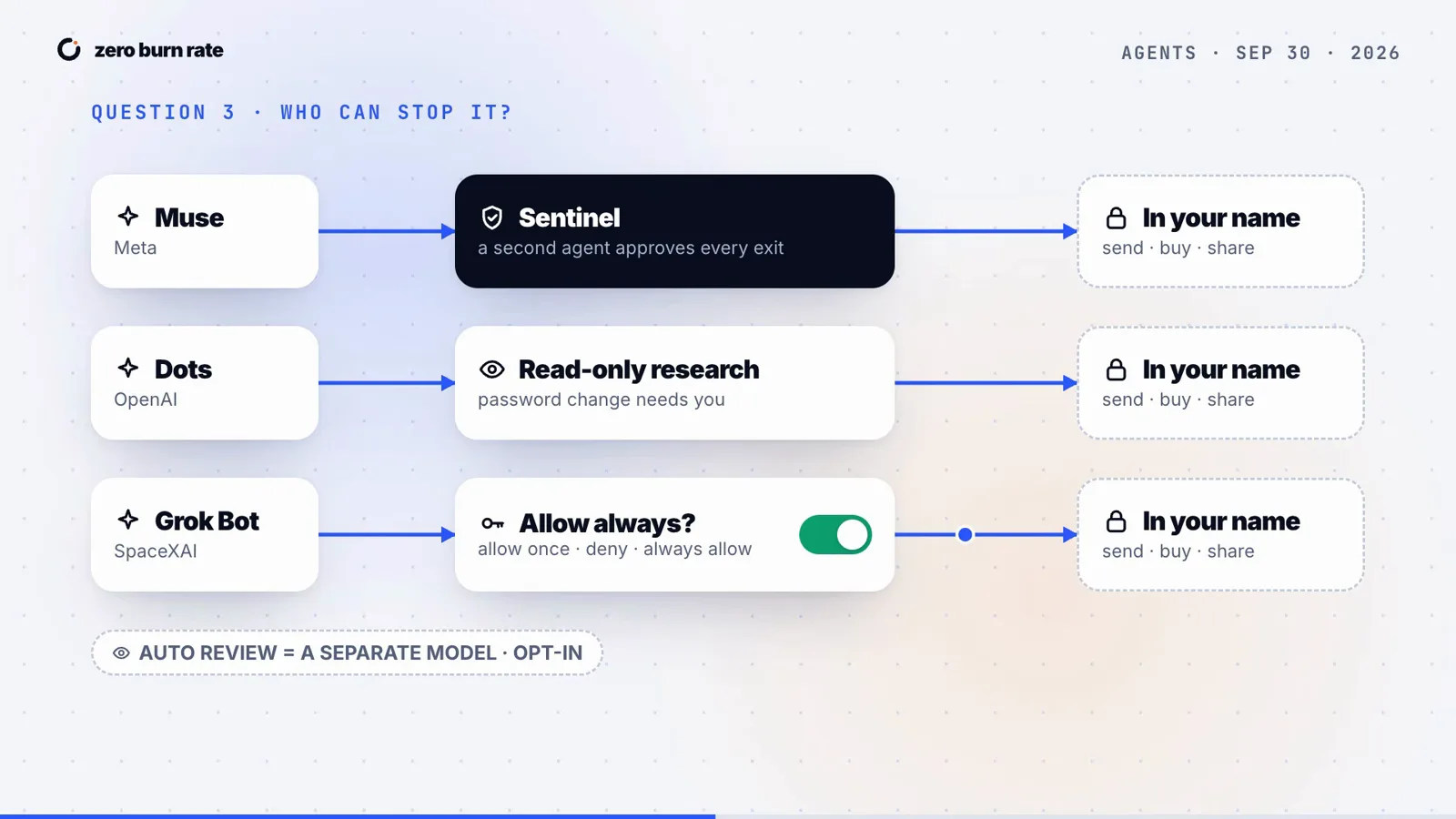
Every safeguard still ends with your finger on the allow button.Watch at 2:30
Reviewers' tables, not this page's verdict
- 15
Zero Burn Rate's table: Muse 3, Dots 1, Grok Bot 1
Zero Burn Rate scores all three agents across six categories and prints the caveat on the table itself: a scoreboard is not a verdict. Their read gives Muse strongest safety design on paper, cheapest start and best for personal life; Grok Bot takes smoothest today; Dots takes best in ChatGPT and Slack plus roughest launch. They did not test the agents - their own label for the table is editorial judgment.
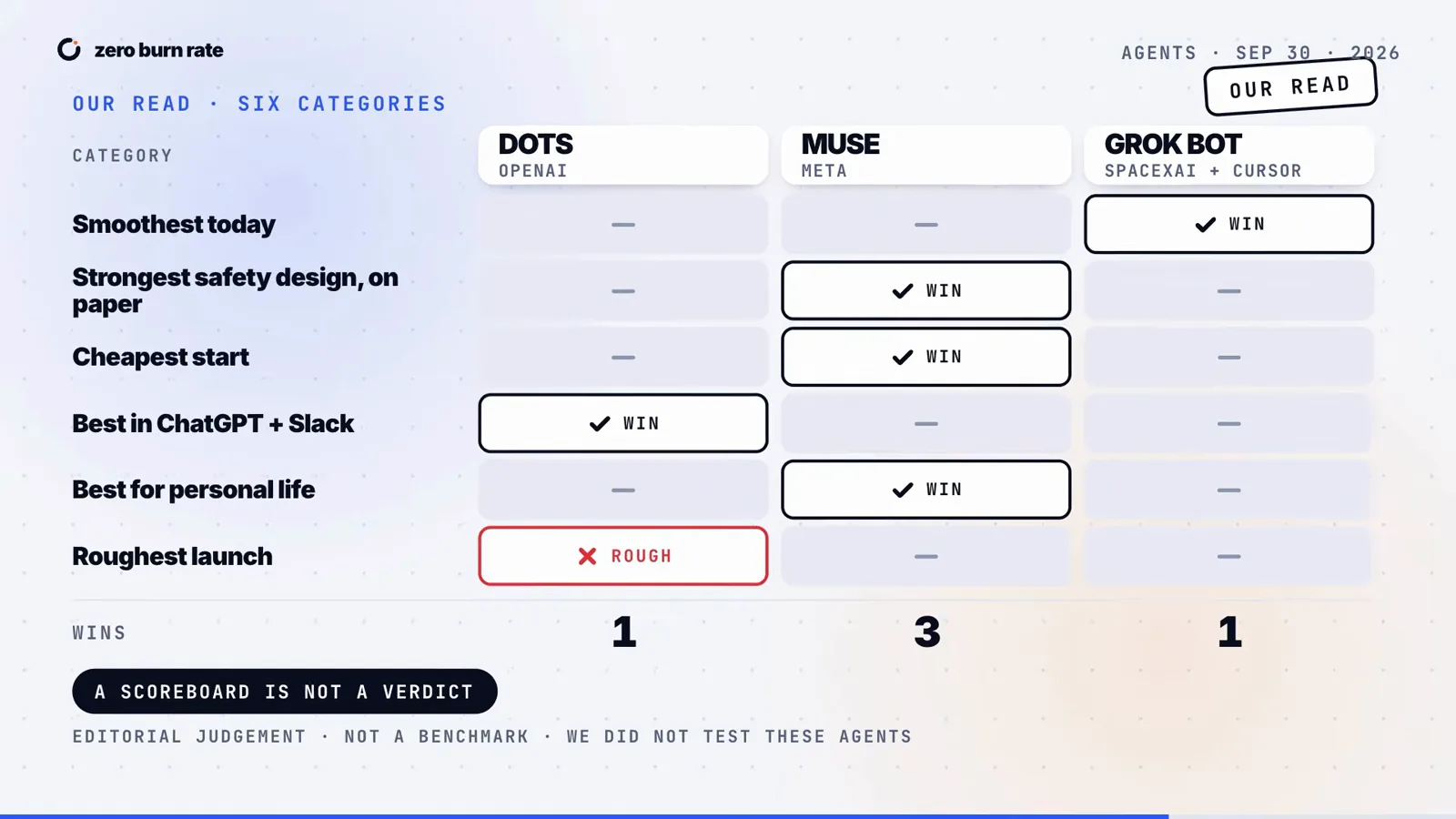
Zero Burn Rate's table: feelings in a grid, not a verdict.Watch at 4:05 - 16
Borrow James's split, then test your own week
Asked to pick, James splits by person, not by product: Grok Bot for creators and business operators running recurring specialist jobs, especially people already in Cursor; Meta Muse for everyday life, planning, budget testers and anyone who wants one assistant holding their personal context. He also notes Grok Bot's October 2026 router pivot is still settling - worth re-checking prices and behavior before you commit either way.
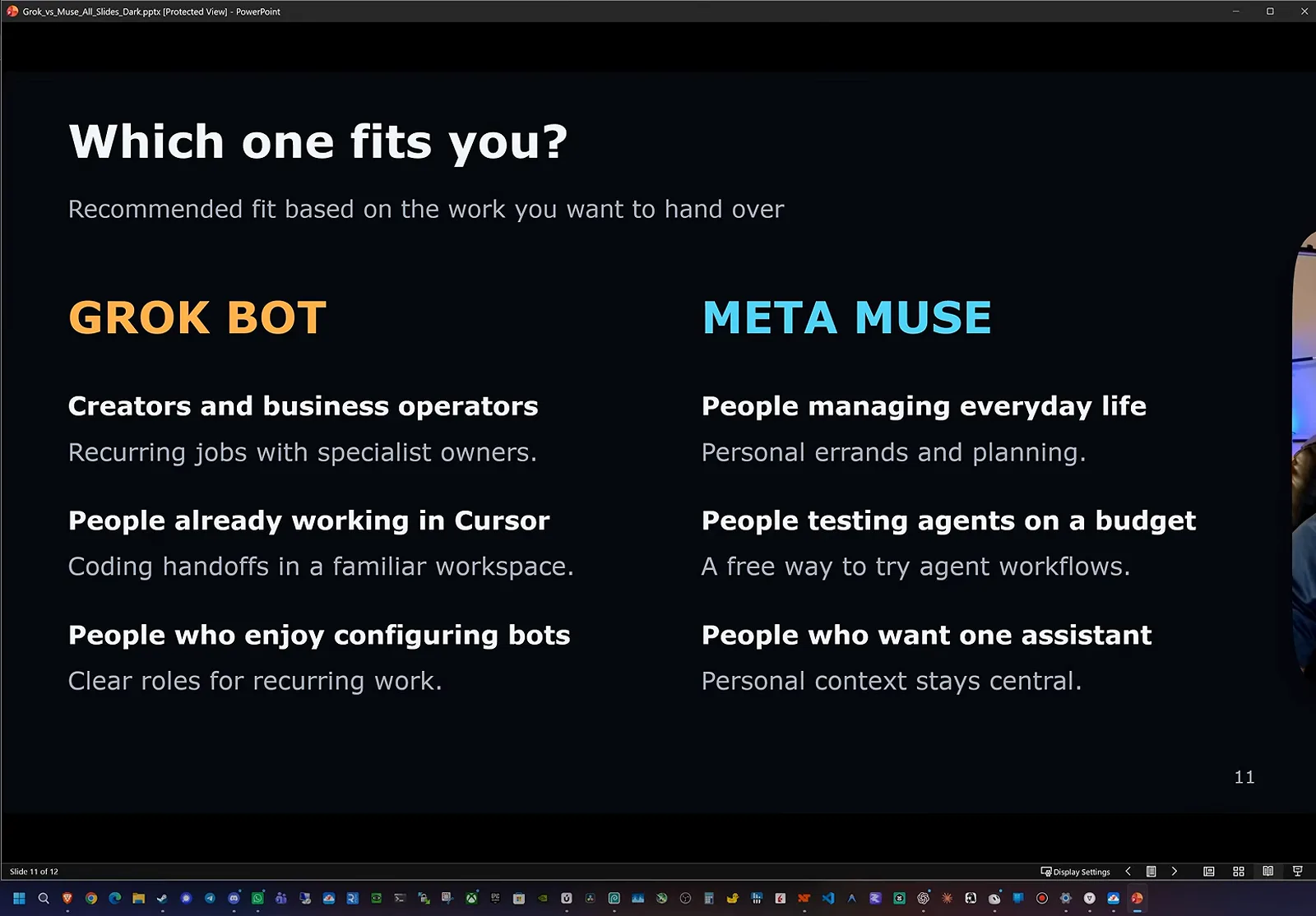
James Layne's parting card - his split, not this page's.Watch at 40:46
Frequently asked questions
Keep exploring
- Grok Bot tool page: prices, access paths and current model setup
- Meta Muse tool page: platforms, free tier and requirements
- Meta Muse tips: setups worth stealing before you pay for anything
- Meta Muse vs Hermes Agent: the closed-cloud vs self-hosted axis
- Grok Bot tips: settings and workflows worth knowing before you commit
- Grok Bot measured against Google's Gemini Spark