

How to Use Claude Haiku 5.5 in 2026: Cheap, Fast, and Ready for Subagent Duty
Claude Haiku 5.5 is Anthropic's new small model, announced October 7, 2026 as the cheapest, fastest, and most capable small model the company has shipped - $0.10/$0.50 per million tokens under a 100k-token prompt, a 1M-token context window, and the first adjustable effort dial in the Haiku line. This page walks you through actually using it: finding claude-haiku-5-5 in the Claude Platform, running it in Claude Code, reading the two-tier pricing, and seeing what it builds on day one. Every frame is checked against three launch-week videos - WorldofAI's fully-tested review is the primary frame source, Bijan Bowen's stress-test supplies the Claude Code and usage-panel shots, and Universe of AI's critical take anchors the caveats. Verdicts stay attributed to the reviewer who made them, and prices move, so treat Anthropic's pricing page as the final word.
Source & credits
Screenshots in this guide are captured from WorldofAI's public walkthrough video. Every step links back to the exact moment it shows, so you can follow along.
WorldofAI ↗Meet Claude Haiku 5.5
- 1
Open the announcement page
Anthropic announced Claude Haiku 5.5 on October 7, 2026, and the model page opens on the headline claim: the cheapest, fastest, and most capable small model the team has shipped. Note the model ID printed under the contents list - claude-haiku-5-5 - because you will reuse it in API calls later. The page's own table of contents runs Performance, Prompting, Pricing, which is a fair list of what to check before you build.
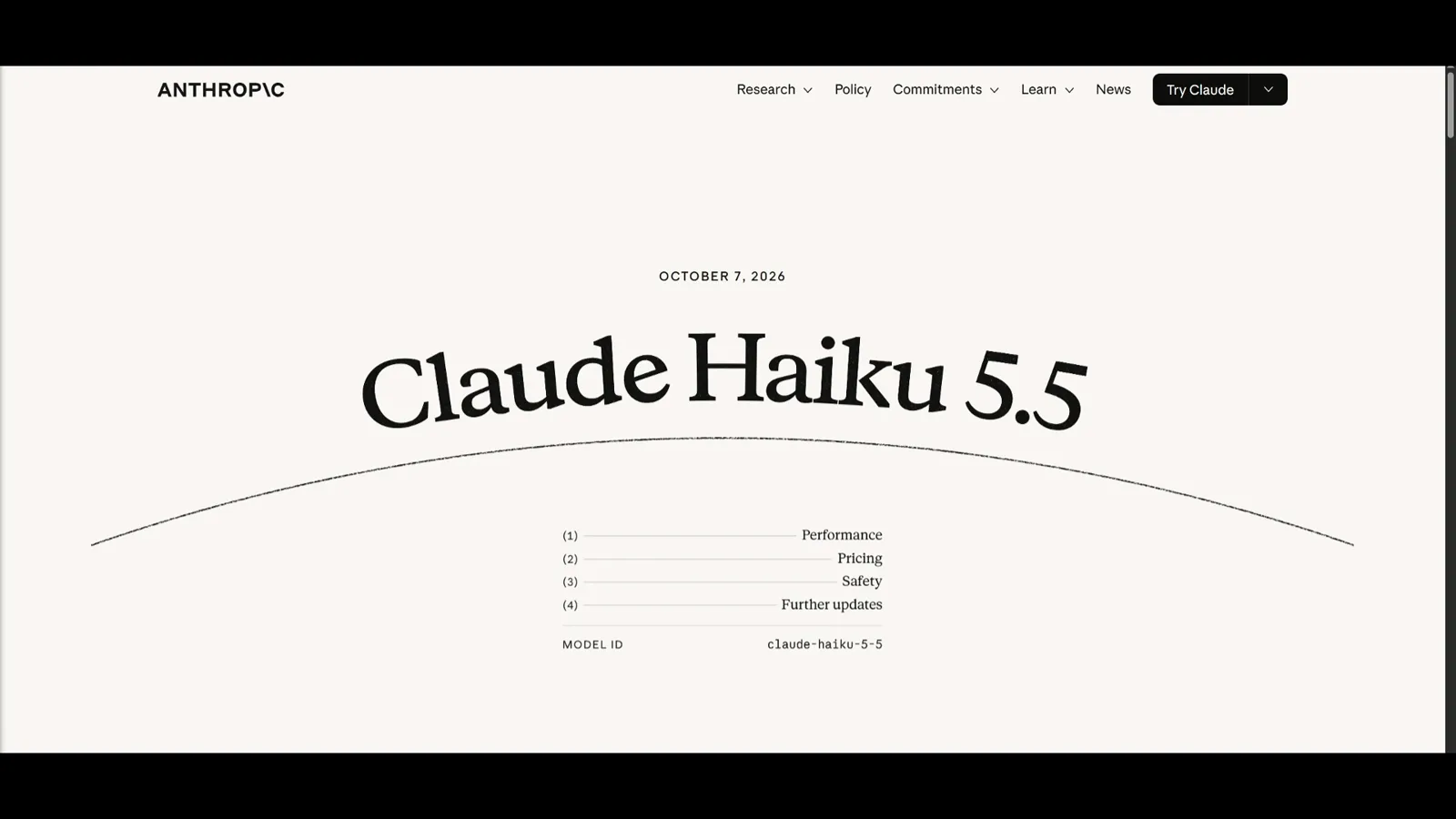
Released October 7, 2026 - model ID claude-haiku-5-5, with an official Prompting section in the docs.Watch at 17:24 - 2
Read the benchmark jump
The @claudeai launch post bills Haiku 5.5 as "a significant step up over Haiku 4.5 across coding, computer use, and knowledge work," and the table backs it: OSWorld 2.1 computer use leaps from 15.7% to 72.4%, Humanity's Last Exam climbs from 10.2% to 45.9% without tools and 57.4% with them, and Terminal-Bench 4.0 agentic coding lands at 39.2% where Haiku 4.5 scored zero. The same table shows GPT-6 Luna at 16.4% on Terminal-Bench, which is why reviewers keep pairing the two models.
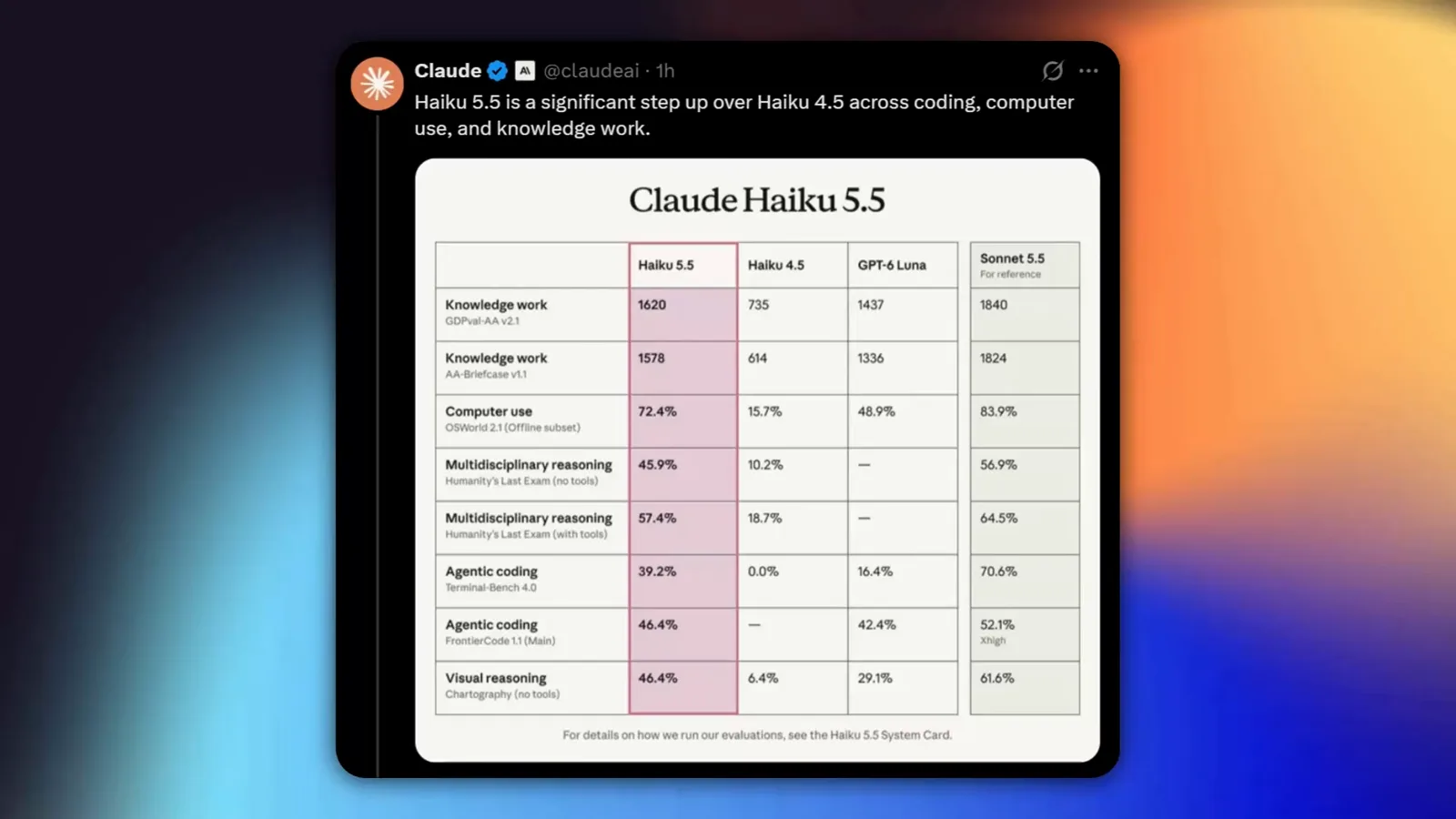
72.4% OSWorld, 45.9%/57.4% HLE, 39.2% Terminal-Bench - the numbers behind "significant step up."Watch at 2:32 - 3
Meet the effort dial
Haiku 5.5 is the first Haiku shipped with an adjustable effort setting, so the same model can run cheap-and-fast or slower-and-smarter. The launch post's chart plots real-world knowledge tasks by effort level against cost per task: each step up from Low toward Max buys visibly more score. Leave it low for routine jobs; raise it exactly when a task gets tricky.
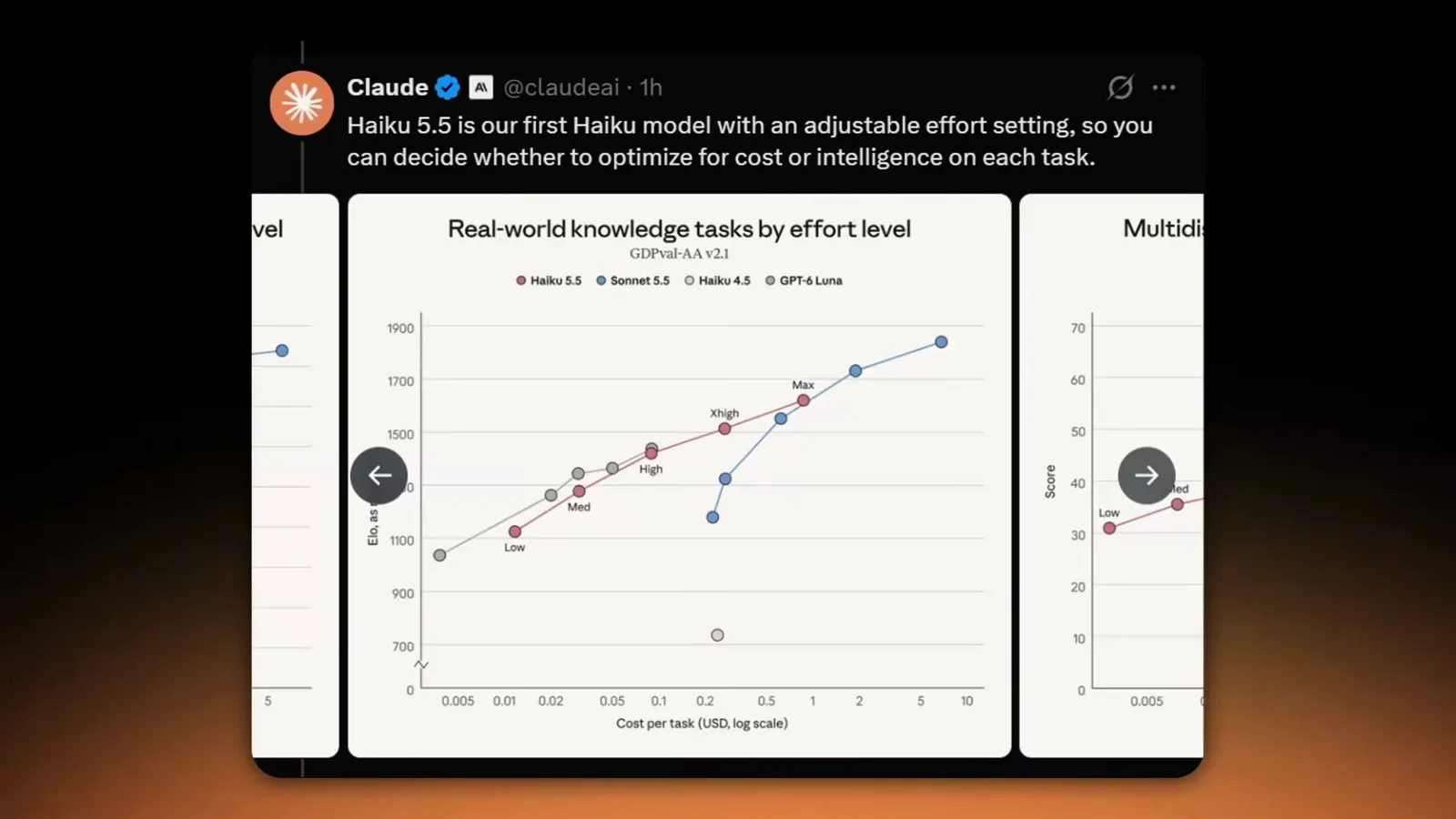
First Haiku with adjustable effort - score scales with what you spend per task.Watch at 2:50
Where to run it
- 4
Find it in the Claude Platform
In the Claude Platform, the Haiku 5.5 card puts everything on one screen: the claude-haiku-5-5 ID with a copy button, a "Try in playground" shortcut, and the full price and feature list - $0.10 input and $0.50 output per million tokens, 1M-token context, 128K max output, June 2026 knowledge cutoff, adaptive thinking enabled. Click "Try in playground" to send your first prompt without writing a line of code.
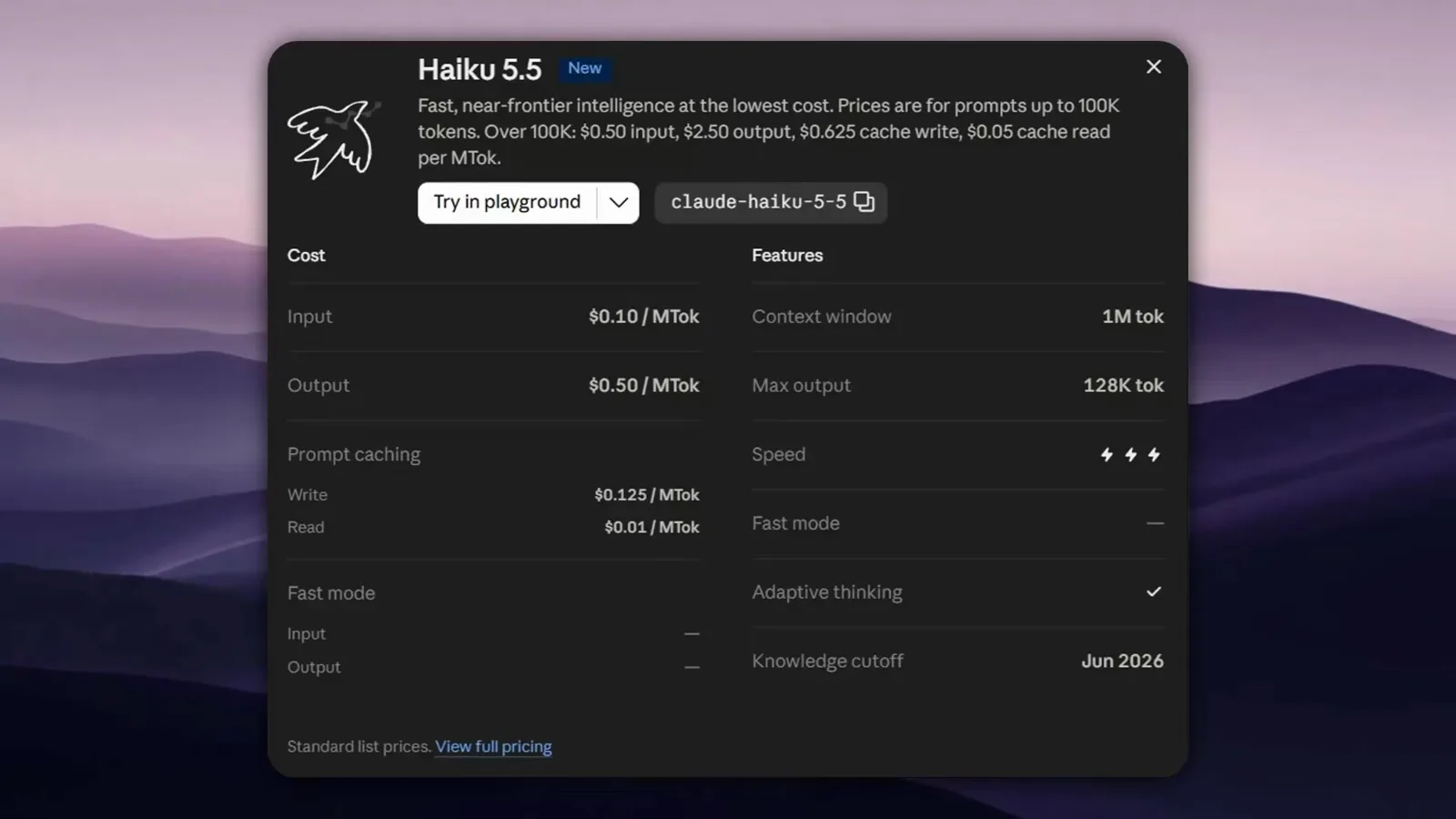
One card, everything you need: ID, playground button, prices, and limits.Watch at 4:10 - 5
Switch your Claude Code to it
Claude Code is where this model is meant to earn its keep, and the launch post confirms it was available there on day one. In the walkthrough the reviewer is mid-session in a Claude Code terminal, handing over a reference photo and asking for visual fixes to a C++ skateboarding game, while the trace shows Haiku 5.5 reading files and thinking at max effort. Point your existing Claude Code setup at Haiku 5.5 like any other model and watch the trace run cheap.
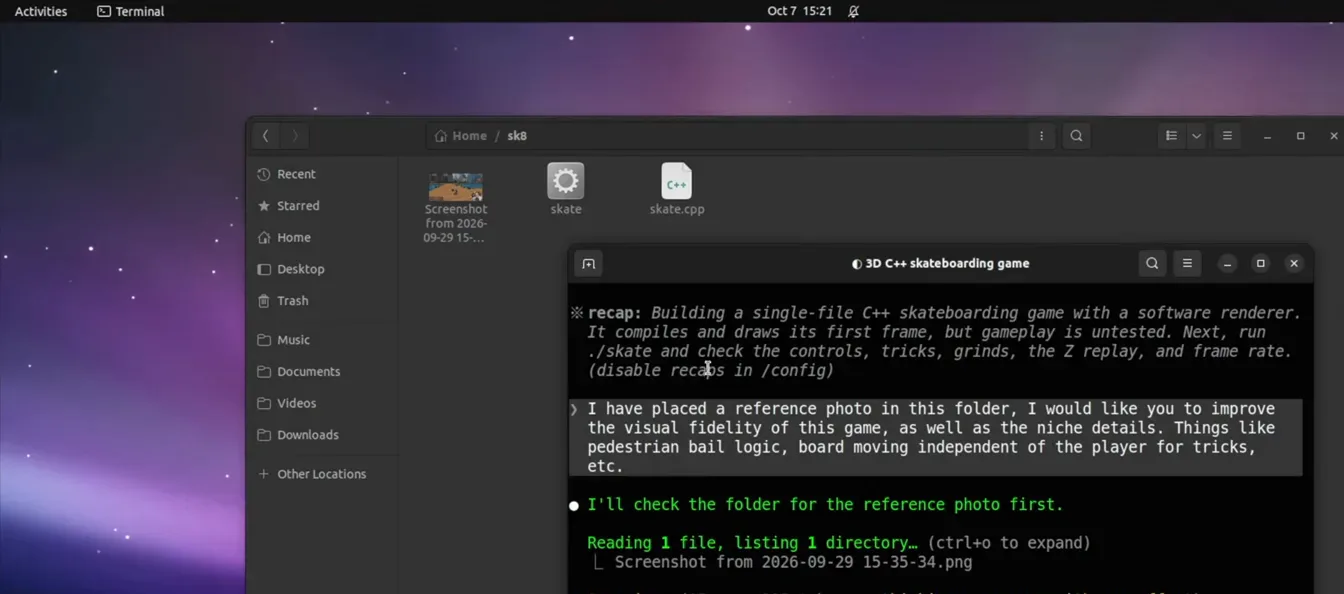
A live Claude Code trace: reference photo in, file reads and max-effort thinking out.Watch at 11:00 - 6
Test-drive it for free
If you would rather compare before committing, third-party platforms host Haiku 5.5 too. The walkthrough's demo itself ran on World of AI Bench, a free vibe-coding benchmark offering 81+ frontier models with hands-on prompts and AI-judged scores. Send the same prompt to Haiku 5.5 and a rival, then read the difference yourself instead of trusting a thumbnail.
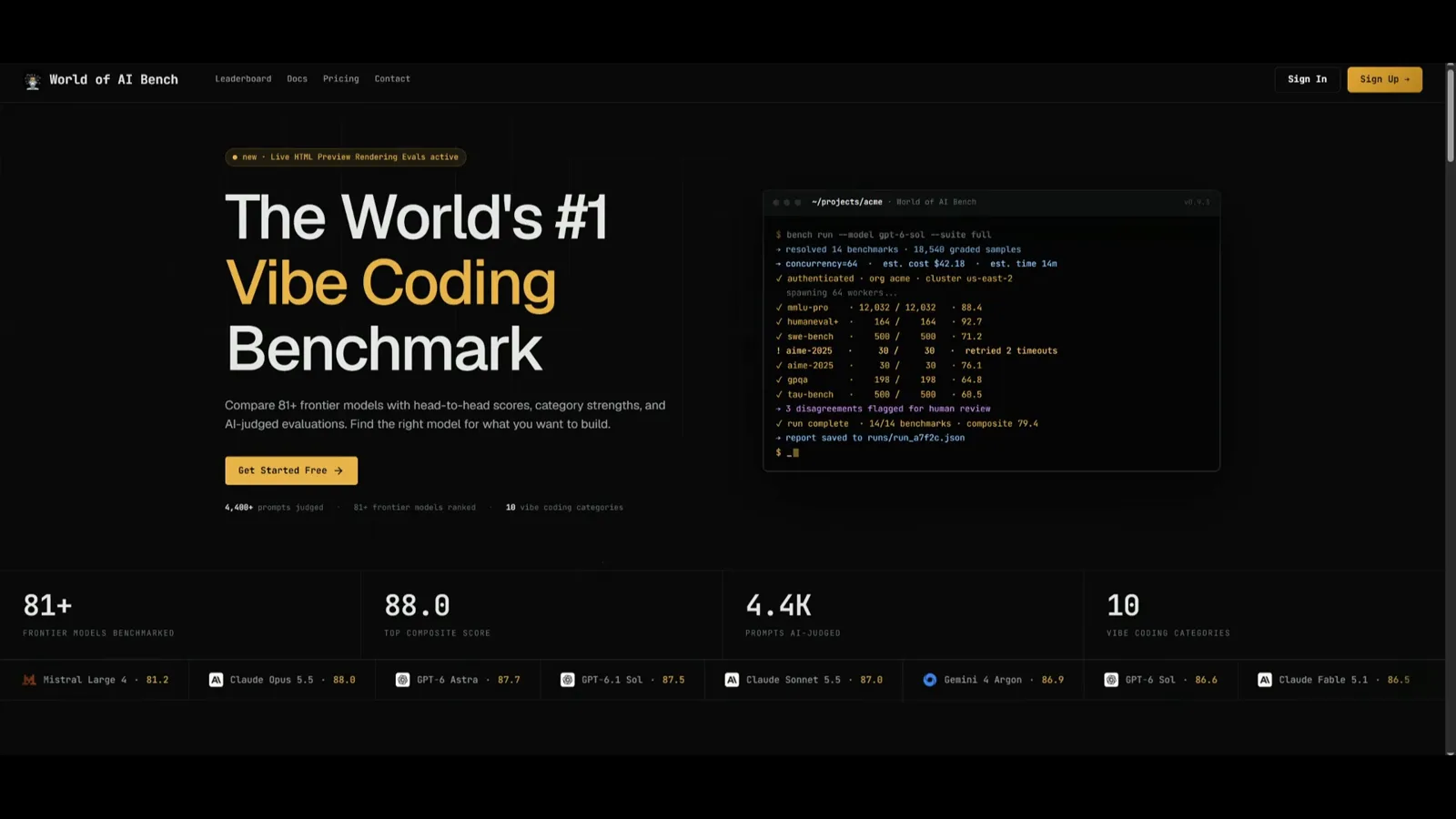
81+ models, hands-on prompts, AI-judged scores - a free proving ground.Watch at 8:20
Pricing, specs, and limits
- 7
Check the official docs page
The Claude Platform docs describe Haiku 5.5 as built for "high-volume, latency-sensitive work such as classification, routing, extraction, and subagent tasks," and the spec row confirms 1M context, 128K output, and From $0.10/$0.50 pricing. The overview adds a saving all by itself: the new tokenizer counts the same text as roughly 30% fewer tokens than Haiku 4.5. The same page links Anthropic's prompting guide for when you start tuning prompts.
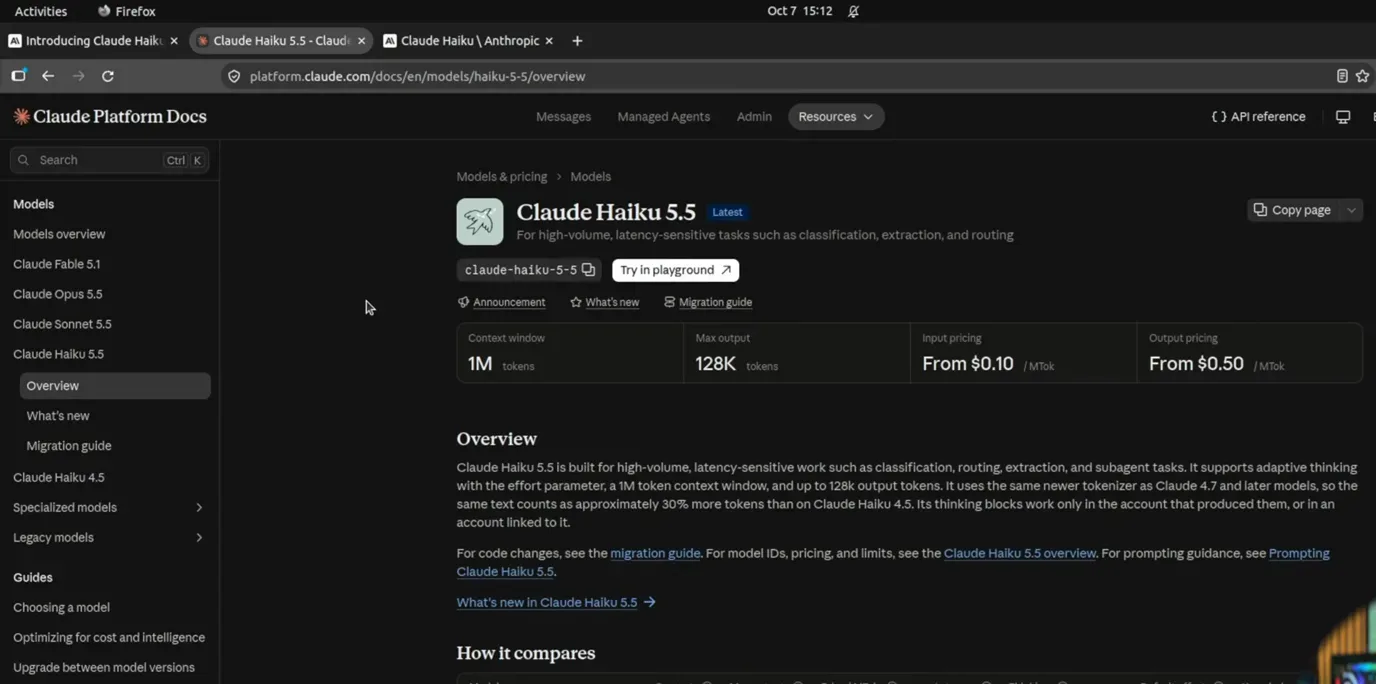
Docs confirm the specs - and note the new tokenizer counts ~30% fewer tokens.Watch at 3:35 - 8
Learn the two-tier pricing
Pricing splits at 100,000 prompt tokens: below the line you pay $0.10 per million input and $0.50 per million output; above it the rates rise to $0.50 and $2.50. Anthropic's post notes about 90% of requests to the previous Haiku stayed under the threshold, so most workloads never leave the cheap tier. Next to the table's own columns, Sonnet 5.5 lists at $2/$10 and Haiku 4.5 at $1/$5 - which is how the top tier still comes out at about a quarter of Sonnet's price.
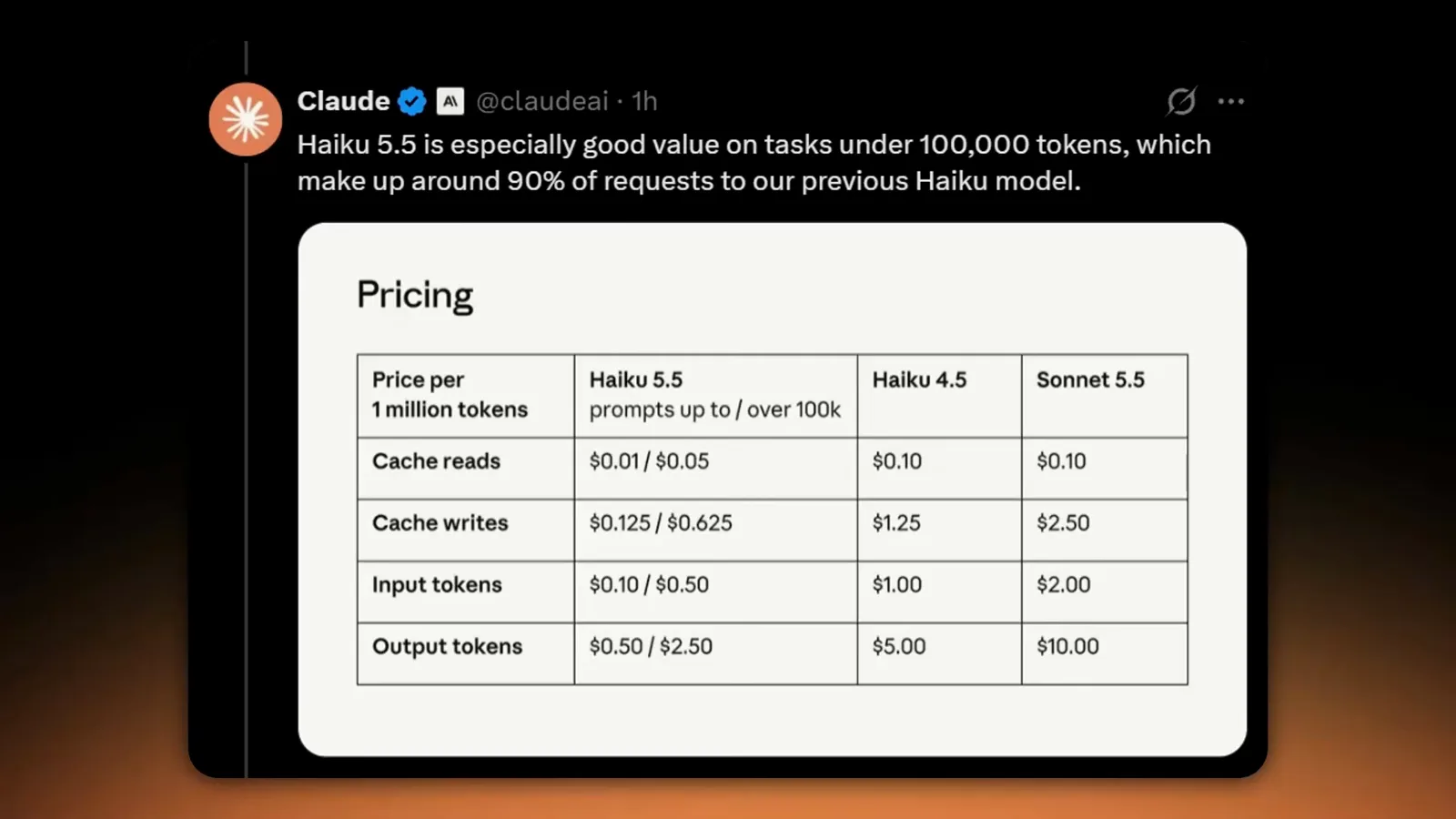
Two tiers split at 100k prompt tokens - and ~90% of Haiku requests never cross it.Watch at 5:30 - 9
Watch the subscription meter
On a subscription the cost you feel is usage limits, not tokens, and the settings panel shows exactly where you stand: current session, this week, and any 5-hour resets. Bijan Bowen ran roughly ten builds in one sitting and burned about 1% of his weekly Max-plan allowance - the cheap tier stretches a subscription a long way. Check the Usage page before a long batch so you know your real headroom.
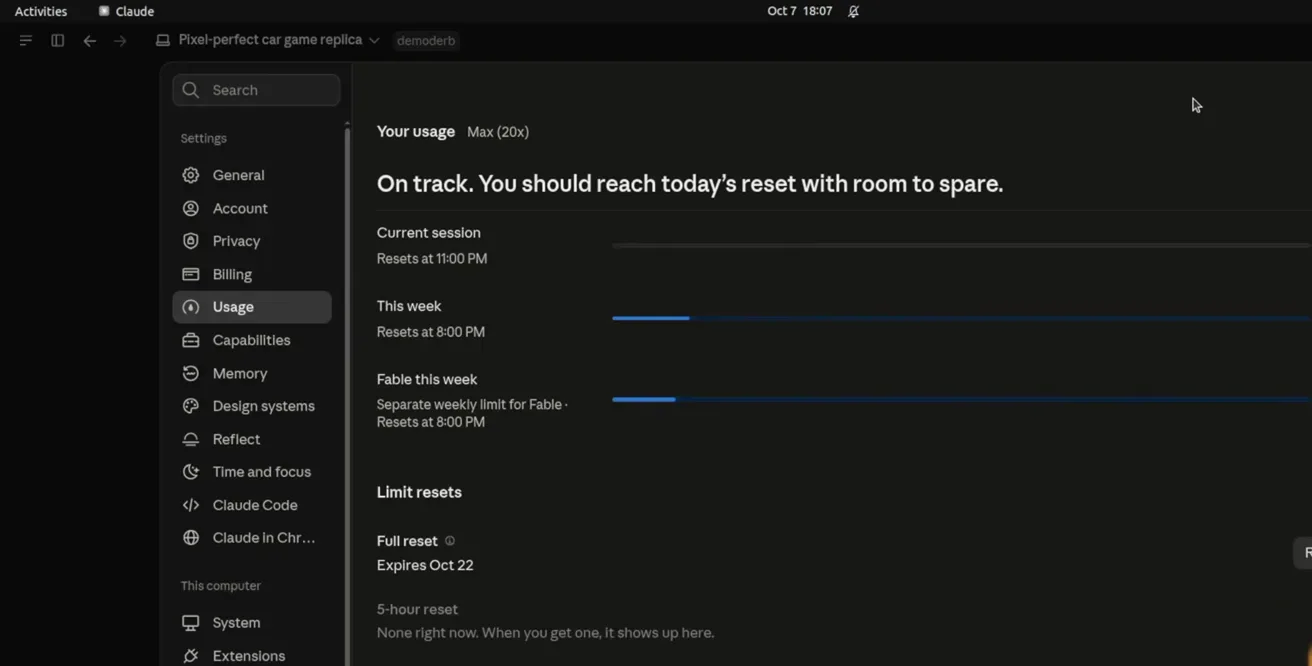
~10 heavy builds cost about 1% of a weekly Max allowance in one reviewer's run.Watch at 28:20
First builds worth copying
- 10
Send one ambitious prompt
For the walkthrough's signature demo, the reviewer asks Haiku 5.5 - in Ultracode mode on the benchmark platform - for a Call of Duty Zombies-style clone in Three.js. The artifact panel comes back with a playable prototype: night courtyard, flashlight in hand, a points HUD, and a written plan about death routes and door reroutes. One ambitious prompt in, one playable result out, is exactly the right first test for a new model.
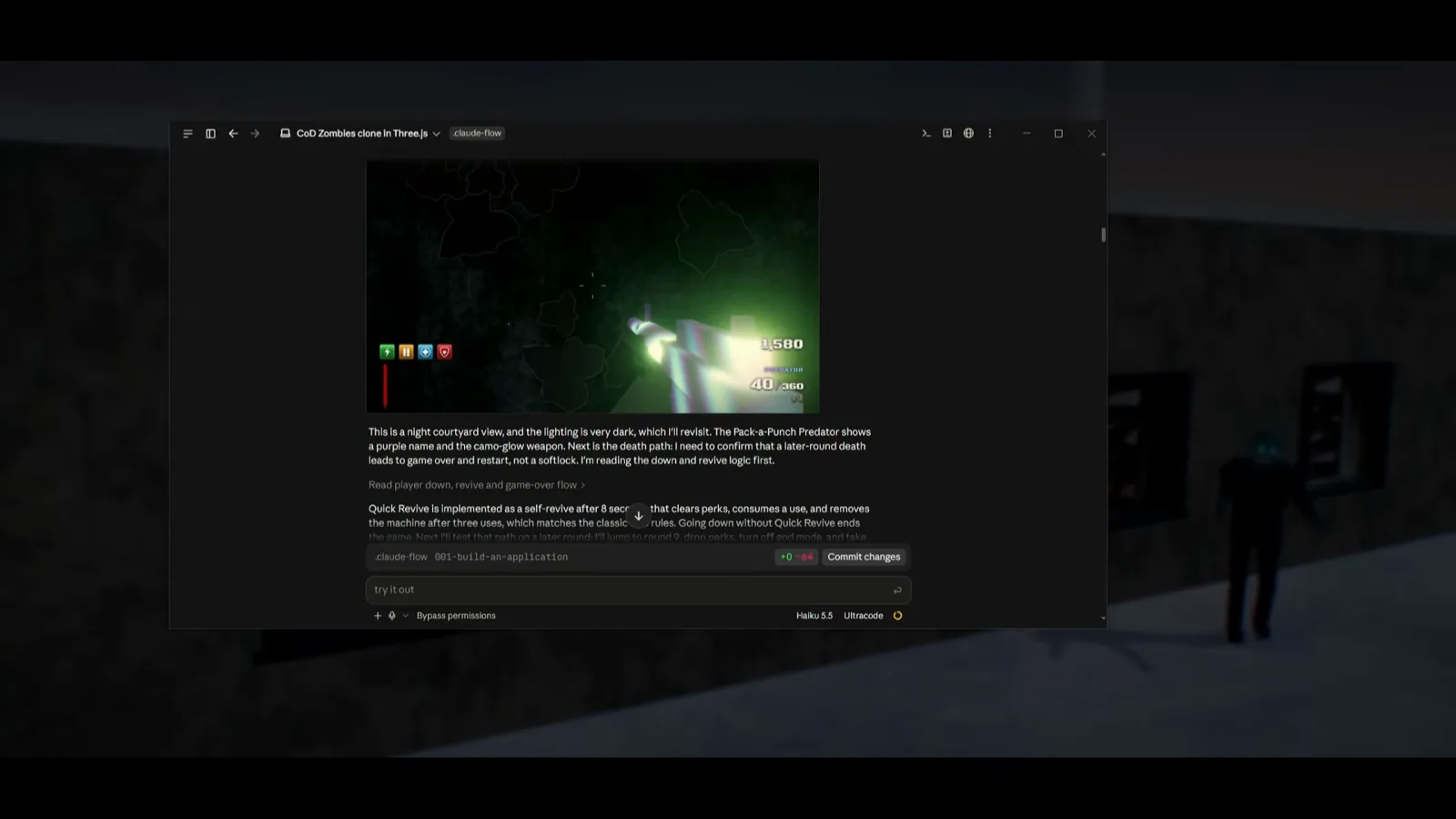
Ultracode mode, one prompt, and a zombies clone you can actually walk around in.Watch at 8:27 - 11
Play it and probe the edges
The reviewer then does what you should: play. The generated schoolhouse has boarded doors you can pay points to open, barricades to rebuild, weapons with their own sound effects, even a stamina system - all from the same build. Pushing on the edges of the output is how you find both the strengths and the seams of a small model.
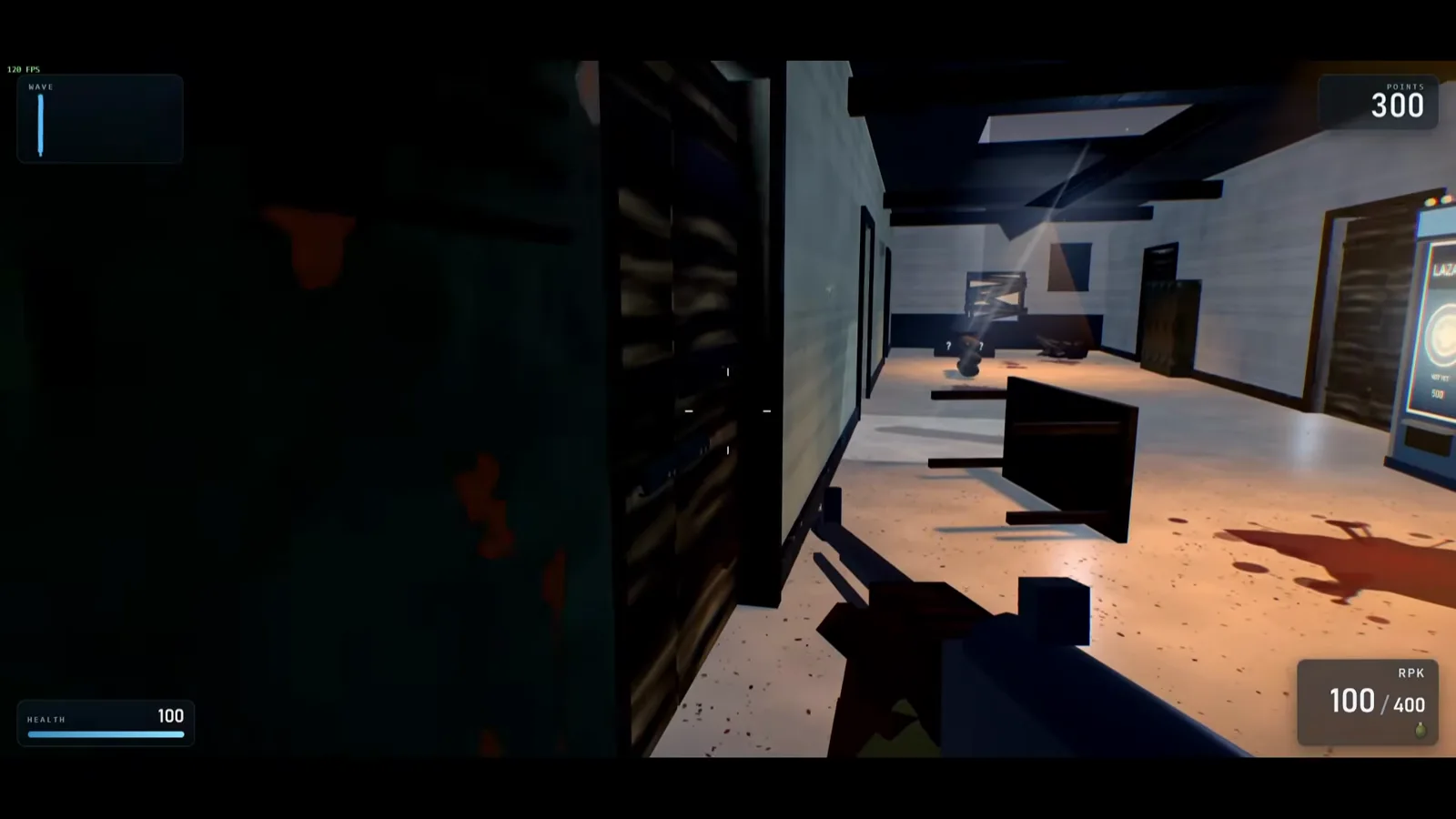
Boarded doors, buy-to-open paths, blood-splattered floors - all from one prompt.Watch at 10:28 - 12
Ask for polished frontend
Frontend is where reviewers say Haiku 5.5 punches highest, so make your second test an interface. The demo's isometric room, titled "Hearth & Haven," layers warm textures, golden-hour lighting, and animated details like drifting dust motes, a candle flicker, and a swaying plant. Generation speed stays high while the price stays at the bottom of the Anthropic lineup.

An isometric room with living details - the demo's pick for Haiku's best surface.Watch at 12:32 - 13
Push beyond code
The same reviewer credits Haiku 5.5 with respectable motion design: the showreel frame renders a perspective checkerboard animation complete with orbit and easing specs, and the narration says it finished in about 15 minutes where bigger models would take over 40. If your work touches animation at all, hand the model a motion brief, not just a coding one.
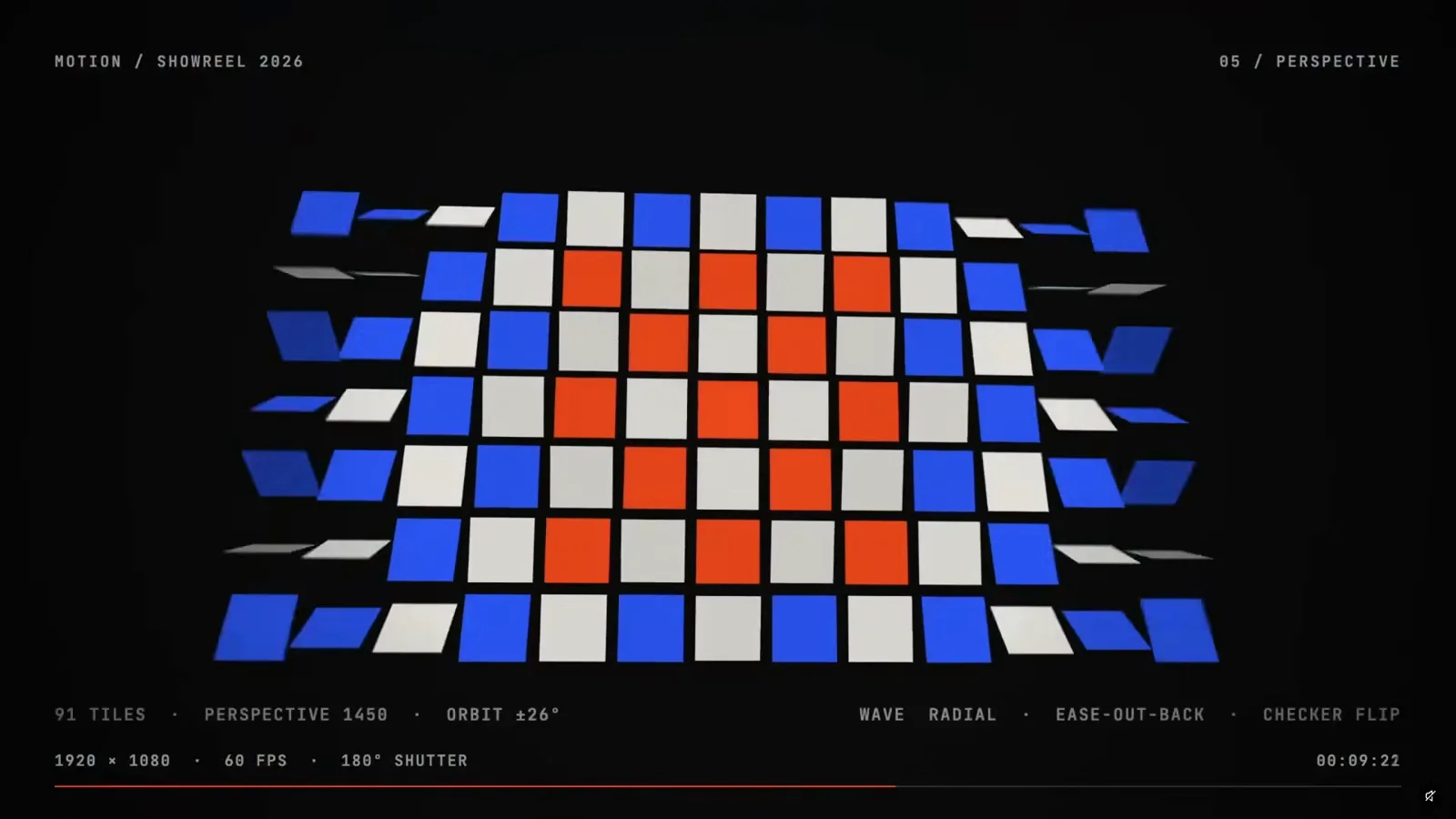
A checkerboard showreel with orbit and easing specs - done in ~15 minutes.Watch at 17:15
Haiku 5.5 vs the rest
- 14
Pair it with Opus as a subagent
Anthropic's launch post recommends running Haiku 5.5 as a subagent under Opus 5.5 or Sonnet 5.5 and shows an egg-drop test: Opus alone finished in 1:05 with 10 designs tried for $0.17, while Opus plus ten Haiku 5.5 subagents tried 86 designs in 0:58 for $0.14. The orchestrator keeps the brains; the cheap model does the legwork. That is the job this model was built for.
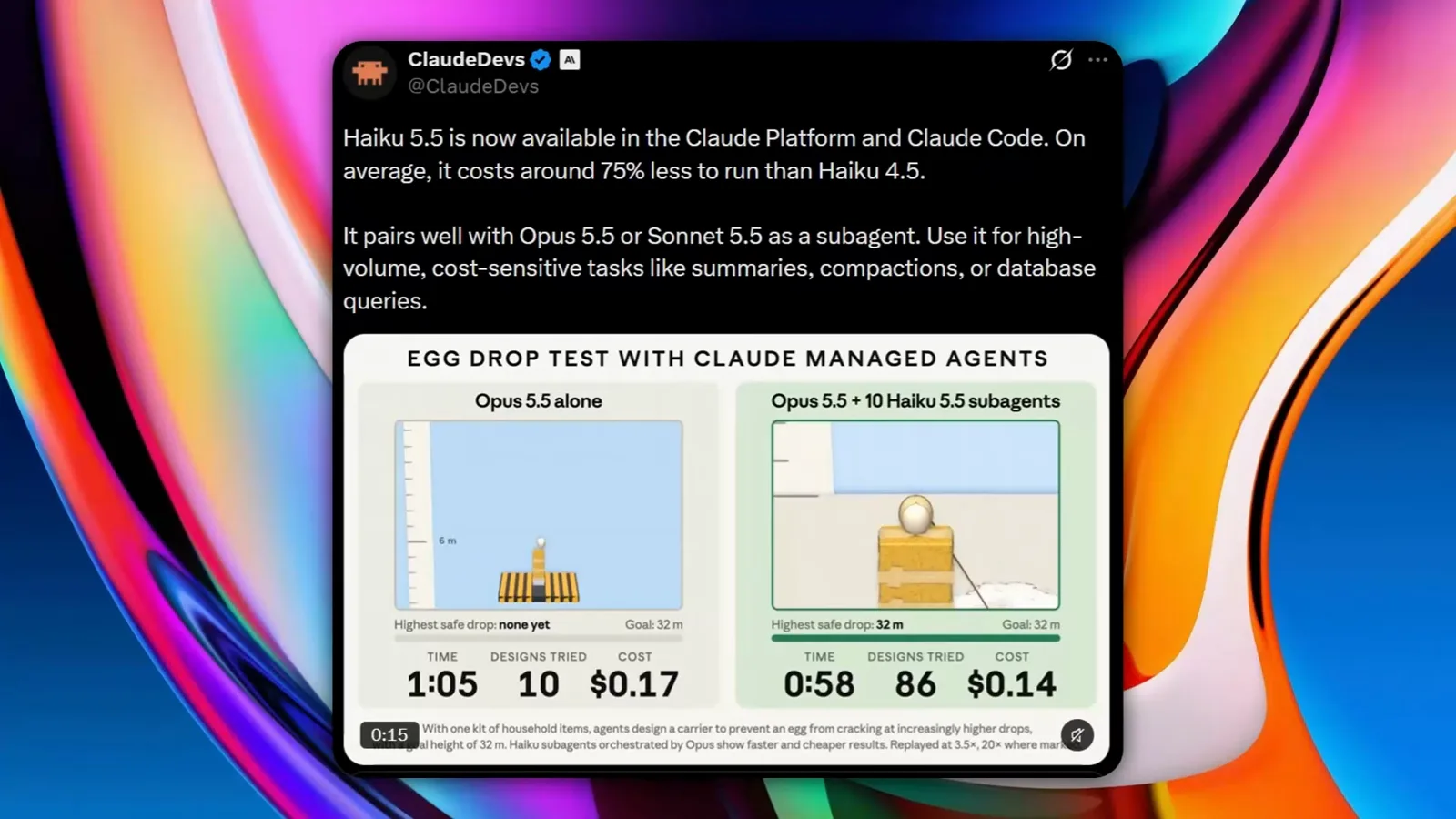
More designs, less time, lower bill - subagents are the intended use.Watch at 1:25 - 15
Weigh it against the rivals
A widely shared launch-week test ran Haiku 5.5 and Grok 4.7 on the same prompt at their highest reasoning: Haiku finished in 27 minutes at about $0.80 in Claude Code, while Grok needed 35 minutes and about $4.10 in its own build tool - roughly five times the cost. The poster still calls quality a close call, so run the same prompt on both before you switch any workflow over.
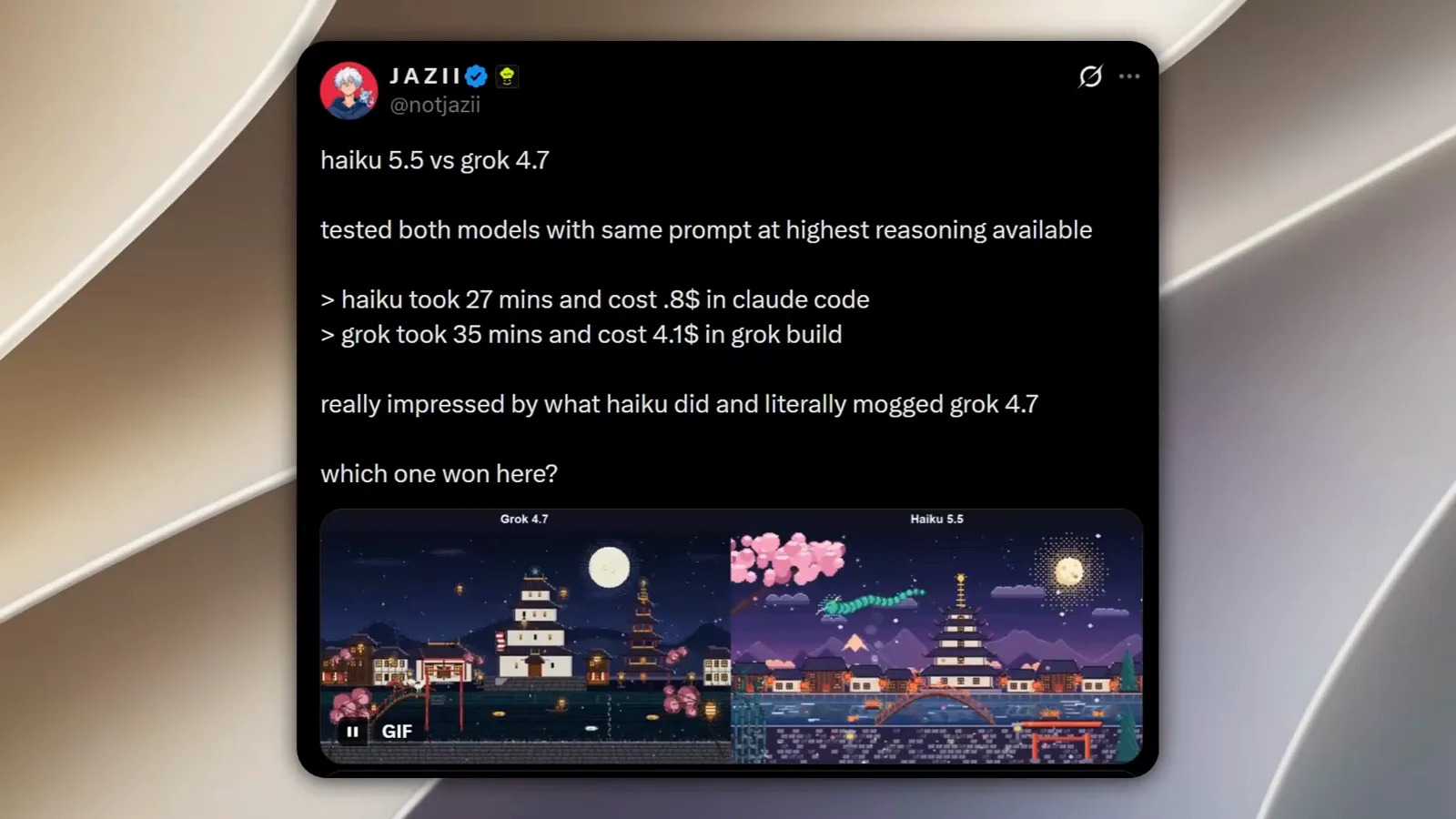
Same prompt: 27 min for ~$0.80 vs 35 min for ~$4.10 - speed and cost both Haiku's way.Watch at 15:05 - 16
Mind the token bill at Max
Cheap tokens are not the same as cheap tasks. Artificial Analysis measured Haiku 5.5 at Max effort using about 162k output tokens per Intelligence Index task - more than Opus 5.5 and roughly three times GPT-6 Luna - and one launch-week user reported a voxel-island generation costing about $25 on Haiku versus under $2 on Luna after crossing the 100k tier. Save Max for hard problems, let Low handle the routine, or the per-token bargain quietly evaporates.
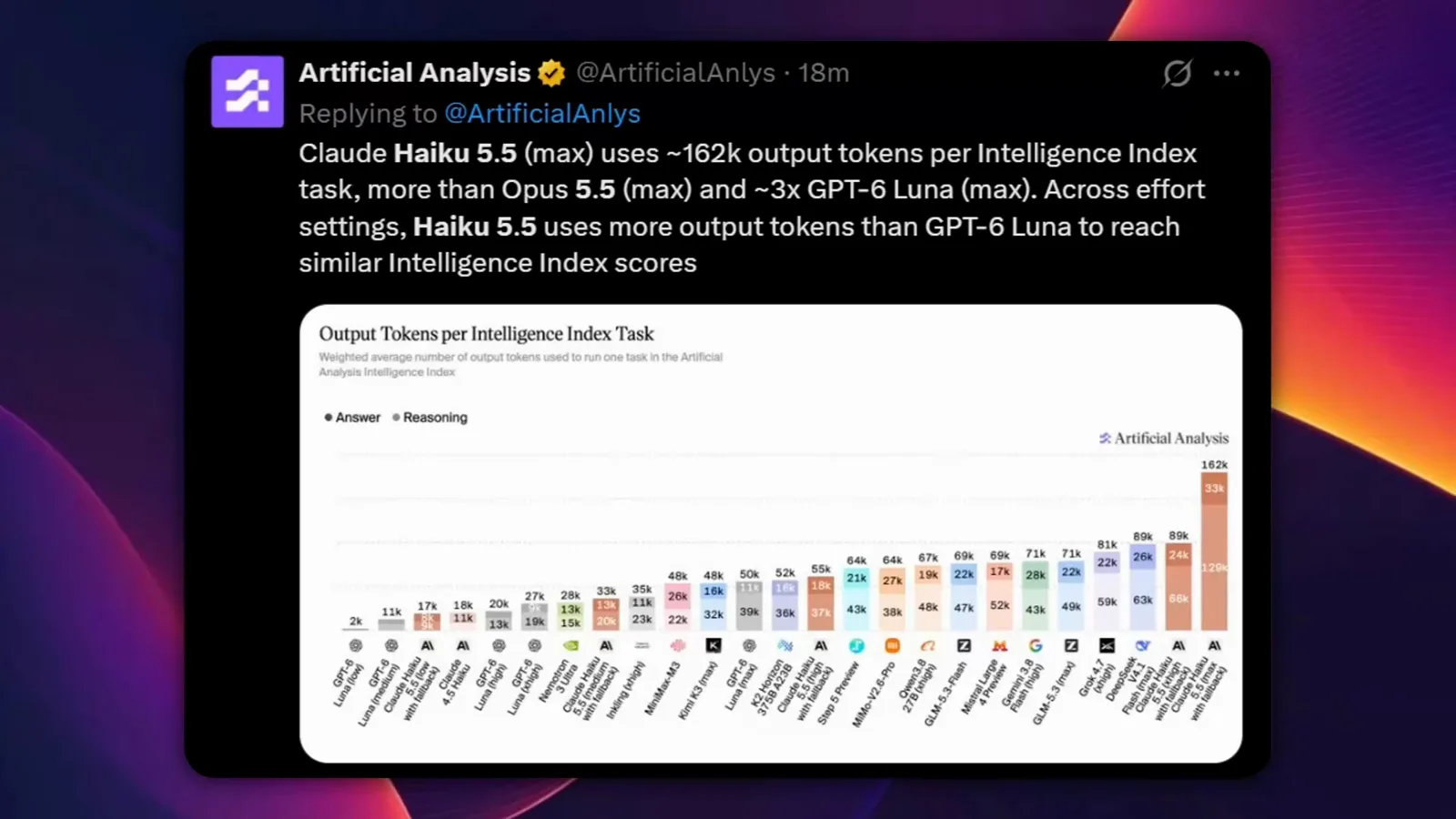
~162k output tokens per task at Max - cheap rates, thirsty model.Watch at 6:25