

How to Use Claude Fable 5.1: Save It for the Hardest, Longest Jobs
Claude Fable 5.1 is Anthropic's frontier model for complex reasoning, coding, knowledge work, and long-horizon agentic tasks, and it punishes the habits that worked on older models. This guide follows the hands-on testing by AI LABS on YouTube, with announcement and launch-week frames from Developers Digest and a live dashboard build from Riley Brown. You will learn where Fable 5.1 fits next to Opus 5 and Sonnet, how to prompt it so it finishes whole features on its own, and how to keep it from burning through your weekly limits.
Source & credits
Screenshots in this guide are captured from AI LABS's public walkthrough video. Every step links back to the exact moment it shows, so you can follow along.
AI LABS ↗Know the Model Before You Spend on It
- 1
Start from the official announcement
Fable 5.1 shipped on September 1, 2026 alongside a restricted sibling, Claude Mythos 5.1. The announcement is the best map of the model: it leads with agentic scientific research, coding, knowledge work, and long-horizon tasks — the four areas this guide focuses on. Skim it once so you know what the model claims, then hold every claim against your own work.
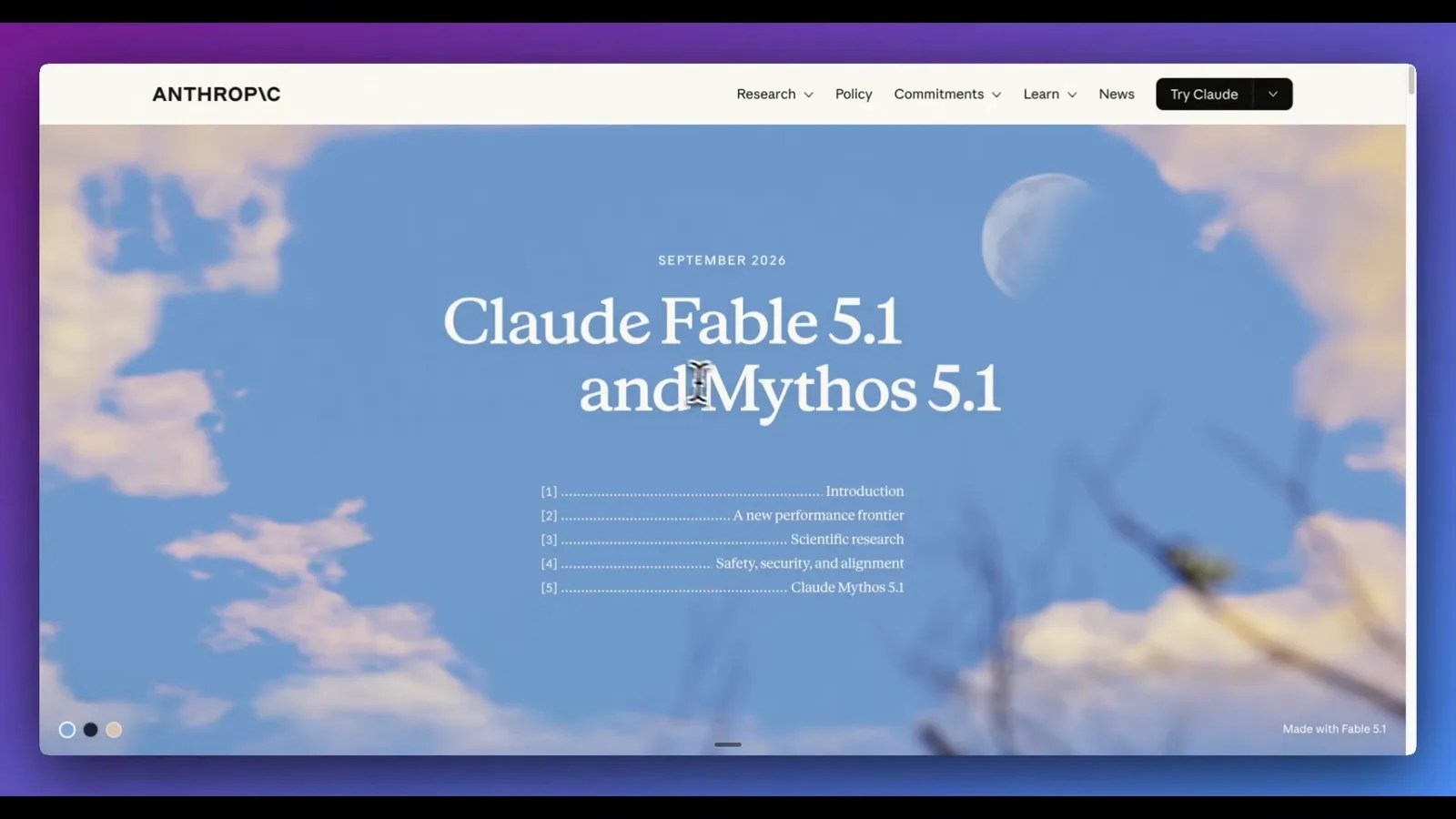
The September 2026 announcement covers benchmarks, safety, and the restricted Mythos 5.1.Watch at 0:22 - 2
Read the benchmarks with a sceptic's eye
Anthropic's own table puts Fable 5.1 at 52.6% on agentic scientific research — more than double Fable 5 — and ahead of Opus 5 and GPT-5.6 Sol on agentic coding, knowledge work, and multidisciplinary reasoning. Benchmark numbers describe a ceiling, not your task. Use them to justify a trial on one genuinely hard project, not to expect frontier output on every prompt.
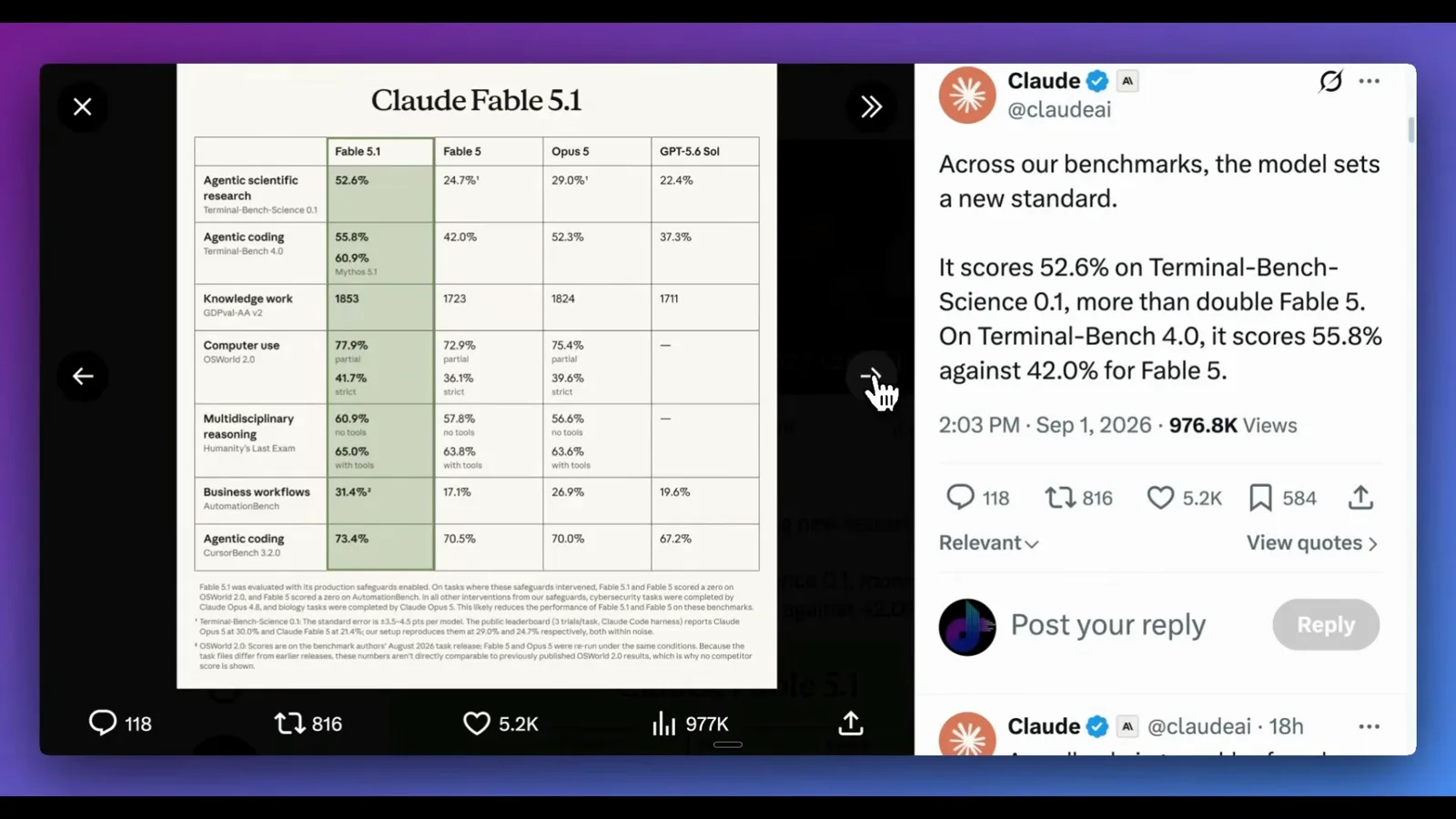
Terminal-Bench, GDPval, and OSWorld scores from Anthropic's launch post.Watch at 0:40 - 3
Expect fewer refusals than Fable 5
Boris Cherny, who leads Claude Code at Anthropic, reported that Fable 5.1's biology safeguards intervene on benign requests 85% less often than Fable 5's, and that Claude Code sessions should see around 60% fewer cyber interruptions. In practice, prompts that merely brush against security-adjacent words no longer shut a task down mid-run. Guardrails still exist, though — the next sections show how to work around the residual ones.
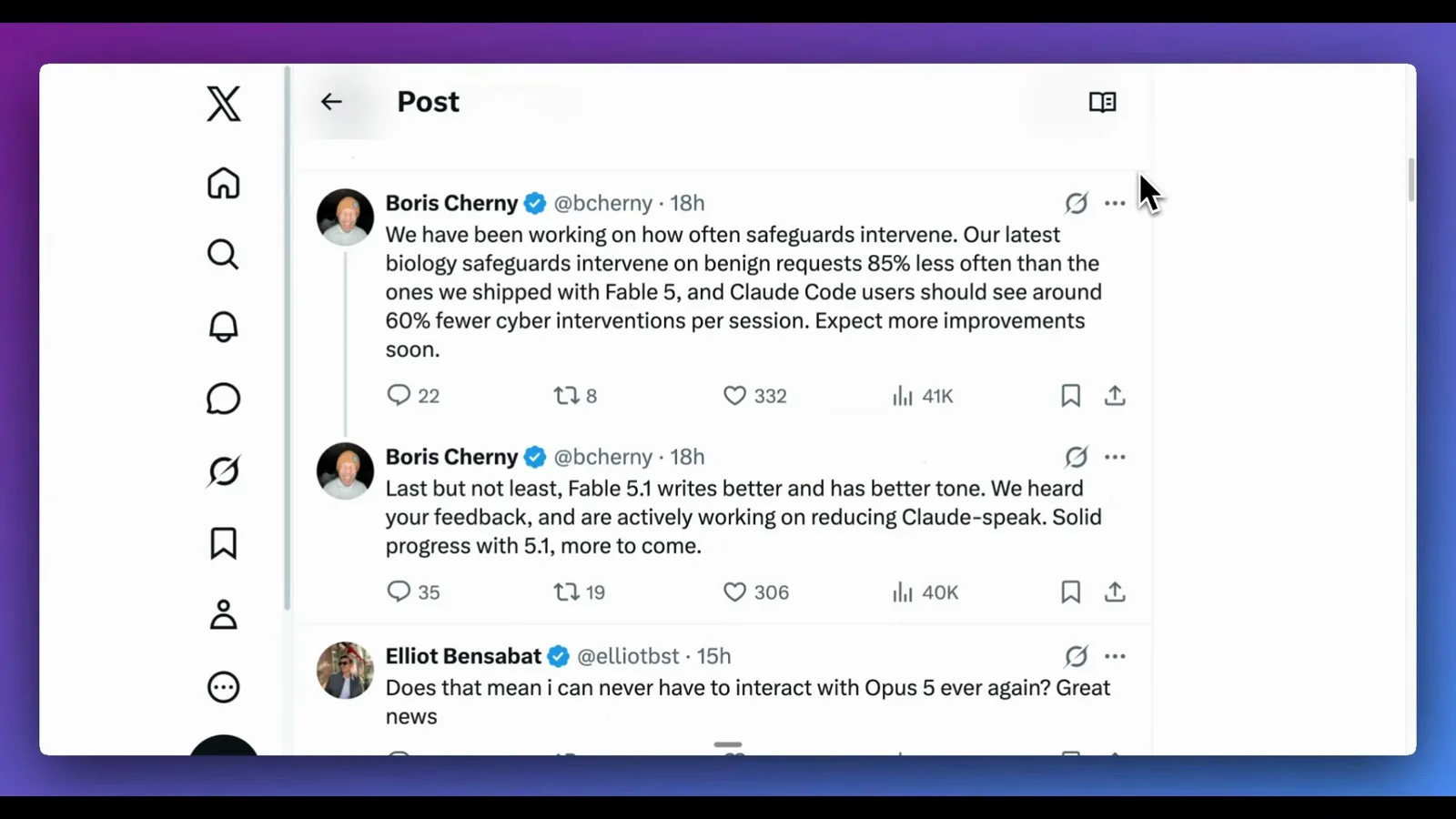
Anthropic on the safety changes in Fable 5.1 versus Fable 5.Watch at 6:30
Switch It On and Put Guards on Your Budget
- 4
Set effort before you set expectations
In Claude Code, type /effort and choose from low, medium, high, xhigh, max, and ultracode — a slider from faster to smarter. AI LABS measured Fable 5.1 catching 61% of code-review problems on low effort versus 57.1% on high, and finishing about three minutes faster. Start every new task on low effort and only climb when a result earns the extra tokens.
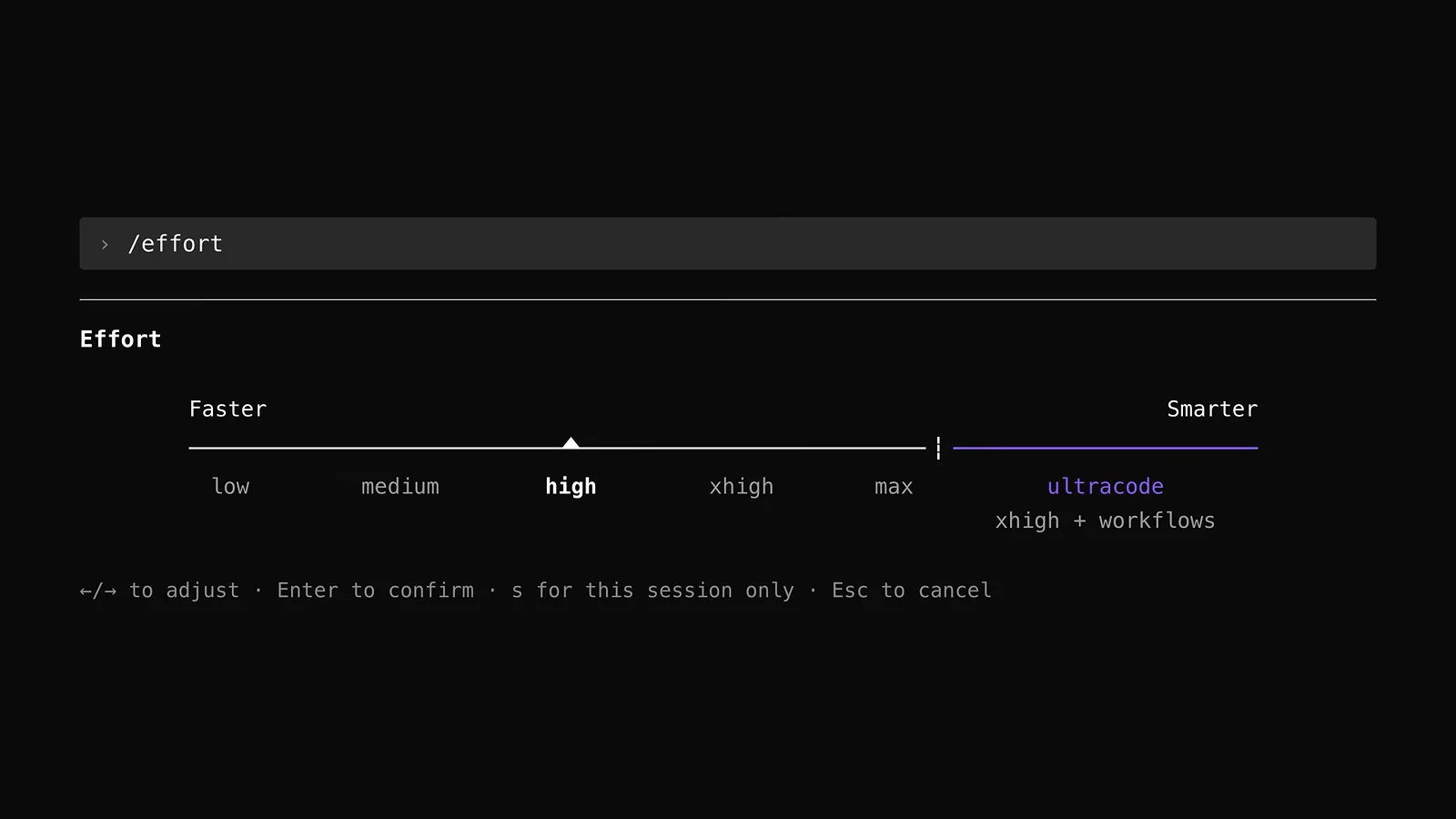
The /effort command controls how long Fable 5.1 thinks and how much it spends.Watch at 5:12 - 5
Check your weekly allowance before you commit
Run /usage in Claude Code to see both meters at once: the current session and the current week across all models — 62% and 34% used in this capture, resetting at 6 a.m. Fable 5.1 usage is included with the Max and Max 20x plans; below those tiers you slide into pay-as-you-go billing quickly. Make /usage a habit before every long build, because Fable drains weekly limits far faster than Sonnet.
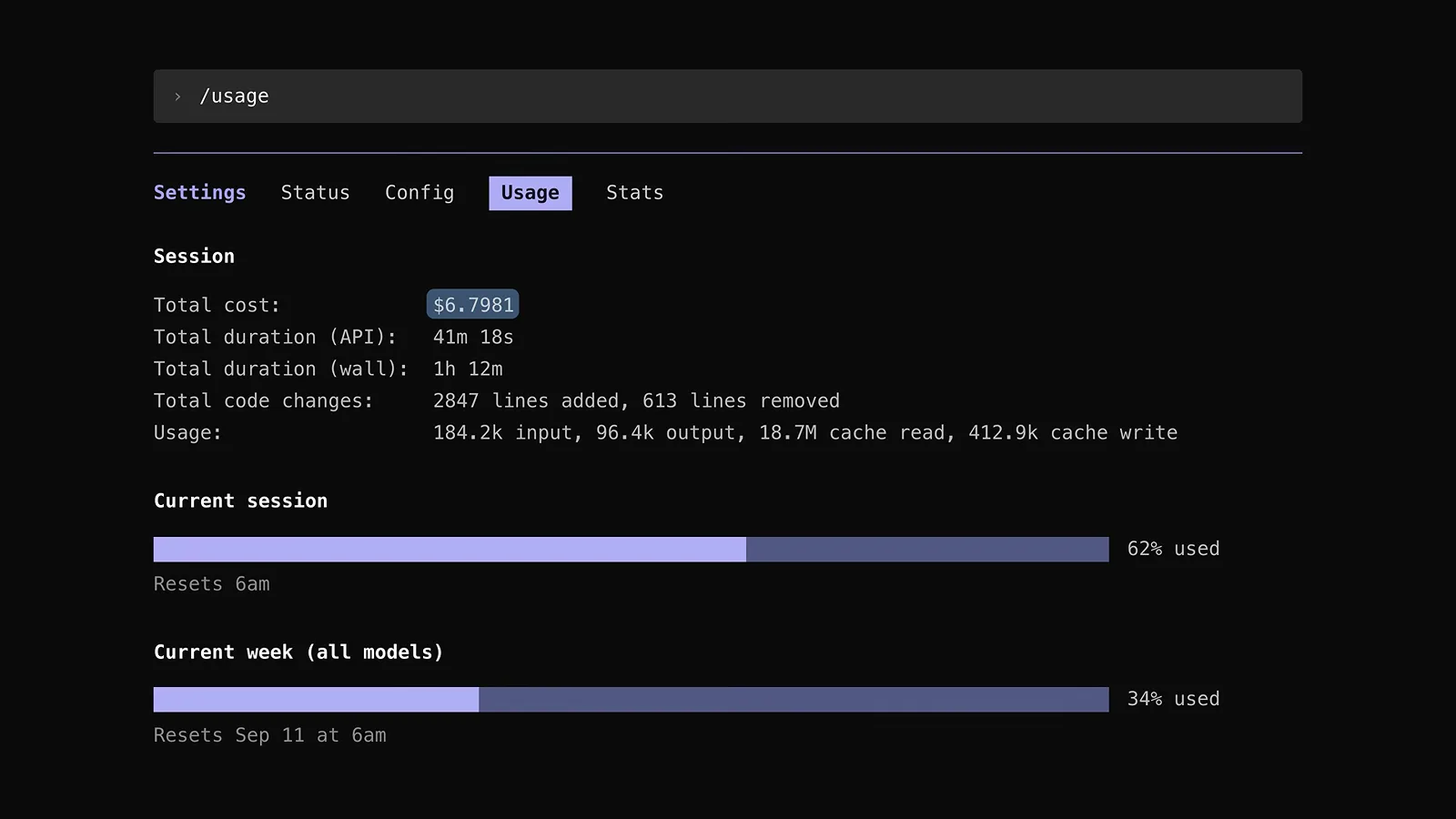
/usage reports session cost, token counts, and both session and weekly meters.Watch at 1:45 - 6
Price the job before you launch it
Anthropic's Terminal-Bench 4.0 chart plots accuracy against mean cost per task for every effort level: low-effort runs land near the top of the score range at a fraction of max's price. Cache reads with Fable 5.1 cost 75% less than Fable 5's, typical token-billed workloads run about 25% cheaper overall, and highly agentic sessions save up to 45%. Effort is the biggest cost lever you control — pull it down first.
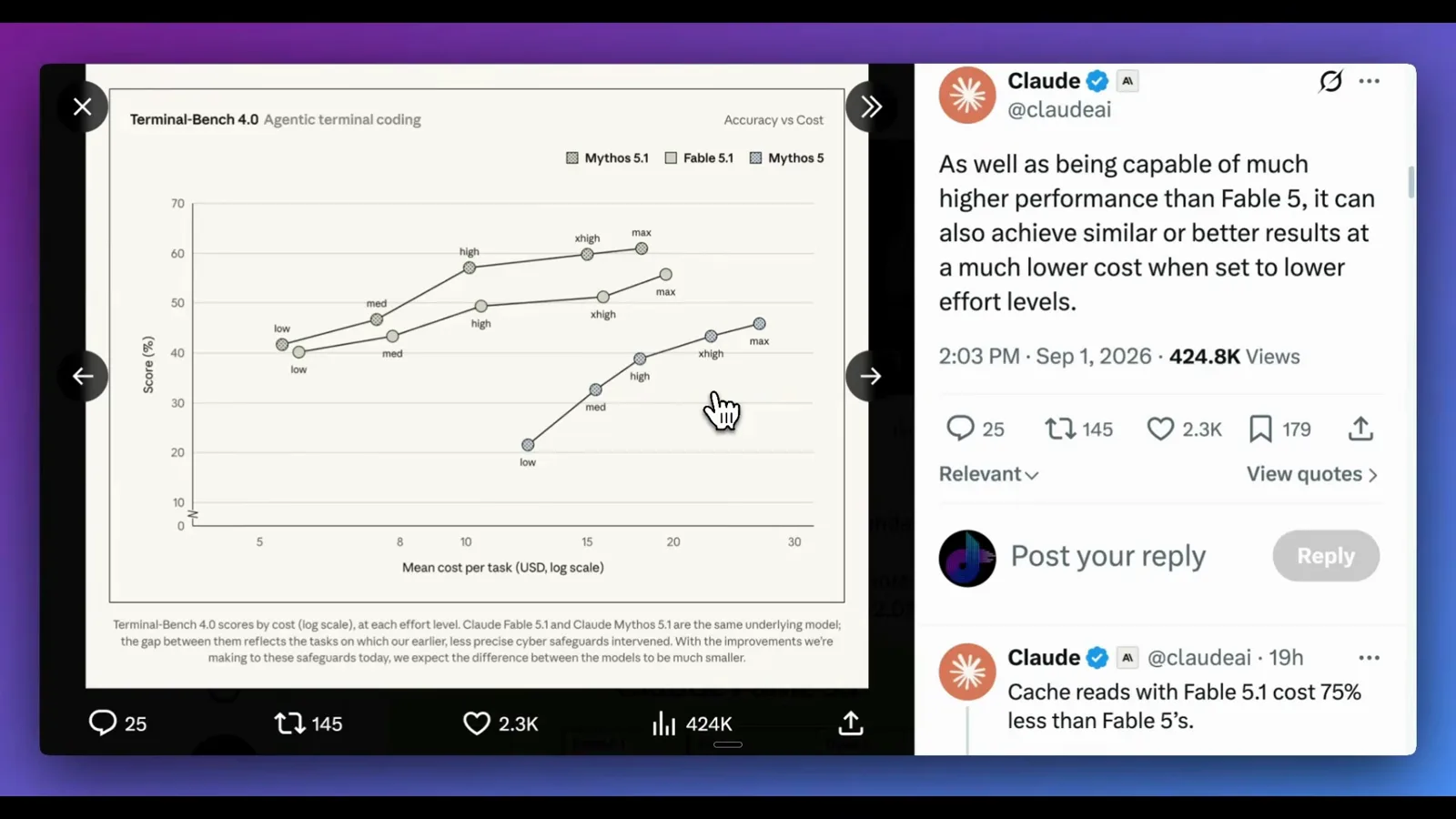
The official accuracy-versus-cost curve, plus Anthropic's note on cheaper cache reads.Watch at 5:30
Prompt It Like a Handoff to a Senior Engineer
- 7
Give it a goal, not a ten-step plan
The strongest Fable 5.1 prompts read like a brief for a senior engineer: state the outcome, the constraints, and what done looks like — then stop writing. Anthropic's own launch material demos the model discovering software vulnerabilities from a one-line brief like the scan shown here. If you catch yourself drafting step seven of ten, delete the steps and describe the destination instead.
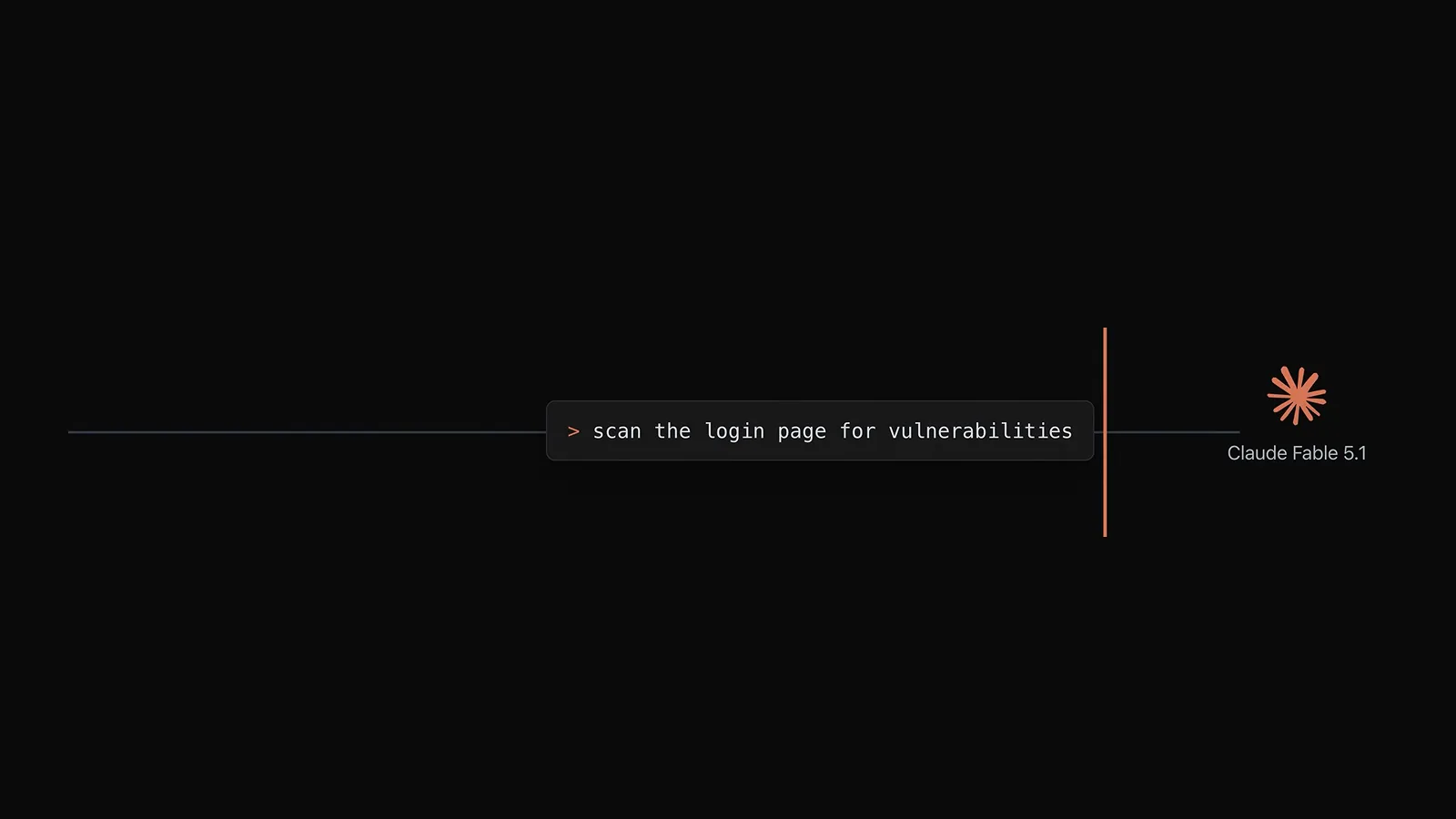
One clear goal is enough for Fable 5.1 to plan its own path.Watch at 3:20 - 8
Hand over the whole feature
Slice a project into micro-prompts and you pay supervision overhead on every turn while forfeiting Fable 5.1's biggest advantage. AI LABS watched it finish every long attempt it started, so describe the entire feature, list what belongs in it, and let it work through its own checklist unattended. Complexity costs wall-clock time, not quality — bigger briefs simply run longer.
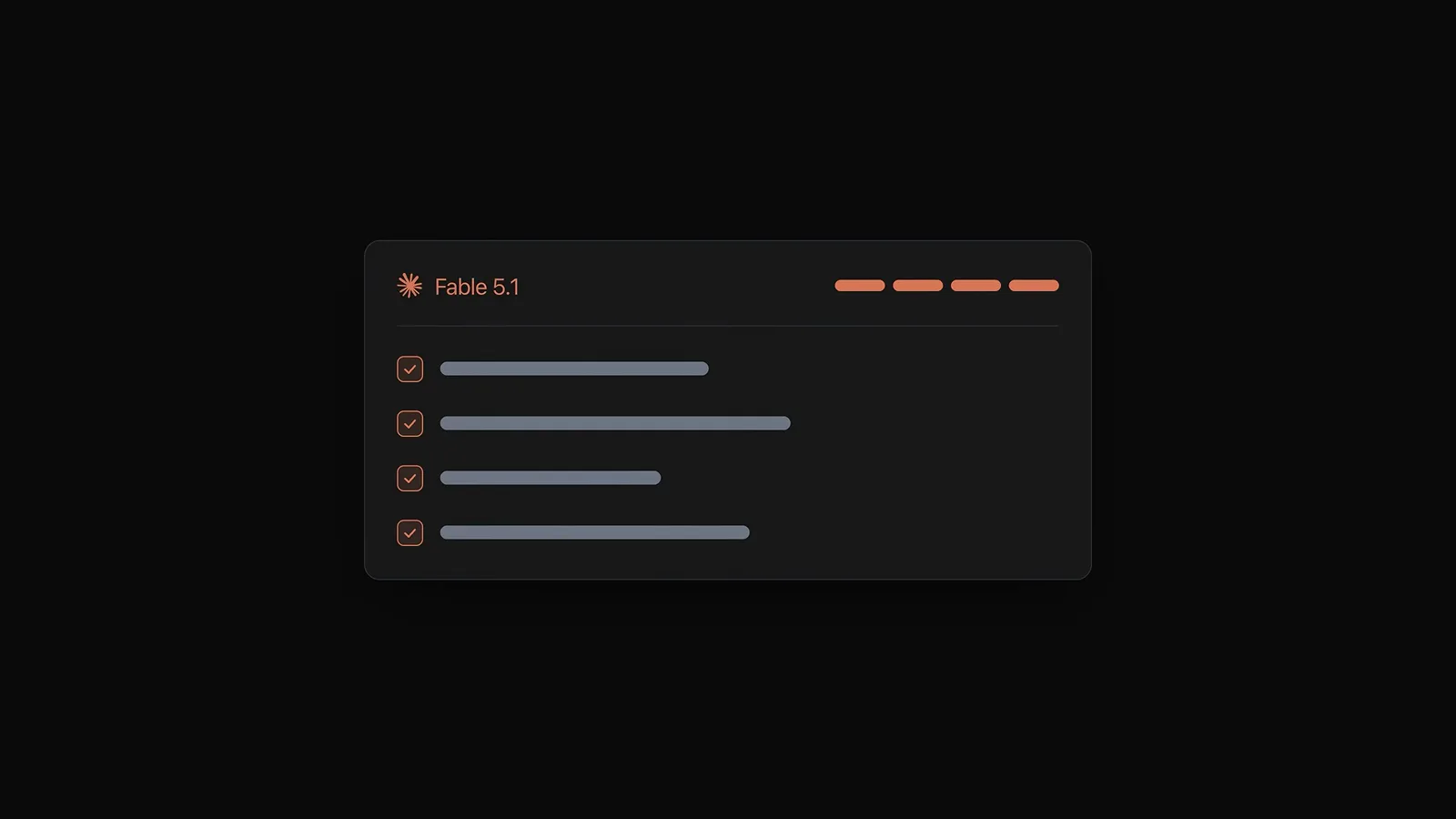
Fable 5.1 works through its own plan and ticks every item before stopping.Watch at 5:08 - 9
Say what it must leave alone
Fable 5.1 is eager to be helpful: it will fix a nearby bug, extend a function, or touch files you never mentioned — AI LABS saw it edit test files nobody asked it to touch on a client project. State the exclusions up front: which files, folders, and behaviours are off-limits, plus the instruction that anything else it notices should be reported at the end, not fixed in passing.
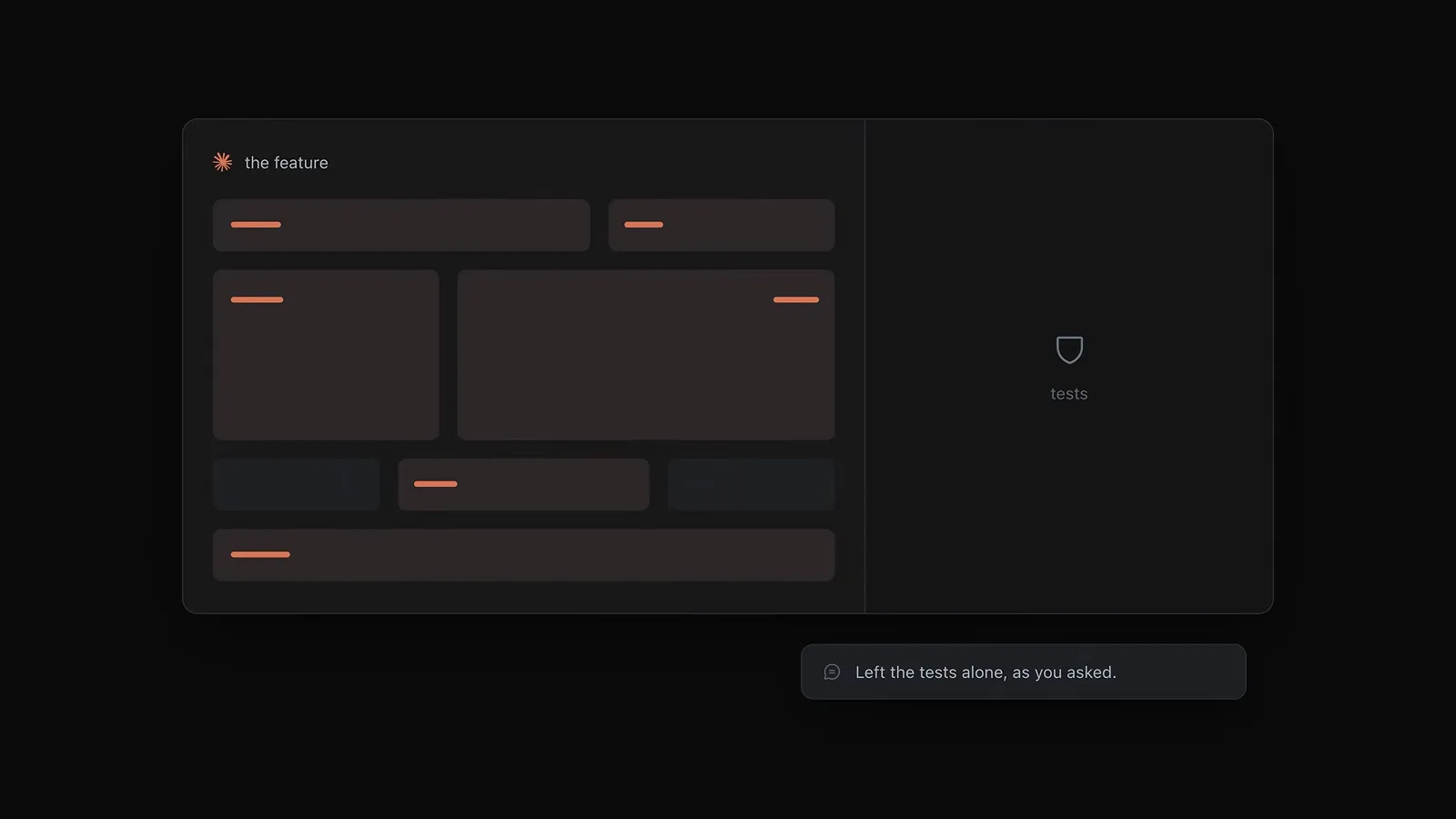
Scope boundaries keep Fable 5.1 out of the files you did not list.Watch at 9:20 - 10
Prune instructions written for older models
Rules like always explain what you changed before you change it were patches for Fable 5-era behaviour, and on 5.1 they just tax every prompt. AI LABS suggests a simple test: remove one instruction from CLAUDE.md, rerun the same kind of task, and compare the results — if nothing changes, the rule is dead weight. Keep the file to conventions that are still true.
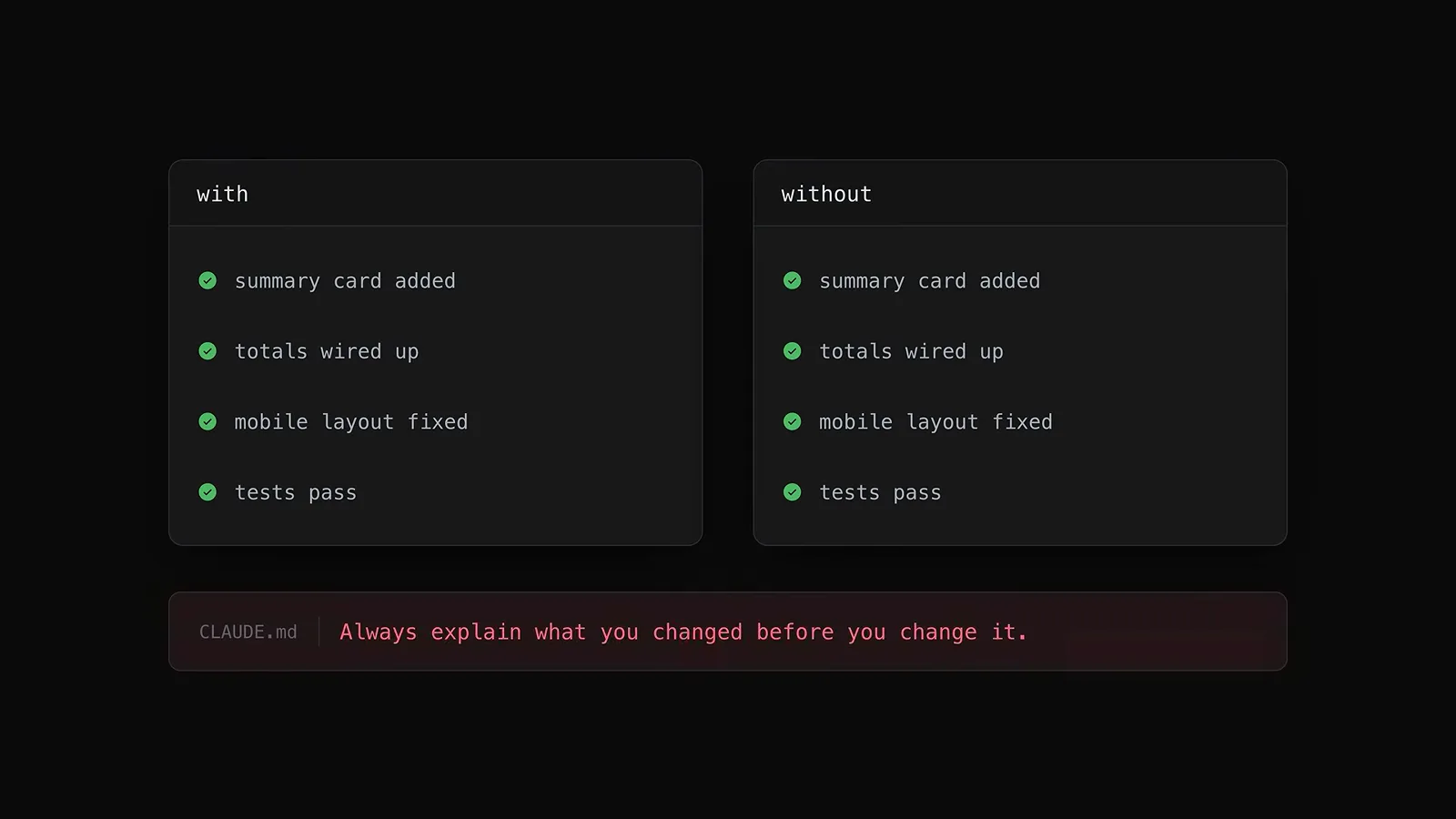
If the results match without the rule, the rule is obsolete.Watch at 6:40 - 11
Outlaw the fancy prose
Ask Fable 5.1 what it changed and you may get a paragraph like this one — essentially what you would expect, on balance the one that made the most sense. Anthropic dialled this Claude-speak back in 5.1, and third-party testers confirm the improvement, but long research briefs still drift wordy. Add one line to your instructions: no metaphors, no filler — state findings and cite evidence.
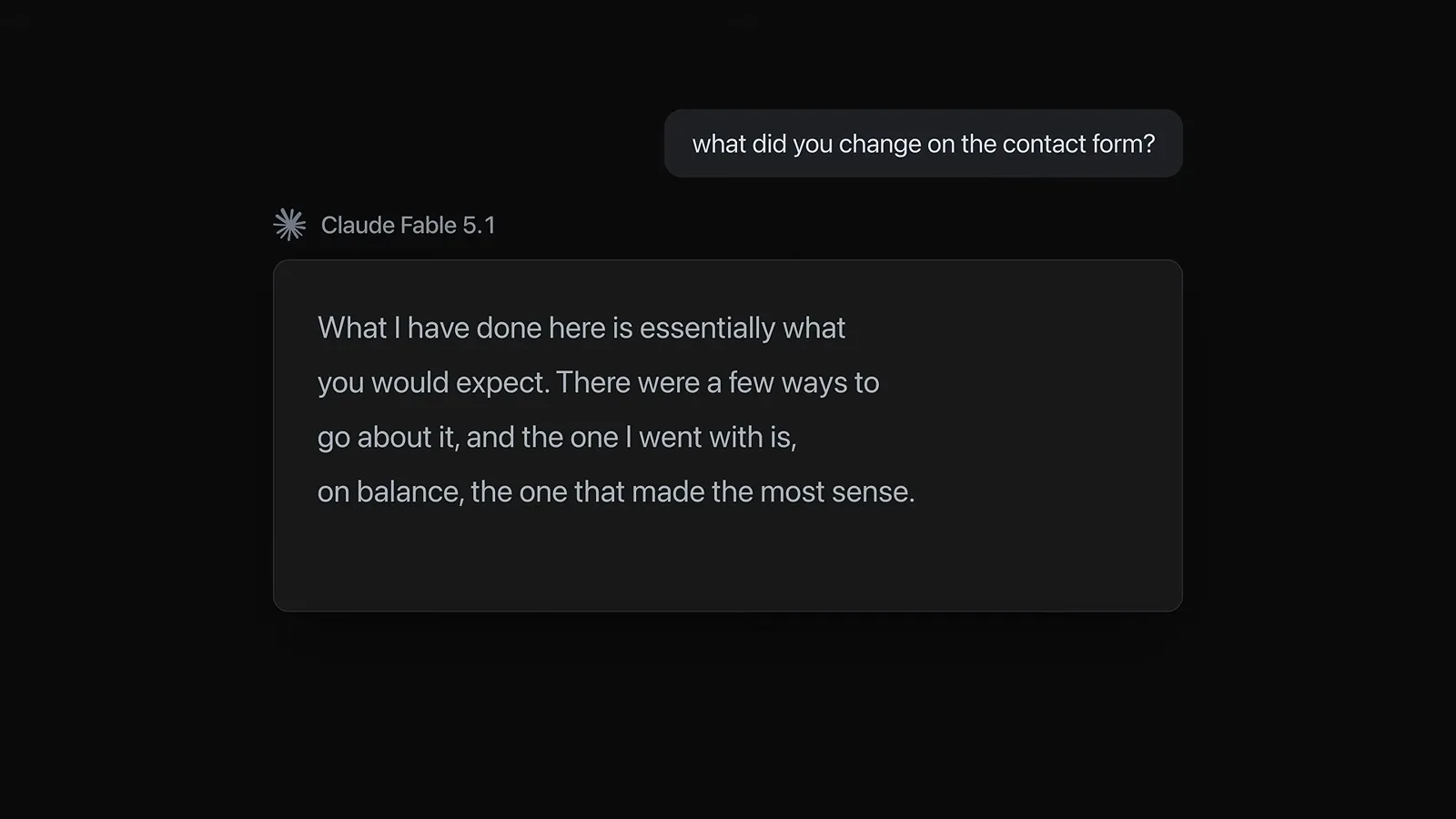
Mannered prose survives in 5.1 — outlaw it explicitly for research and writing tasks.Watch at 10:00
Let Long Jobs Run, Then Verify What Came Back
- 12
Chain long-horizon work and check in late
Fable 5.1 is built for runs that unfold in stages — research, build, test, iterate — like the cascade of work packages shown here. Anthropic's prompting advice for the model is to say that nobody is watching: instruct it to continue with anything already covered by your request as long as the step is reversible. Then set a checkpoint — a commit, a deploy, a report — and come back for that instead of watching every move.
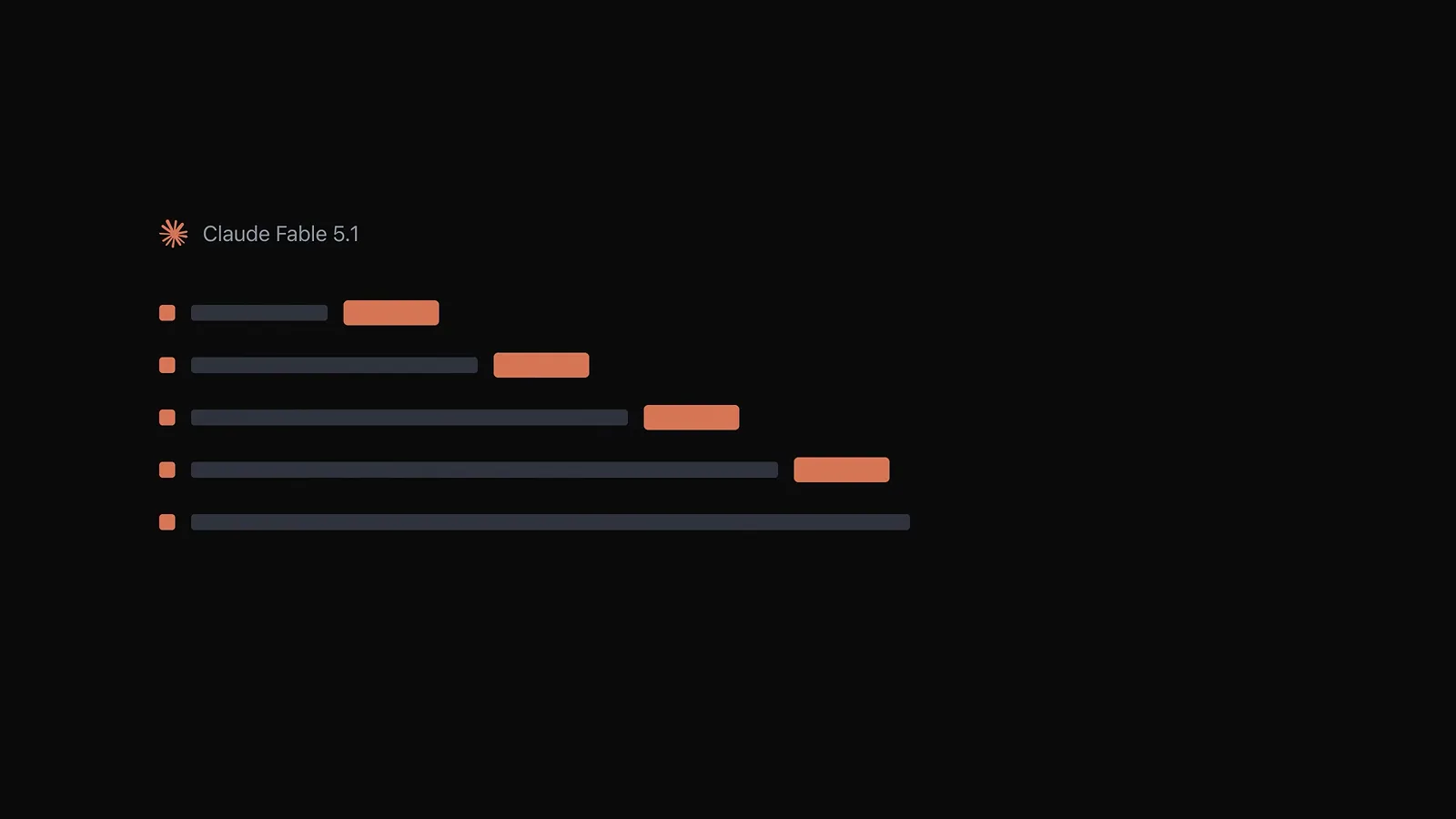
Long-horizon runs are where Fable 5.1 pulls away from Opus 5.Watch at 2:00 - 13
Trust, then verify — in that order, always
Independent evaluators found Fable 5.1 invents an answer more often than Fable 5 when it does not know one, and it flags its own uncertainty less clearly. In the research run shown here, one statistic arrives marked in red precisely because the model could not ground it. For any number, quote, or citation that will leave your desk, ask for sources and check them before you ship.
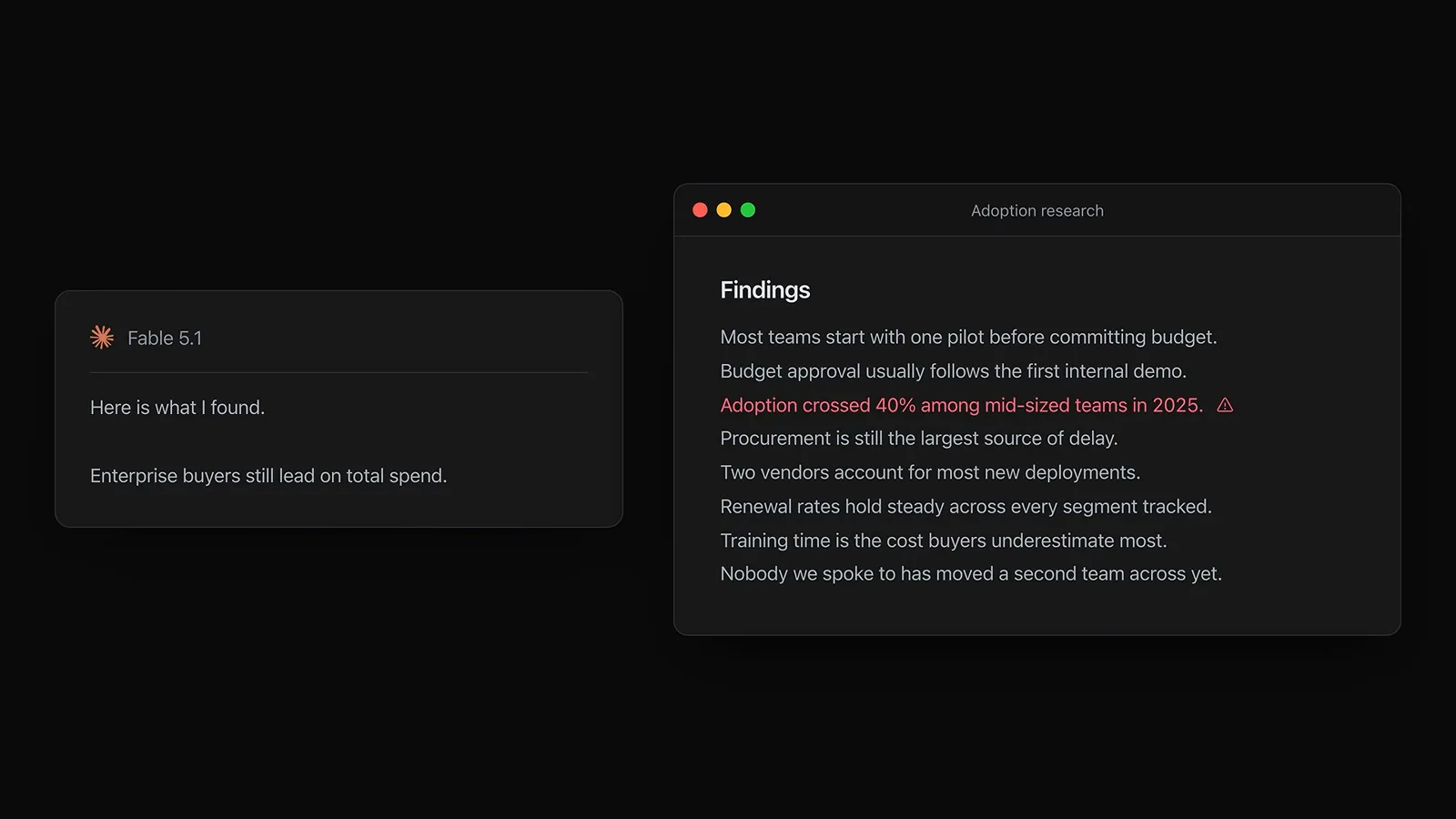
The red flag is the model's own — treat every unflagged number with the same suspicion.Watch at 4:45 - 14
Use 5.1 where the job is genuinely hard
AI LABS ran identical tasks on Fable 5 and Fable 5.1 several times each. Fable 5 did better work on the simplest task; on the hardest one, Fable 5.1 won while finishing about 40% faster at well under half the cost. The pattern generalises: the harder and longer the job, the more 5.1's finish rate pays off — and the less it matters on quick fixes.
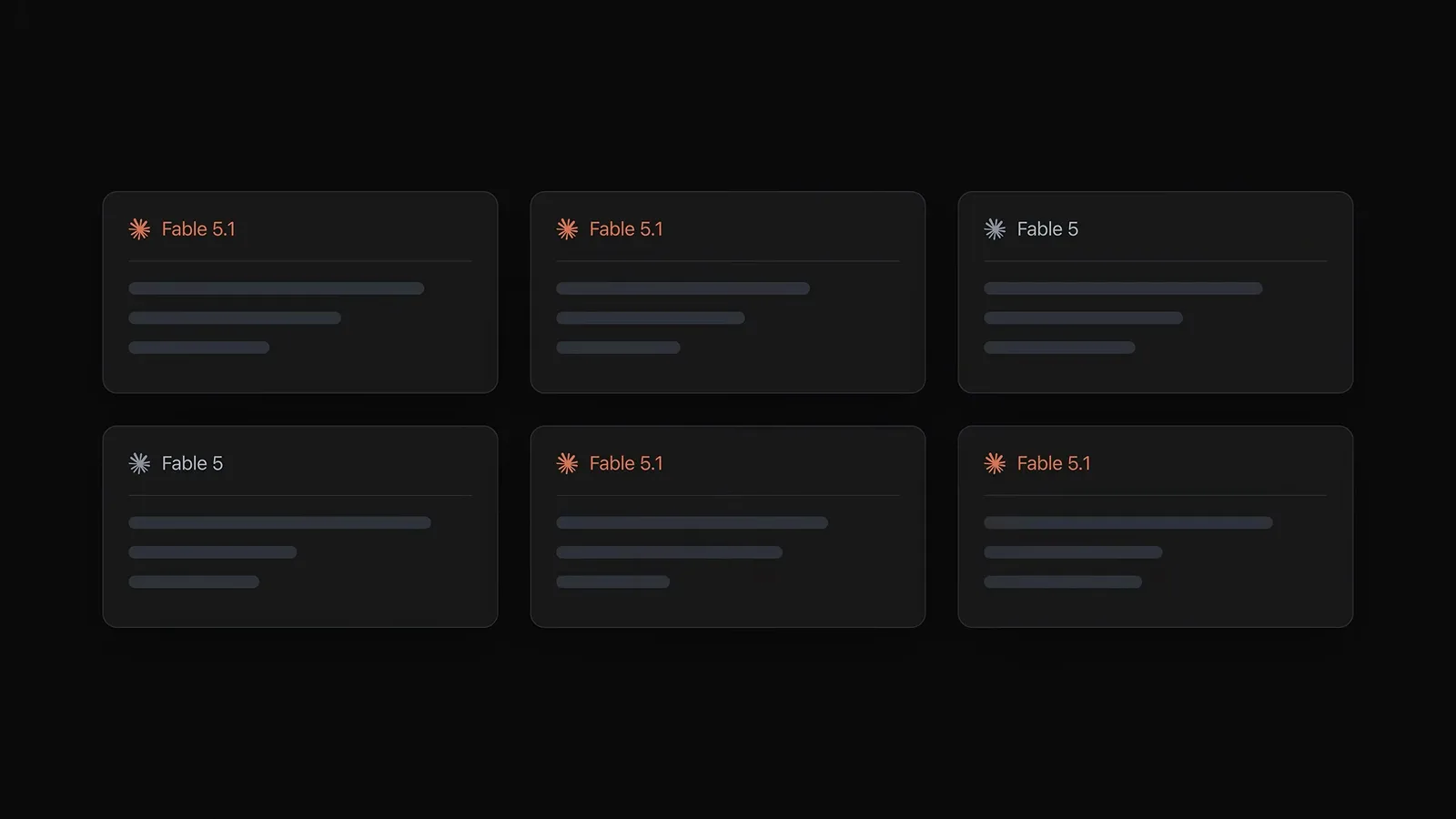
Identical briefs on both models — the gap opens as difficulty rises.Watch at 4:55
Match Fable 5.1 to the Jobs It Wins
- 15
Use it for knowledge work too, not just code
Writing got a deliberate upgrade in 5.1: Felix Rieseberg notes it reaches for bold, headers, lists, and quotation marks far less than earlier models, and that style instructions now stick. That makes Fable 5.1 a better pick for research memos, documentation, and editorial drafts than its predecessor was. Keep the mannered-prose ban from the prompting section in place and it reads like a colleague wrote it.
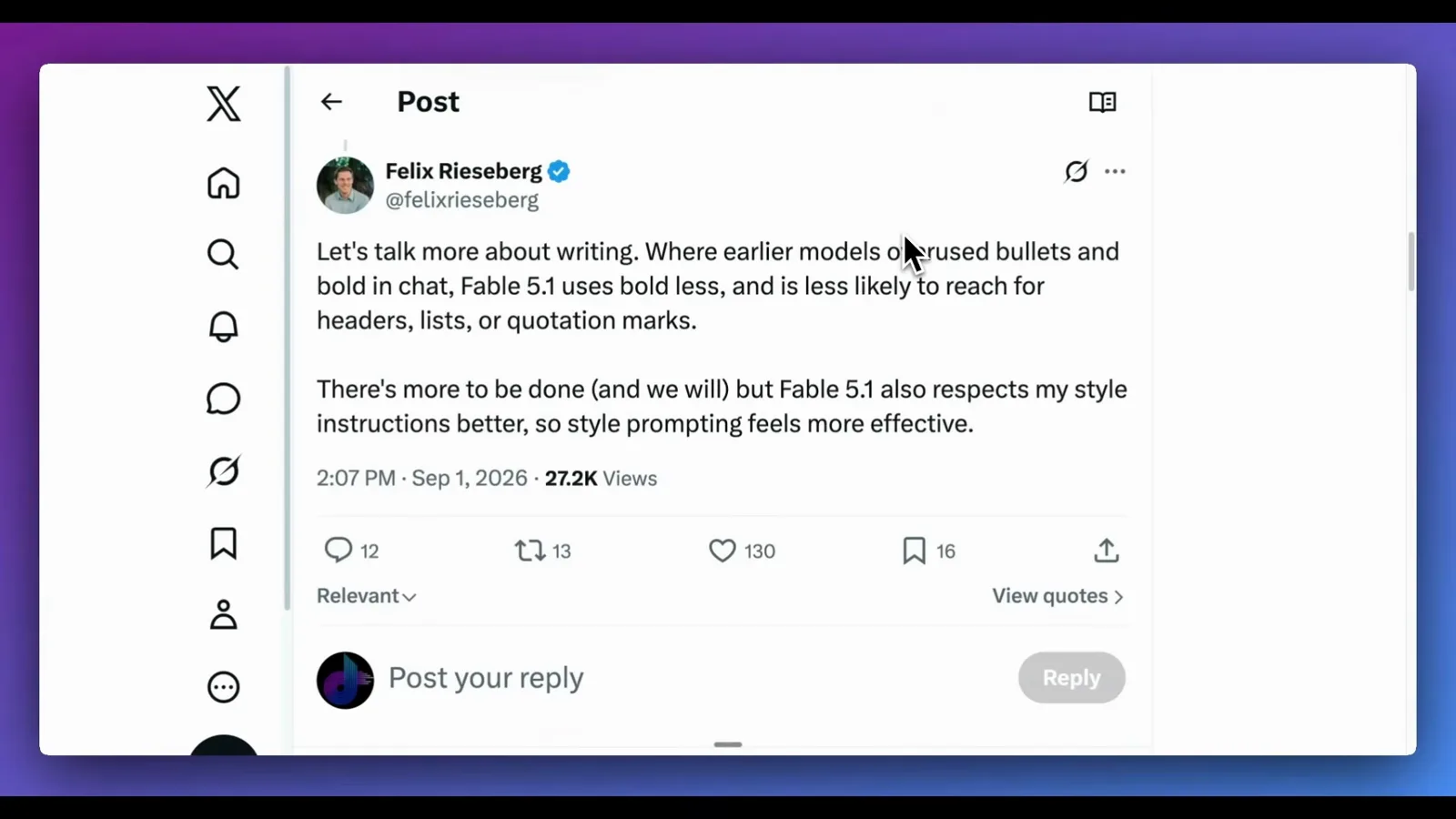
Anthropic engineers flagged the writing improvements during launch week.Watch at 7:08 - 16
Point it at a real, running system
The showcase builds say it best: Riley Brown used Fable 5.1 inside Claude Code to ship an agent-native Trello board — frontend, backend, real-time database, deployed to Vercel — where Claude, Grok, and Codex agents add cards and comments alongside humans. That is the shape of job this model is for: many moving parts, real integrations, hours of autonomous work. Save your Fable 5.1 budget for projects with that profile.
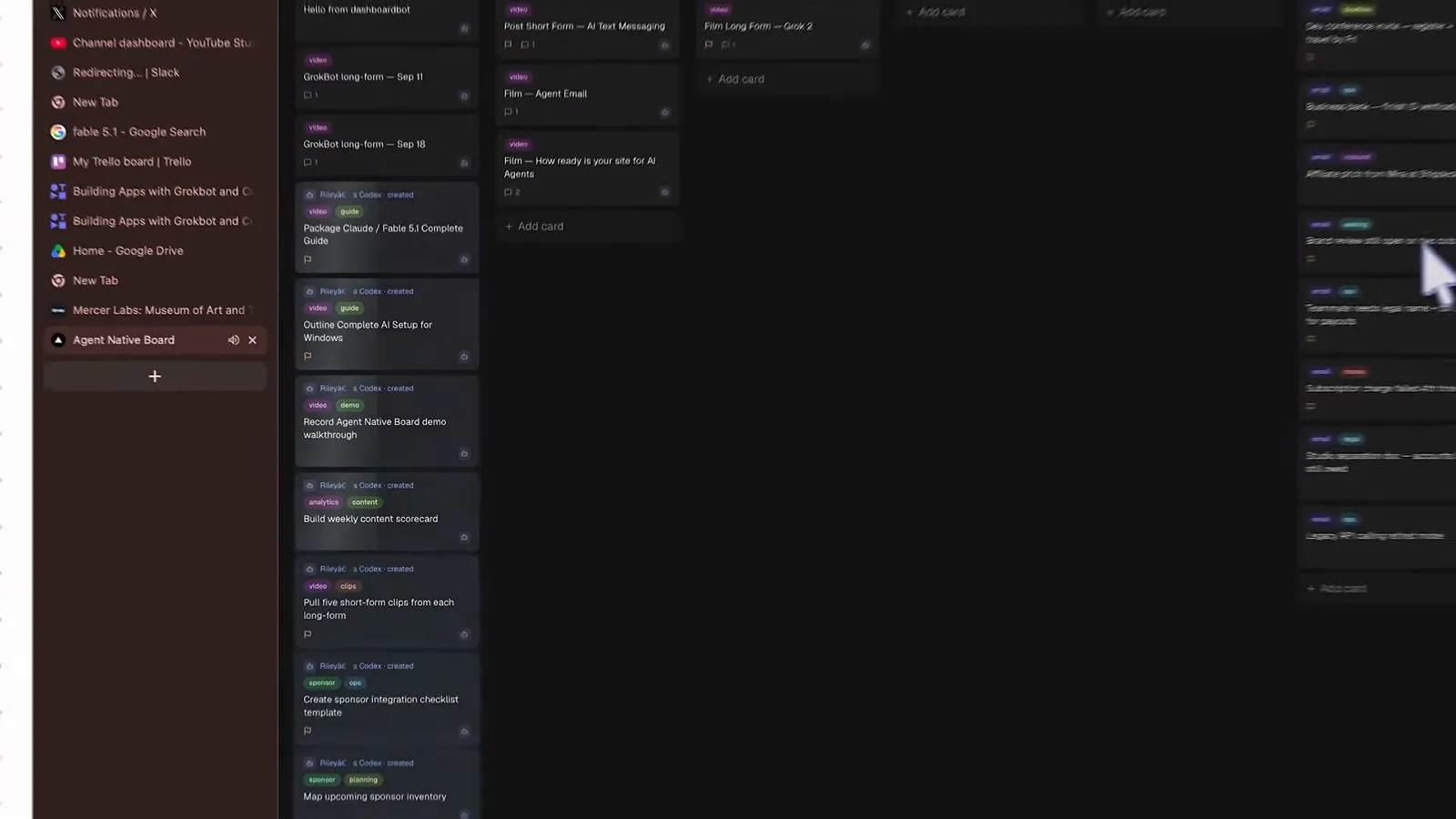
A live multi-agent dashboard built in a single Fable 5.1 session.Watch at 8:00