

GPT-6 vs Gemini 3: Which Flagship AI Should You Actually Use?
OpenAI's GPT-6 Astra and Google's Gemini 3.8 Flash went head-to-head within a day of each other this September, and they are not built for the same buyer. Astra tops the agentic benchmarks — 57.9% vs 19.1% on Terminal-Bench 4.0 in the AI News three-way chart — while 3.8 Flash answers with 13x cheaper API pricing and the second-fastest output speed Artificial Analysis measures. This walkthrough compares both with real demos so you can pick the right one for your work.
Source & credits
Screenshots in this guide are captured from AI News's public walkthrough video. Every step links back to the exact moment it shows, so you can follow along.
AI News ↗Two Flagships, Released One Day Apart
- 1
The release week that set up the rivalry
The current rivalry pairs two September releases: Google shipped Gemini 3.8 on September 2 and OpenAI answered with GPT-6 Astra on September 3, one day after Anthropic's Claude Fable 5.1. Each side also sells cheaper siblings — OpenAI added GPT-6 Sol and Luna on September 22, and Google splits 3.8 into Flash and a restricted Cyber variant. This guide settles the flagship question: GPT-6 Astra versus Gemini 3.8 Flash.

Three launches in three days set up today's GPT-6 versus Gemini 3 matchup.Watch at 0:08 - 2
What GPT-6 Astra is: the flagship deliverables model
OpenAI's launch demos show why Astra sits at the top: it models a house in Blender, then turns it into a walkable Unreal Engine 5 scene that clients can explore before anything is built. The same launch page reports 95.9% on BenchCAD for turning objects into CAD code, against 84.3% for Claude Fable 5.1. This is a model pitched at finished professional deliverables, not chat replies.
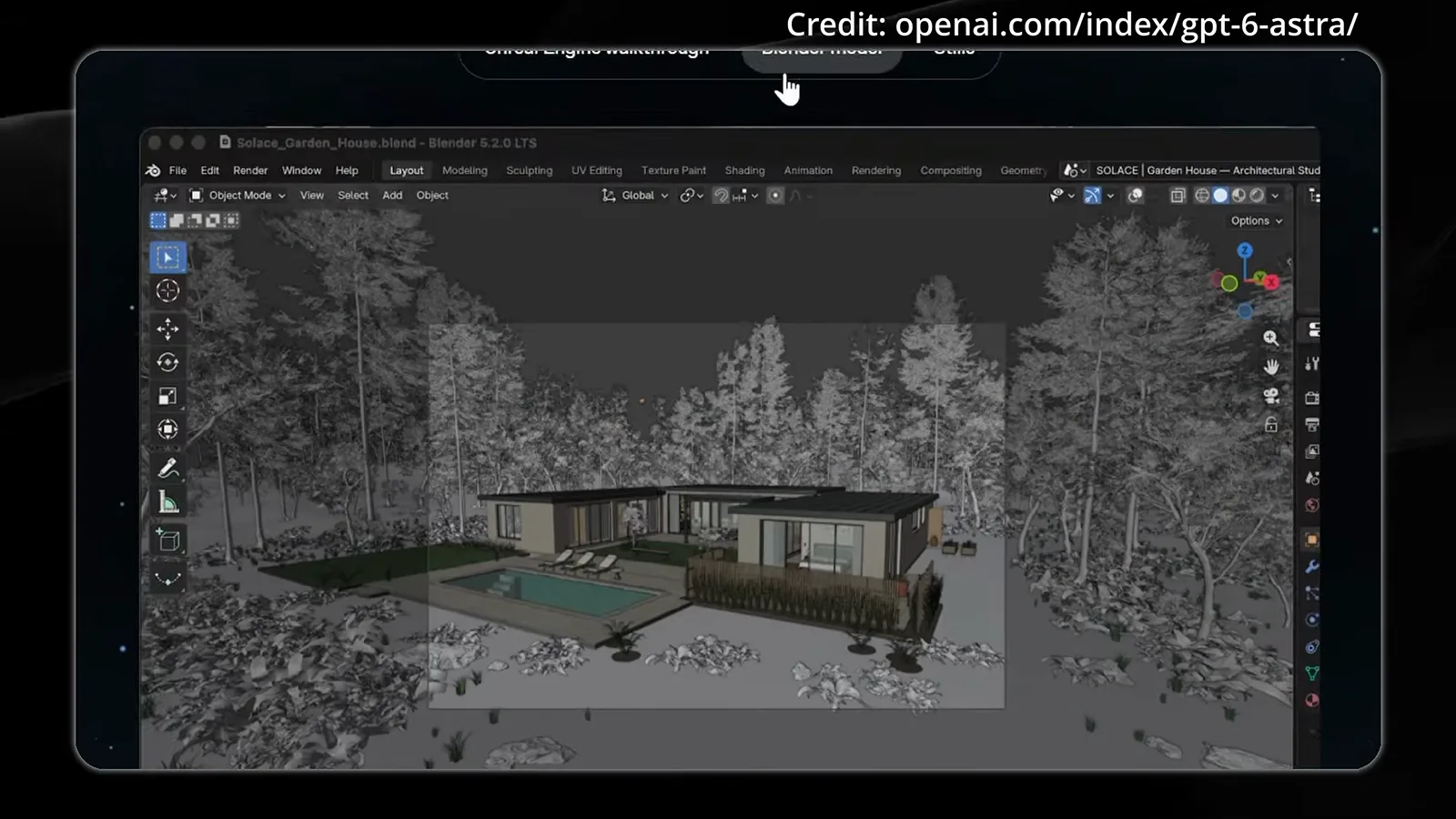
Astra's launch demo: from Blender model to explorable Unreal Engine scene.Watch at 0:30 - 3
What Gemini 3.8 is: the fast workhorse in your Gemini app
Google's answer lives in the Gemini app: open a new conversation and Gemini 3.8 Flash is the model in the picker, the same one Google AI Pro and Ultra subscribers get across the Gemini app and AI Mode. Artificial Analysis clocks it at 293 tokens per second, the second-fastest model it measures, against roughly 54 for Astra. The pitch is speed — reasoning, coding and agents at a fraction of flagship cost.
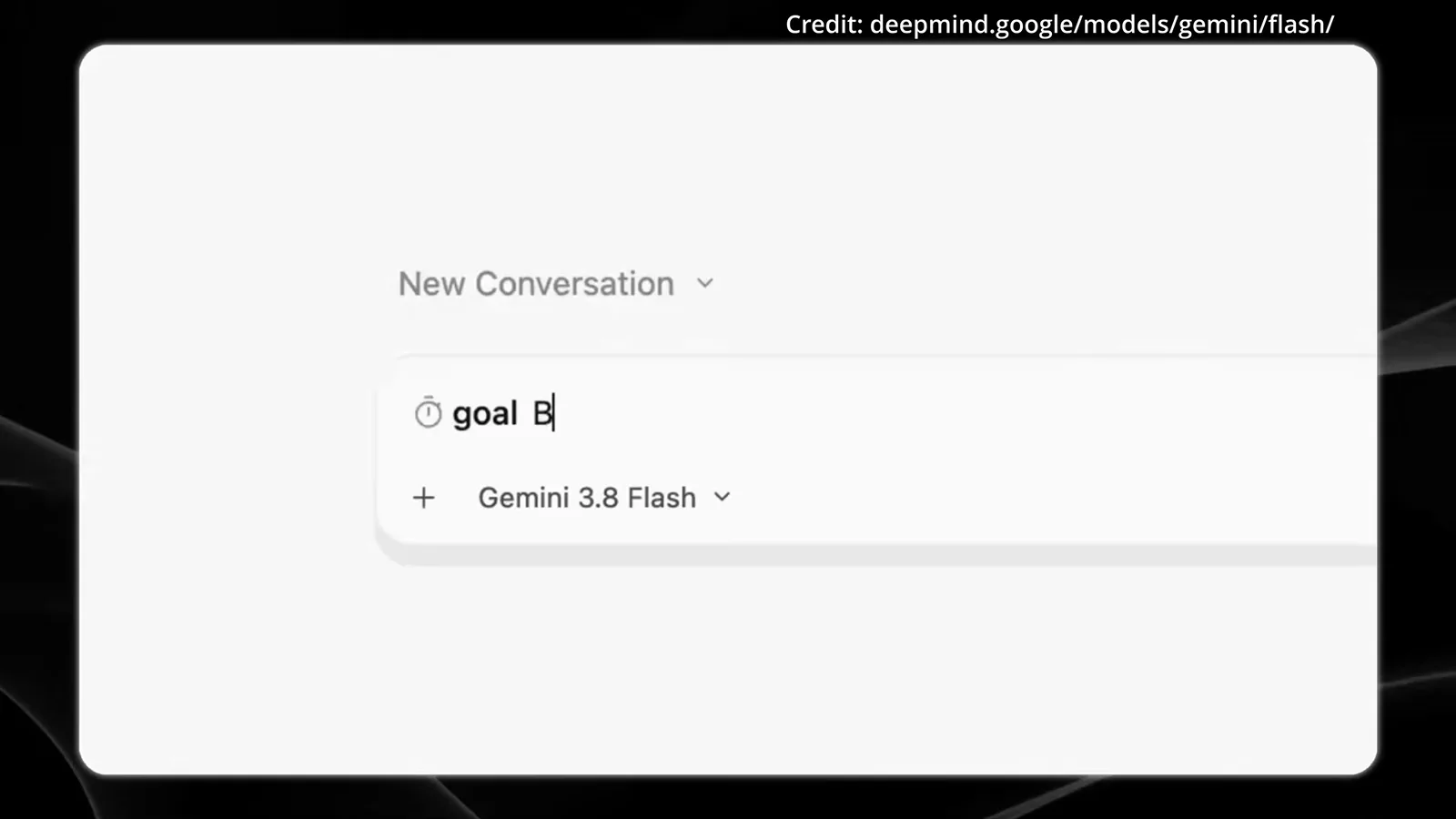
Gemini 3.8 Flash sits one tap away in the Gemini app's model selector.Watch at 3:50 - 4
First, know which Gemini 3.8 you mean
Gemini 3.8 ships as two models with very different access. Gemini 3.8 Flash is the general workhorse for coding, reasoning and agents, while 3.8 Flash Cyber is a security-tuned variant restricted to vetted defenders through Google's Fairwind program. Only Flash is openly available in the API and the Gemini app, so Flash is the model in this fight.
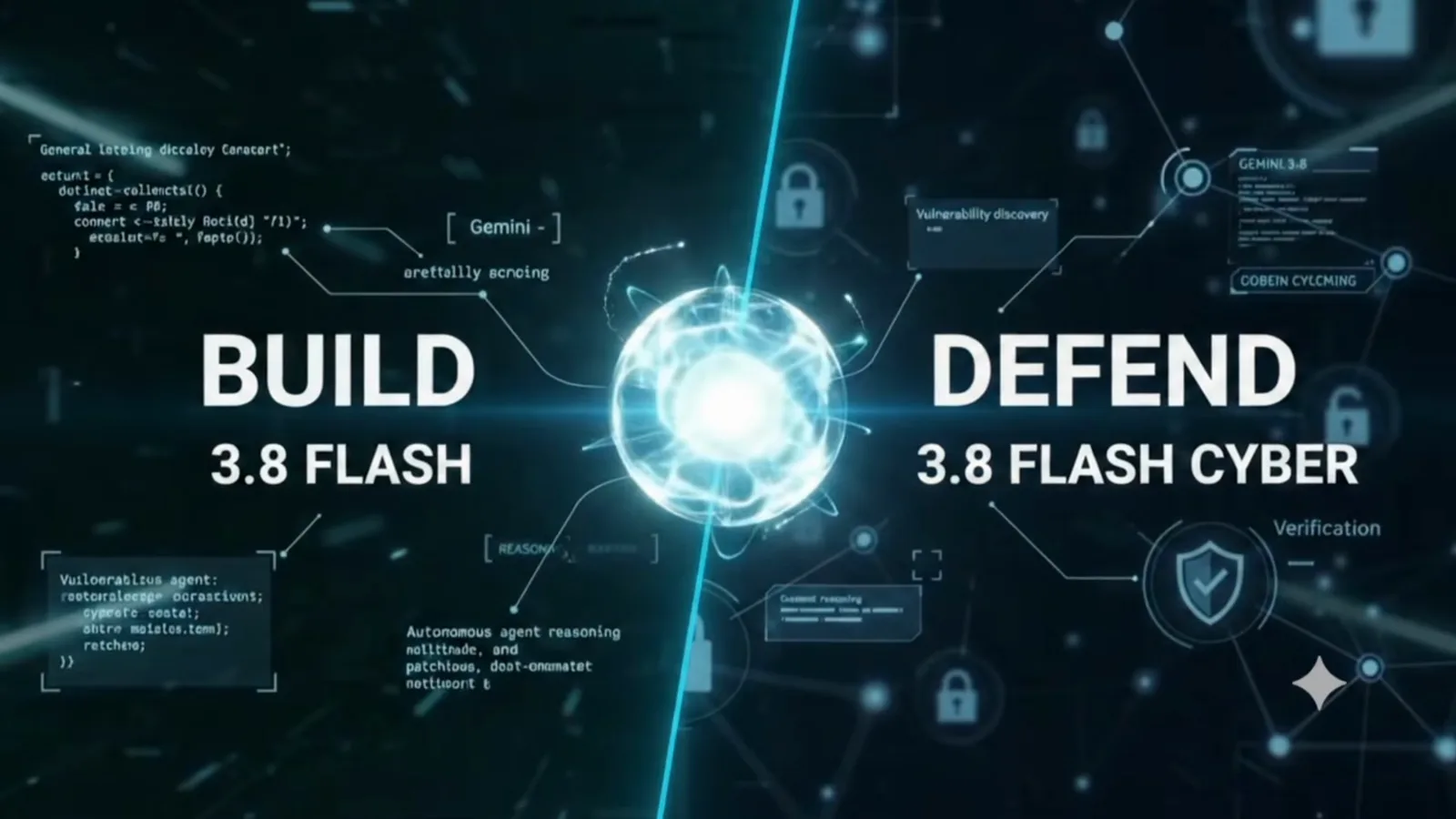
One Gemini, two jobs: the open Flash model and the defenders-only Cyber build.Watch at 5:43
What the Head-to-Head Benchmarks Show
- 5
Agentic coding: Terminal-Bench 4.0, three models side by side
On the AI News three-way chart, Terminal-Bench 4.0 — long-horizon coding-agent tasks — ends at 57.9% for Astra, 55.8% for Claude Fable 5.1 and 19.1% for Gemini 3.8 Flash. OpenAI's own launch page confirms the 57.9% figure. If your work means delegating whole engineering tasks, Astra leads this class of workload by a distance.
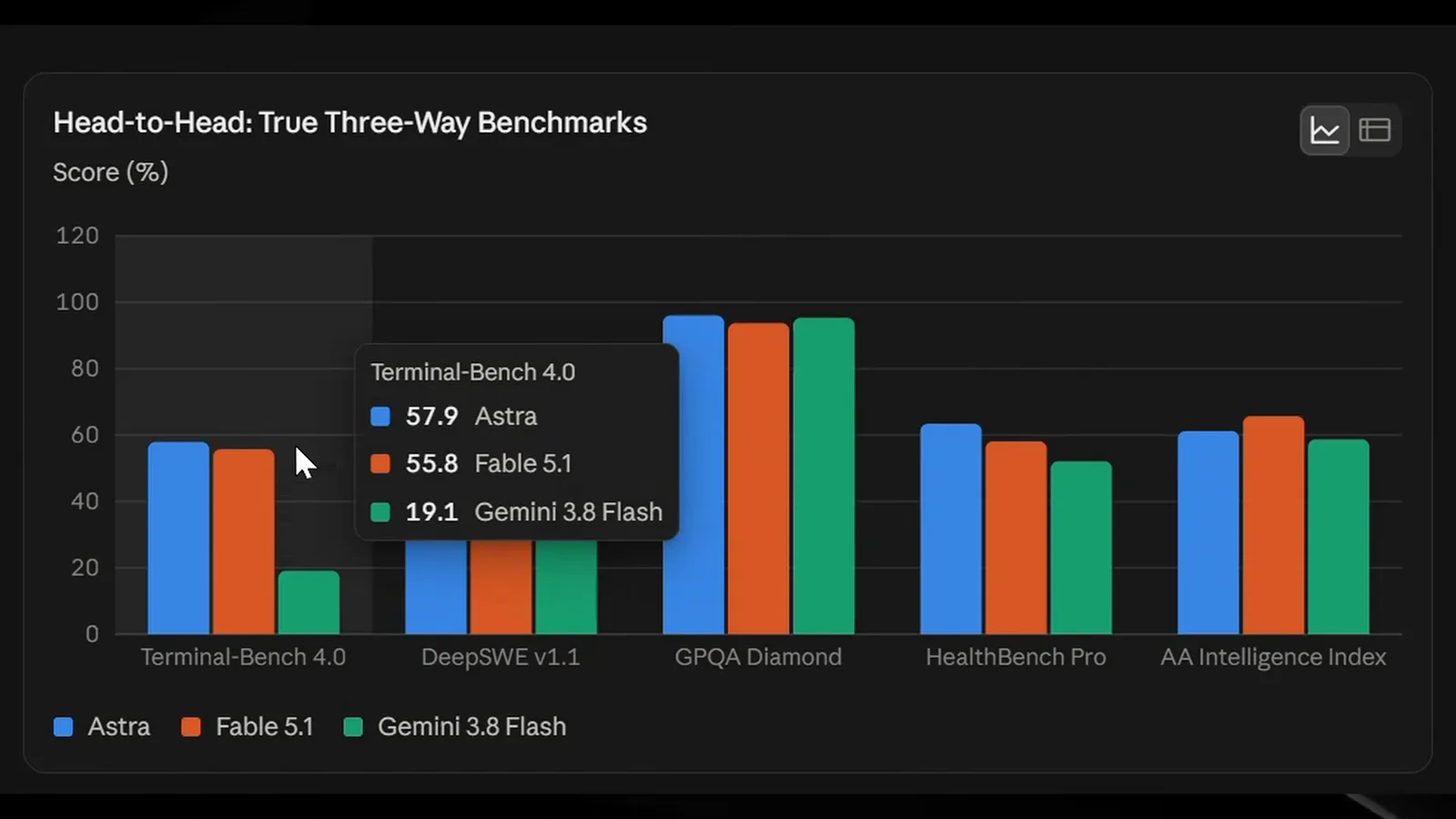
Terminal-Bench 4.0 on the AI News chart: Astra 57.9, Fable 5.1 55.8, Gemini 3.8 Flash 19.1.Watch at 7:32 - 6
Science reasoning: GPQA Diamond is nearly a tie
Graduate-level science reasoning is much closer. The same chart shows GPQA Diamond at 96% for Astra — matching OpenAI's published score — with Gemini 3.8 Flash at 95.3% and Fable 5.1 at 93.7% just behind. A spread under one point means question-answering quality rarely decides this matchup; price and speed should.
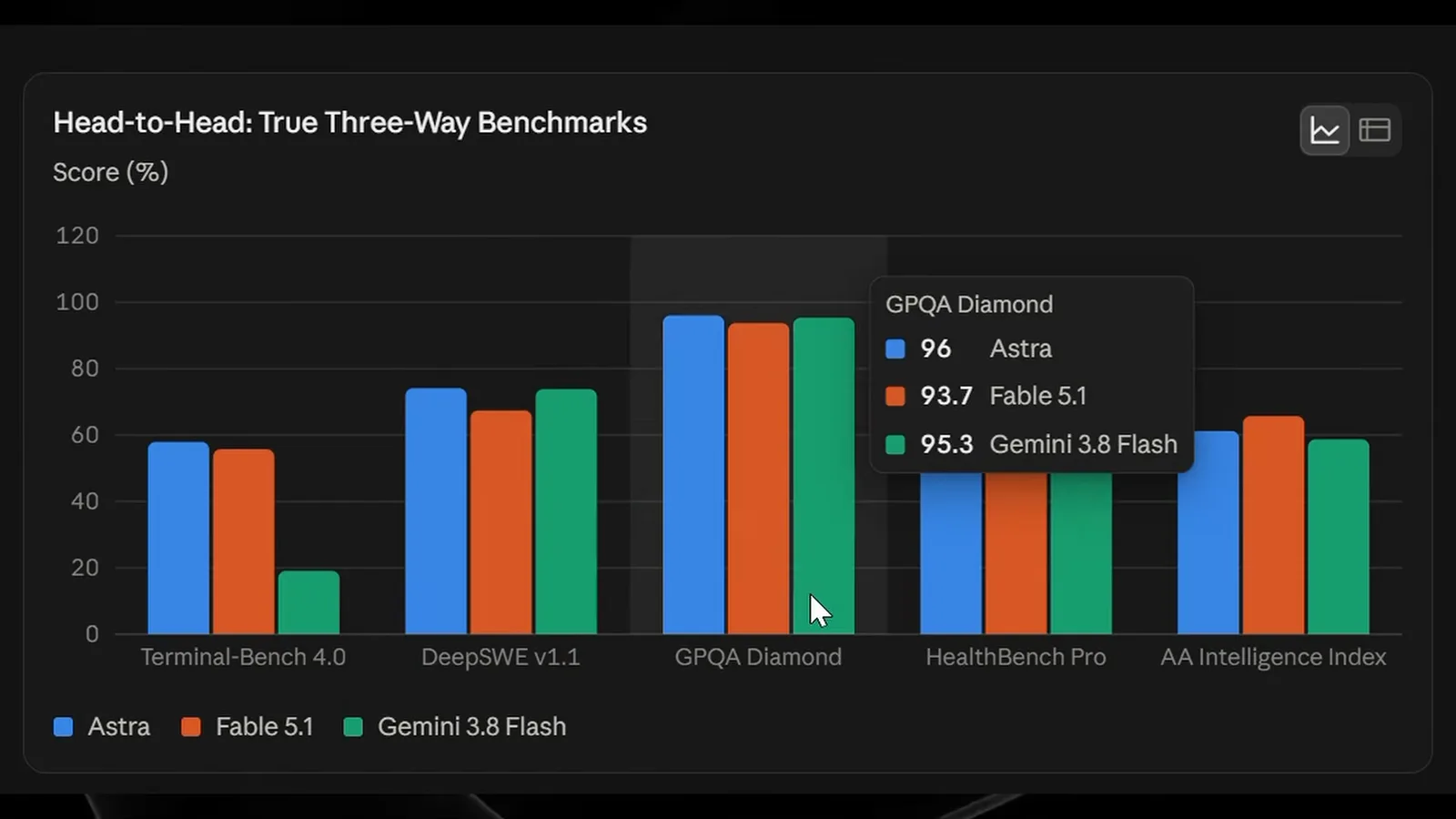
GPQA Diamond barely separates them: 96 versus 95.3 on the AI News chart.Watch at 7:36 - 7
Multimodal arena: same prompt, three models
Independent arenas are starting to test all three frontier models at once. This each-labs comparison renders the same Colosseum prompt through Fable 5.1, GPT-6 Astra and Gemini 3.8 Flash so you can judge consistency and detail yourself — and the banner on top is the catch: output at Astra's tier costs $50 per million tokens. Multimodal quality is real on both sides of this rivalry; the bill is what differs.
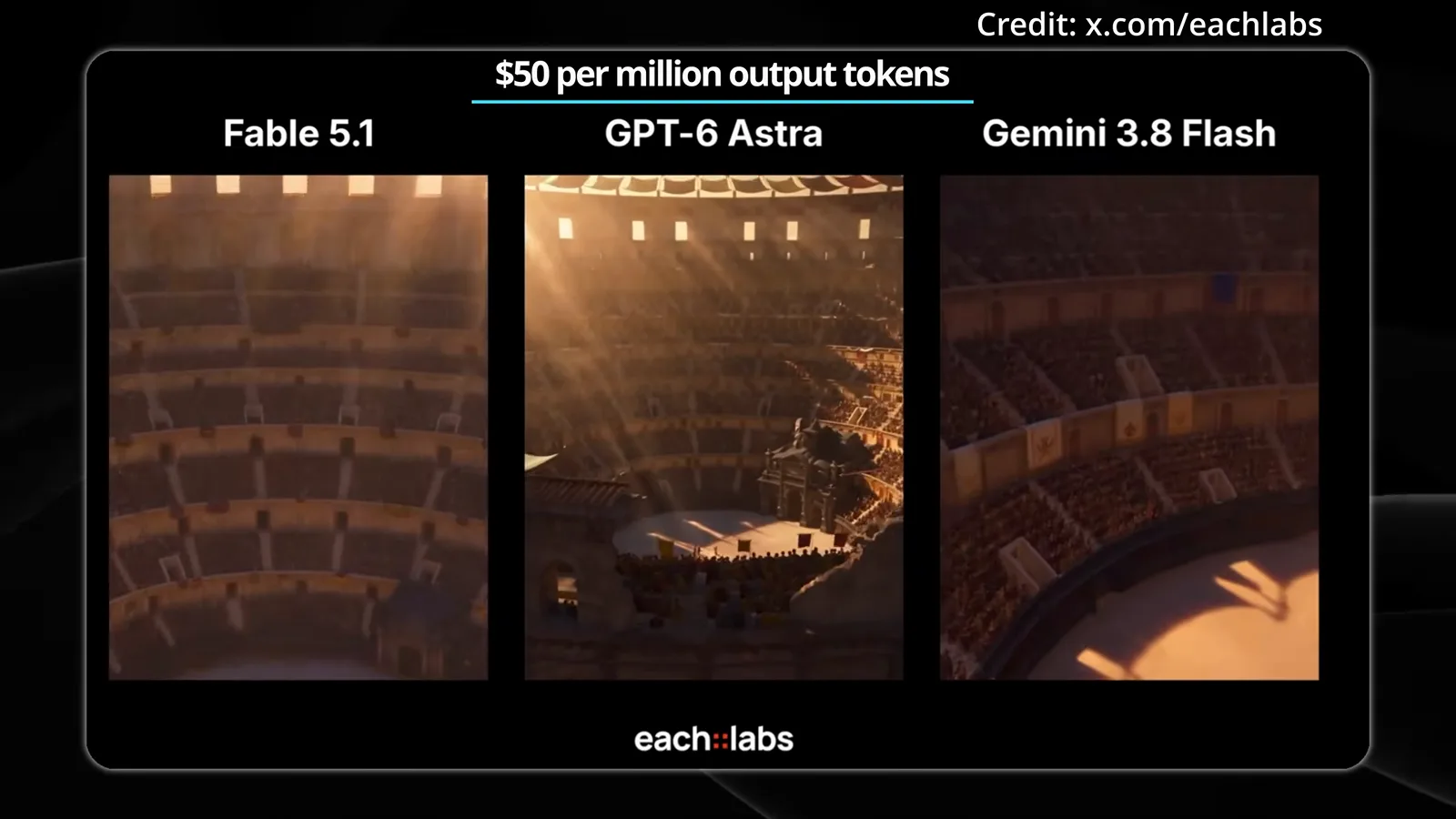
Same prompt, three models: independent arenas make quality differences visible.Watch at 2:56 - 8
Computer use: Astra drives a real storefront
Computer use is Astra's signature skill: it operates a real browser, and this launch demo has it ordering groceries on Macy's. OpenAI reports 72.6% on OSWorld 2.0, reached at roughly 40 minutes per task where its predecessor needed about 75, while the AI News breakdown puts Gemini 3.8 at 70.2% on the same test. On paper the gap is small; in practice Astra is the one OpenAI demos doing errands end to end.
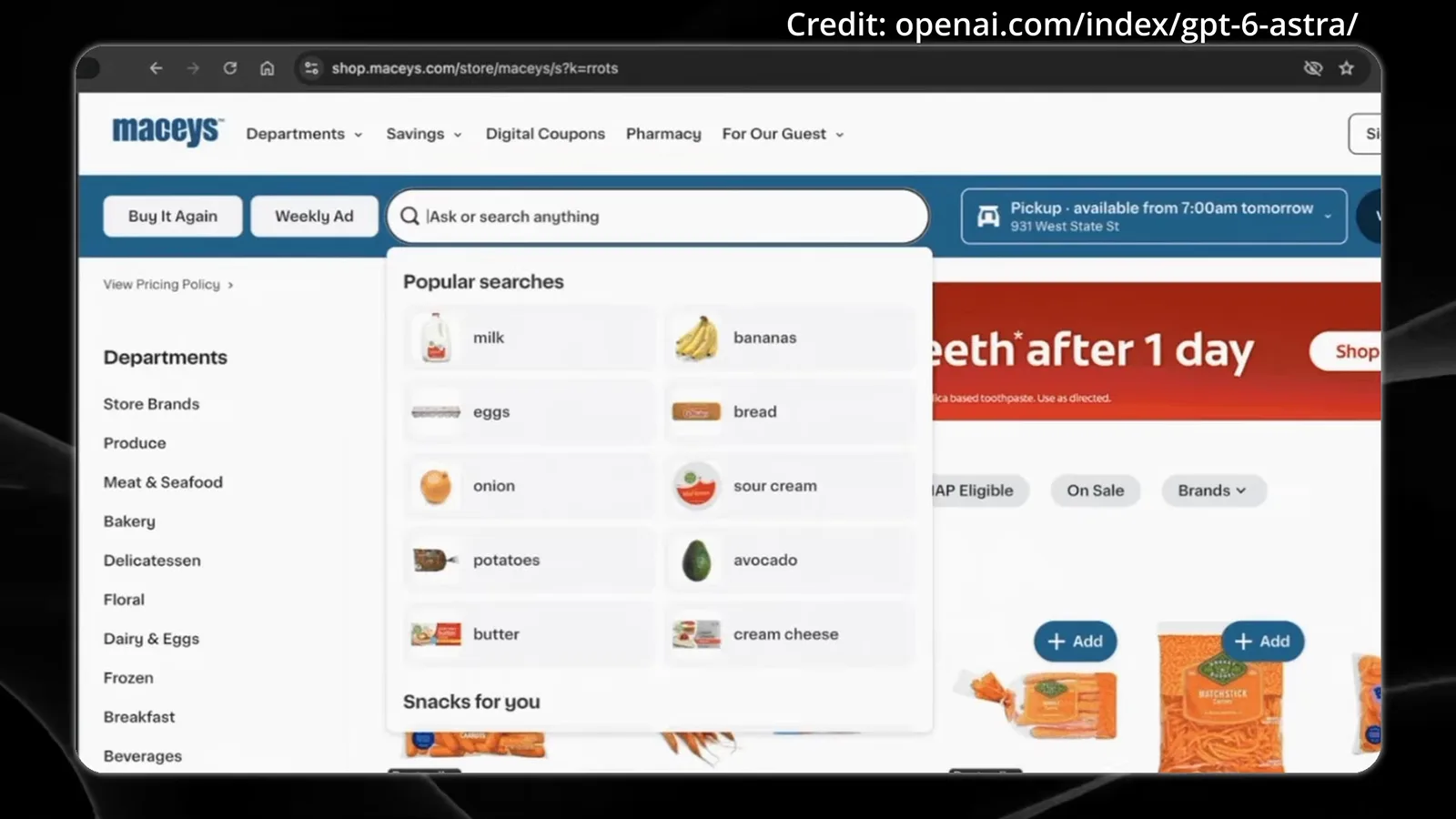
Astra operating Macy's grocery site is the launch demo behind its computer-use scores.Watch at 2:10
Pricing, Context Windows and Limits
- 9
Astra pricing: $10 and $50 per million, plus effort
Astra's sticker is $10 per million input tokens and $50 per million output — about 13x Gemini 3.8 Flash's introductory $0.75 and $3.75. There is also an effort dial: the coding interface warns that higher effort consumes usage limits faster, and OpenAI sells a fast mode at twice the speed and twice the price. Budget for effort, not just tokens.
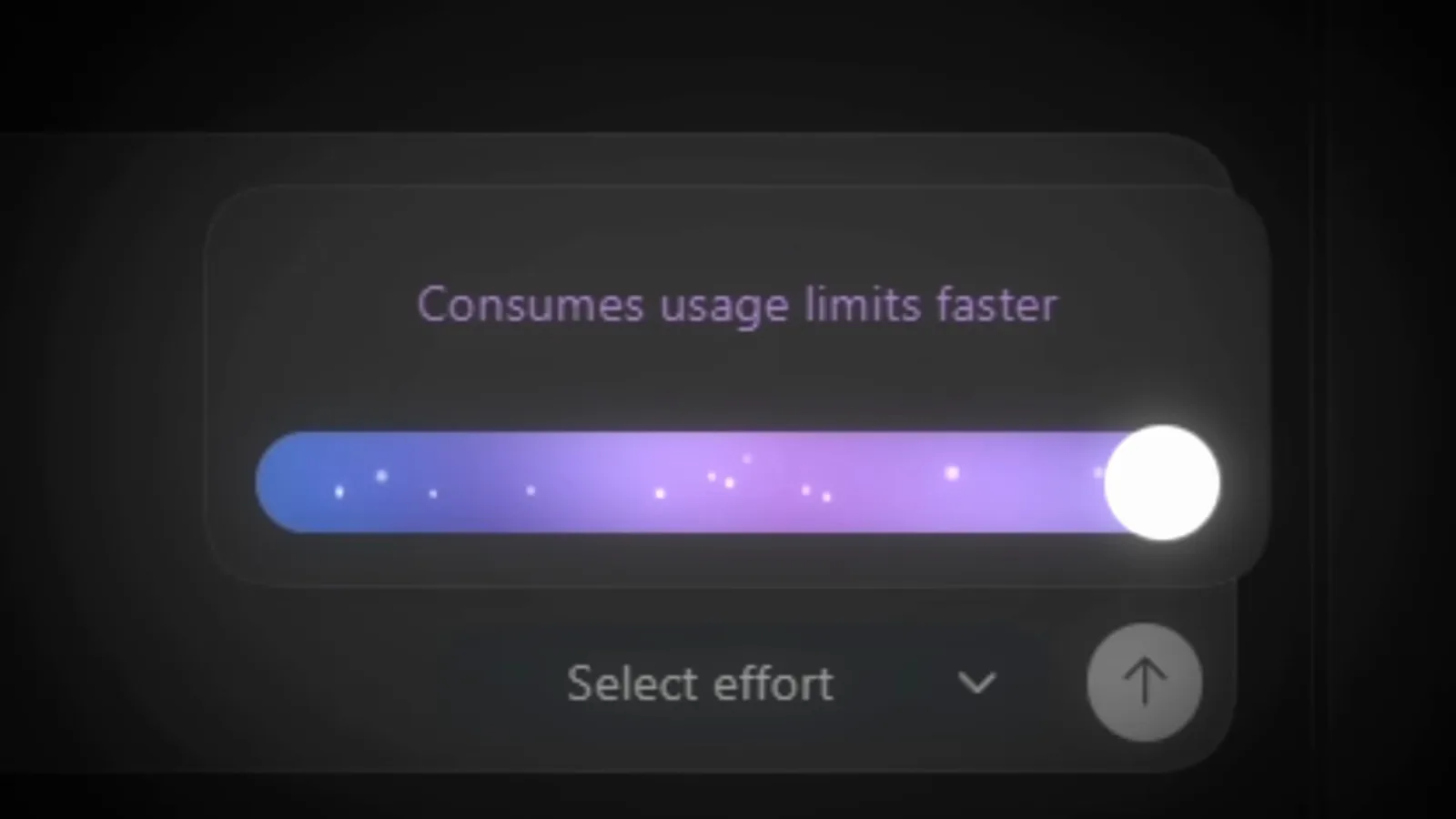
Effort settings change the bill: the interface warns usage limits drain faster.Watch at 0:32 - 10
Gemini 3.8 Flash: intro price and exact limits
Gemini 3.8 Flash lists 1,048,576 input tokens, 65,536 output tokens and low, medium and high thinking levels — the spec card says it in three lines. The introductory API price is $0.75 per million input and $3.75 per million output, and Google's price page states it doubles to $1.50 and $7.50 on January 1, 2027. Astra holds about 1M input and 128K output, so the context race is a tie; the price race is not.
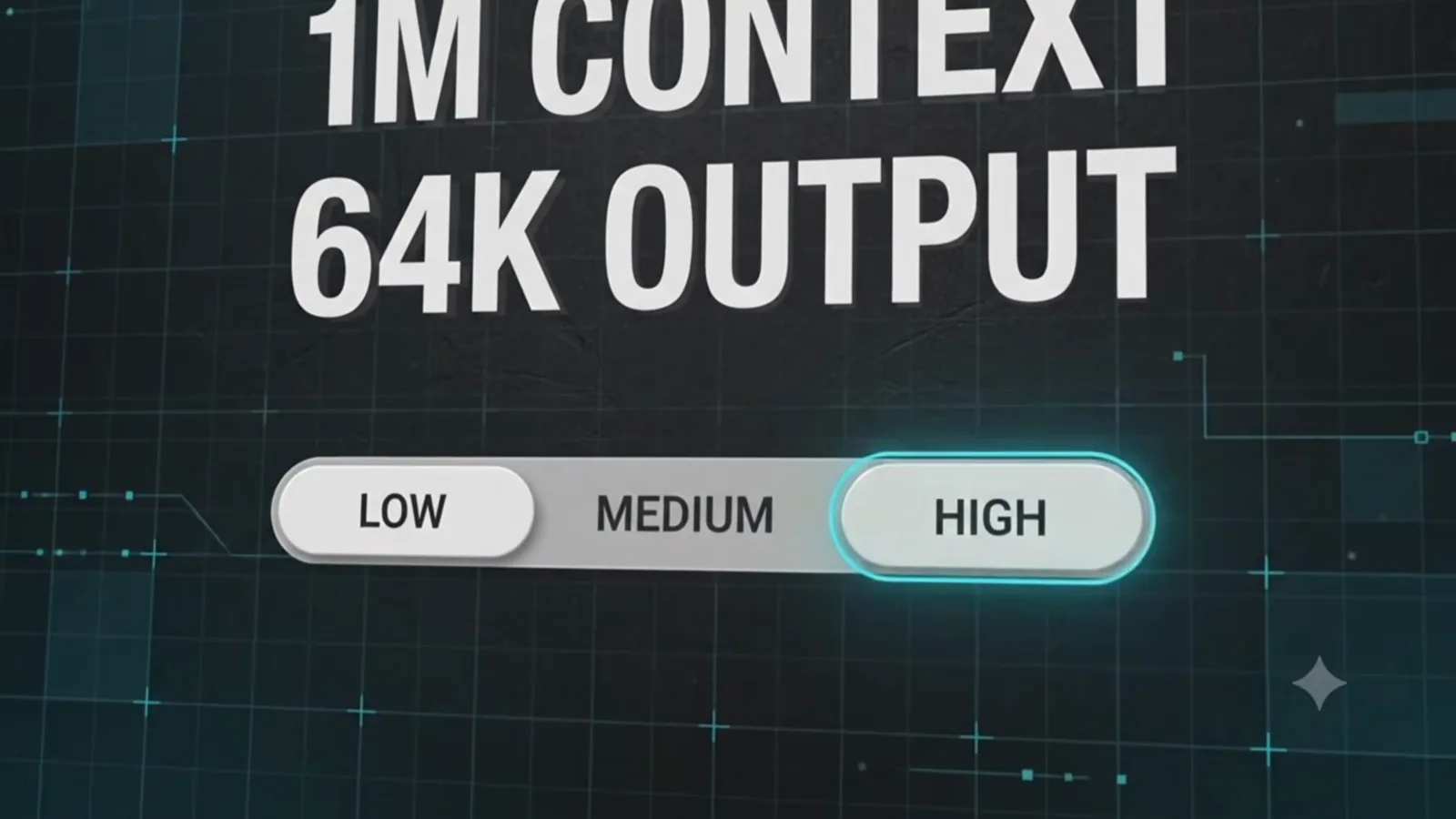
Gemini 3.8 Flash's own numbers: 1M context, 64K output, three thinking levels.Watch at 6:03 - 11
Choosing effort in Antigravity: High, Medium or Low
In Google's Antigravity IDE the menu makes the trade-off explicit: Gemini 3.8 Flash comes in High, Medium and Low Fast variants, with Claude models one click away. NasBuilds' breakdown warns that higher reasoning effort burns more tokens, so your real bill depends on how hard you make the model think. Use Medium for everyday work and save High for genuinely hard bugs.
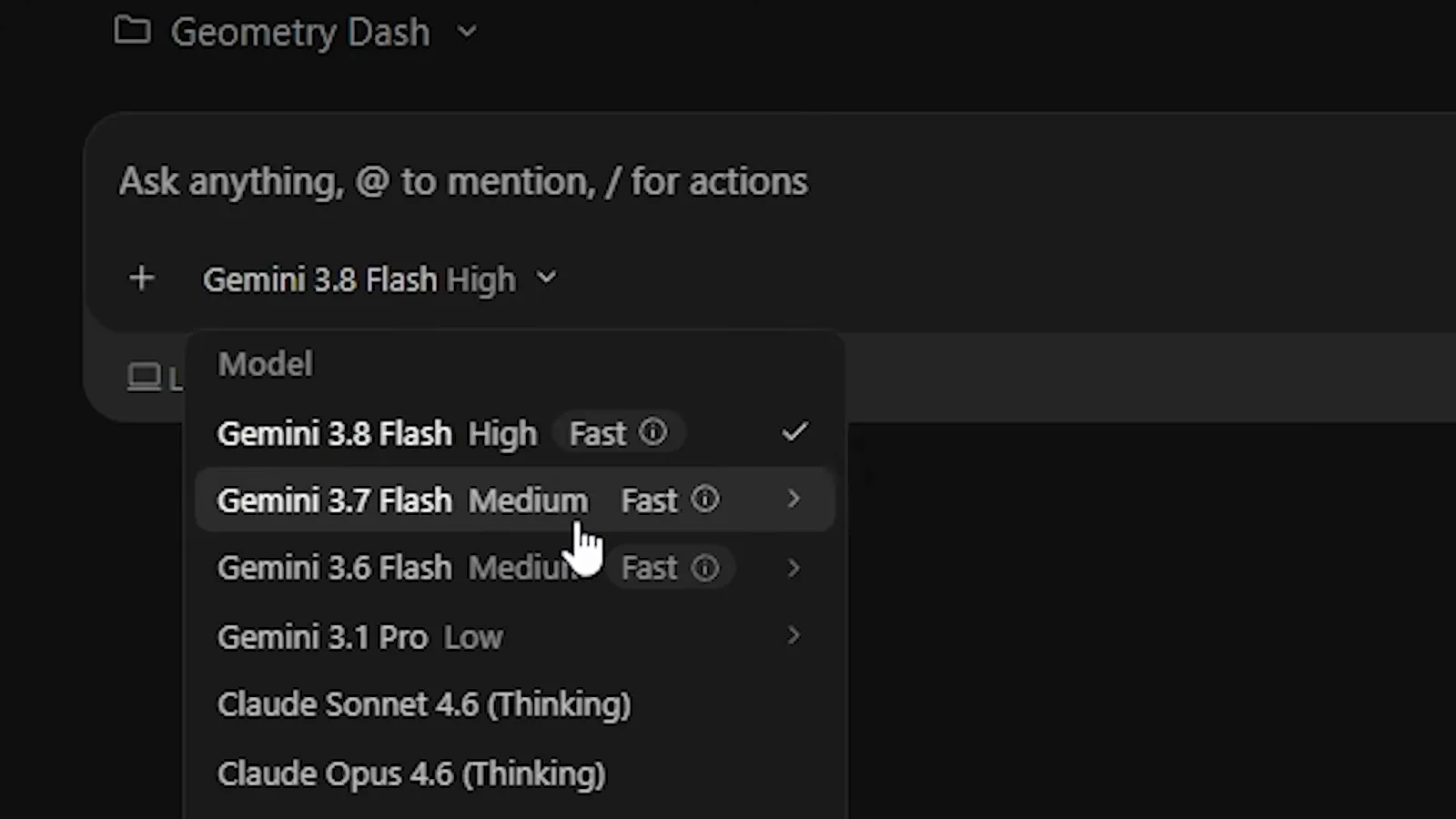
Antigravity's picker exposes the speed-versus-quality dial for every Gemini tier.Watch at 3:30
Where Each Model Wins
- 12
Astra wins: long-horizon professional computer use
Where Astra pulls away is deep professional work: the launch demo drives KiCad unsupervised, taking a circuit from schematic to a manufacturable PCB layout. That is the computer use behind its 72.6% OSWorld 2.0 score, and the 95.9% BenchCAD result shows the same precision in CAD work. If your jobs run for hours across specialist tools, this is what the premium buys.
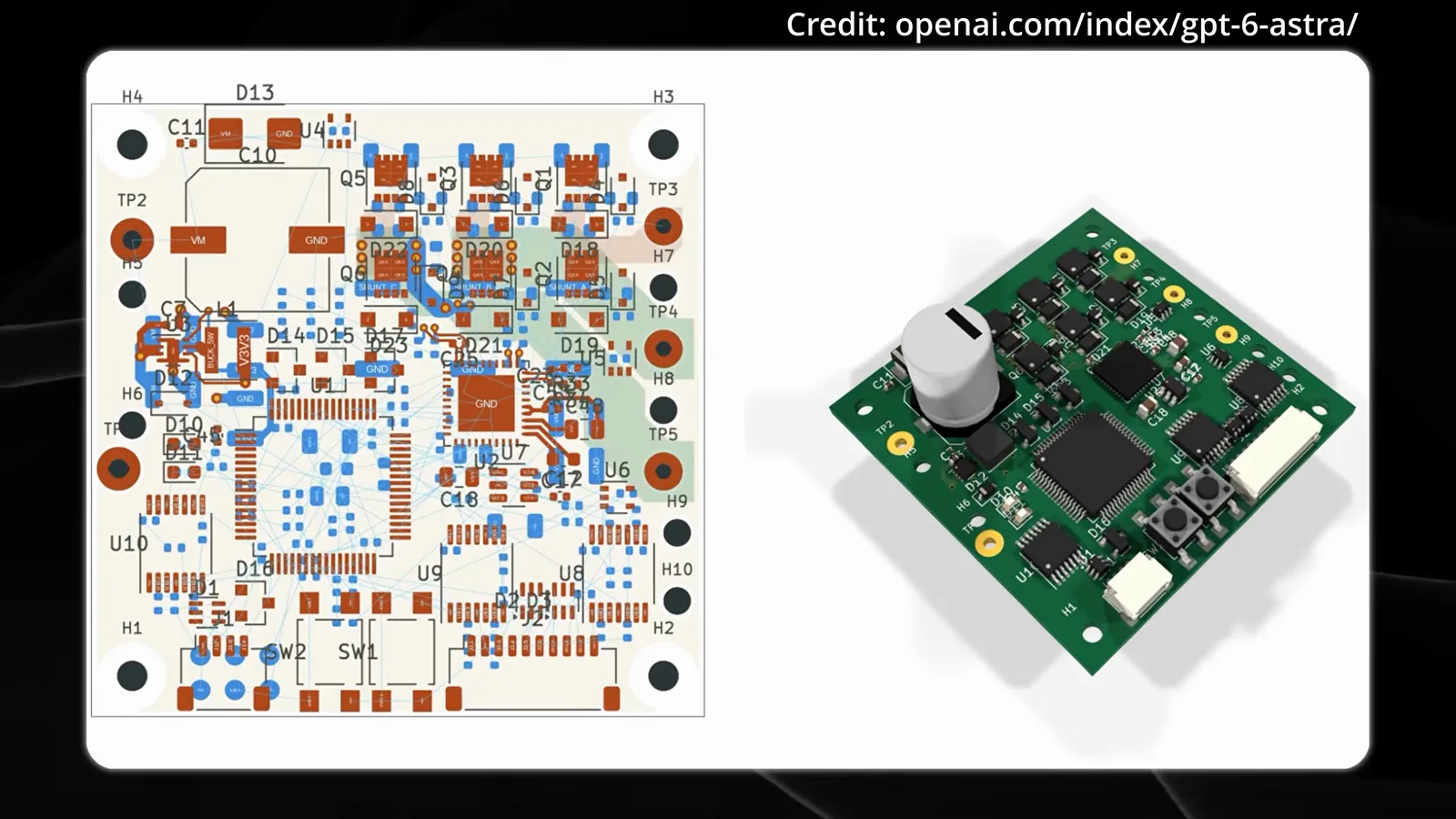
Schematic in, manufacturable PCB out: the kind of work Astra is priced for.Watch at 1:44 - 13
Gemini wins: everyday coding inside your IDE
Gemini 3.8 Flash is built into the tools developers already use — here it works on C++ in VS Code with its badge showing in the editor. NasBuilds' walkthrough highlights long-horizon engineering: plan, code, test and debug in one run. For quick, well-scoped coding tasks, Flash delivers flagship-adjacent results at Flash prices.
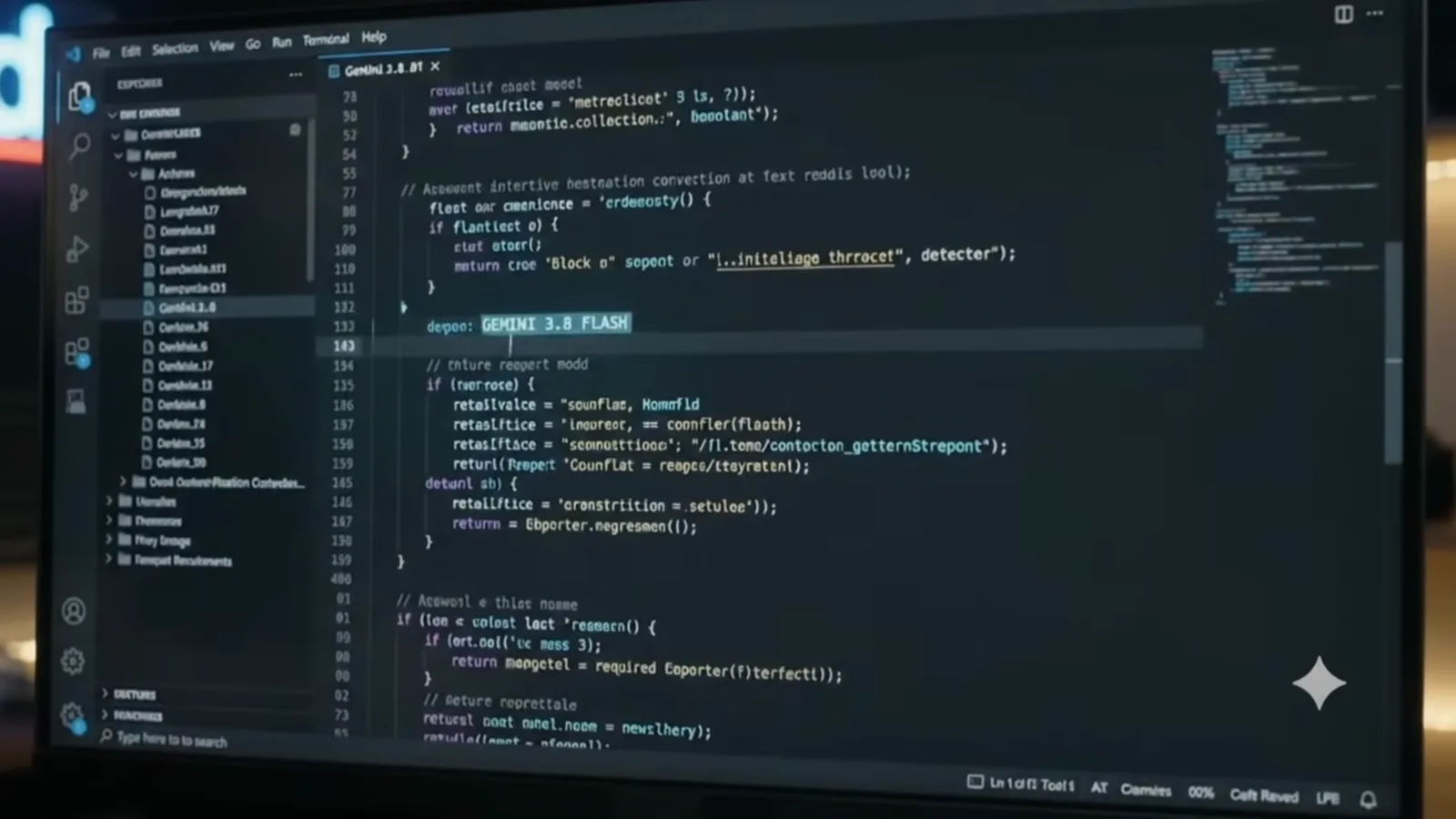
Gemini 3.8 Flash coding inside VS Code, where most everyday engineering happens.Watch at 5:50 - 14
Gemini wins: fast creative builds from one prompt
Given a Geometry Dash-style brief in Antigravity, Gemini 3.8 Flash produced a playable game with nine named levels, practice modes and a working level editor — and Viral Echoes' creator admitted it beat his expectations. That is real shipped code from one session, not a canned demo. For fast creative builds, Flash is genuinely hard to beat.
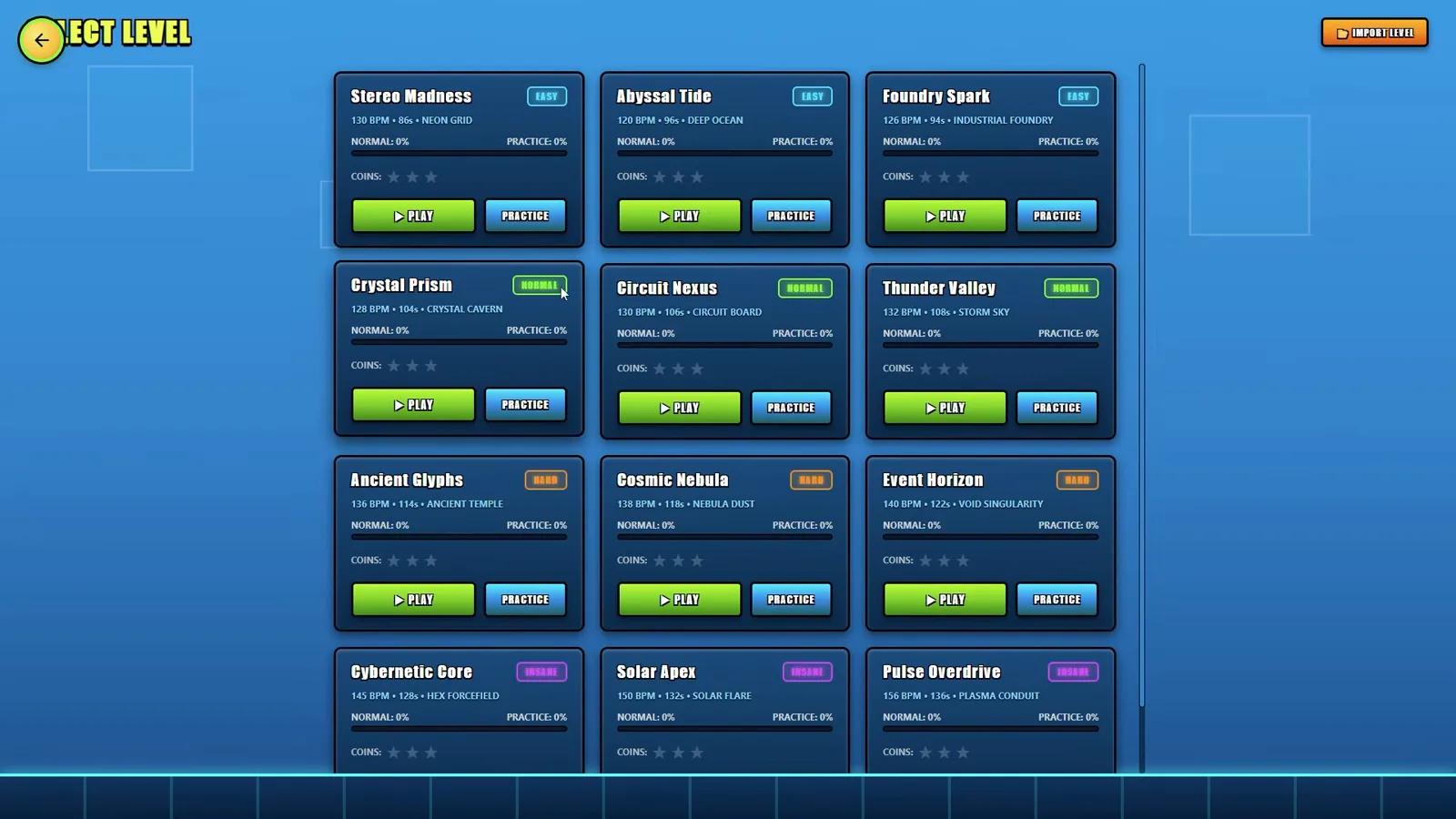
A nine-level arcade game with editor and practice modes, built in one session.Watch at 4:06 - 15
Pick Astra when your prompt looks like a project
Astra's home turf is the big brief: developers paste a whole spec into Codex, set effort, and let it execute end to end — this racing-game brief runs to hundreds of lines before the first build. It matches OpenAI's positioning of Astra for computer use, long workflows and science. If your prompts look like this one, the premium pays for itself; if they look like one-paragraph asks, Flash is the rational default.
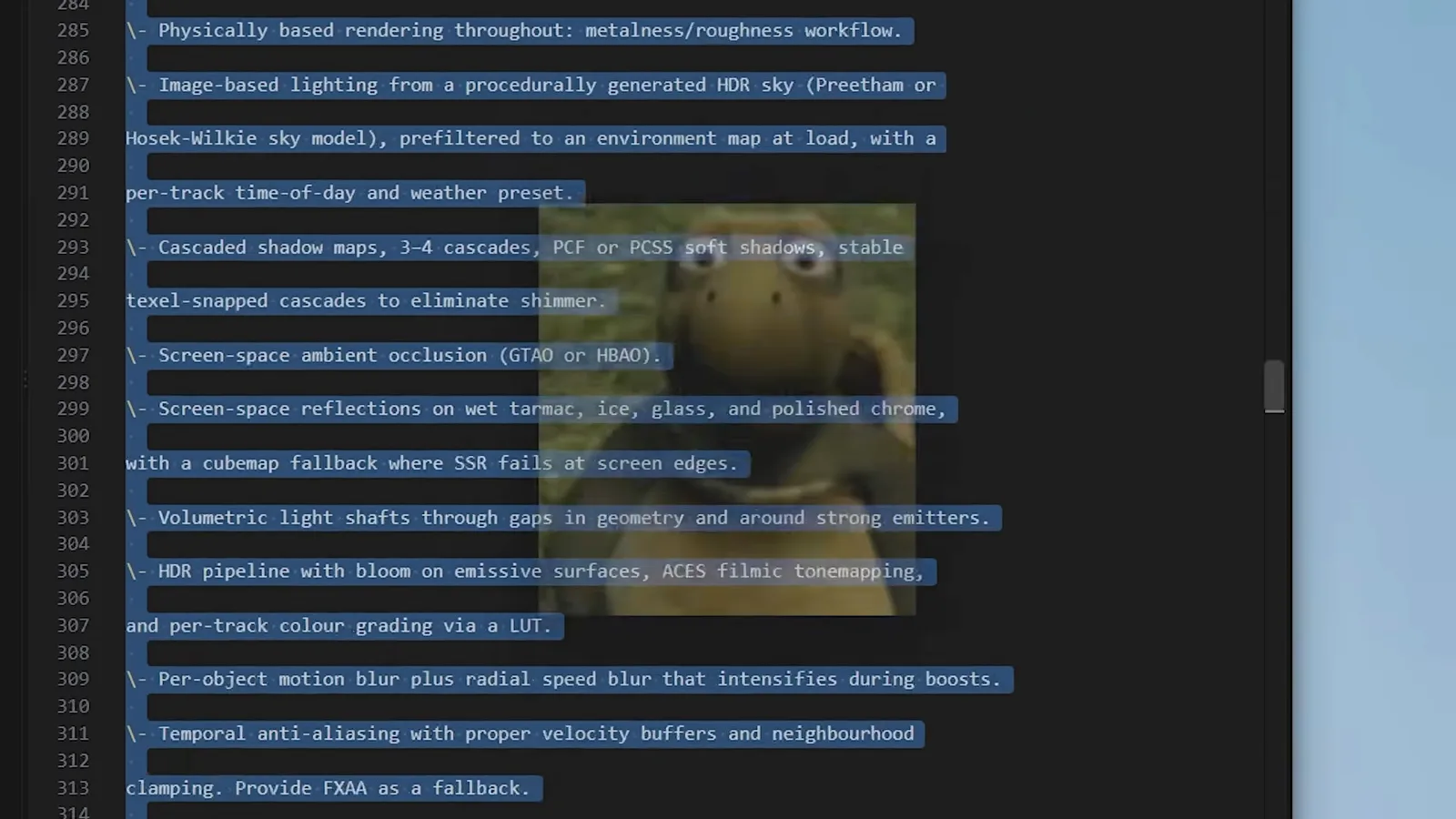
Project-length prompts are where GPT-6 Astra justifies its premium.Watch at 0:26
Which One Should You Pick?
- 16
The trade-off in one line: capability versus cost
Independent comparisons keep reaching the same verdict: same task, different wallets. Artificial Analysis scores Astra 53 on its Intelligence Index versus 41 for Gemini 3.8 Flash, but the cost per scored task is $3.26 versus $1.24. Choose Astra when the task is long, hard or expensive to redo; choose Flash when it is short, frequent and speed-sensitive.
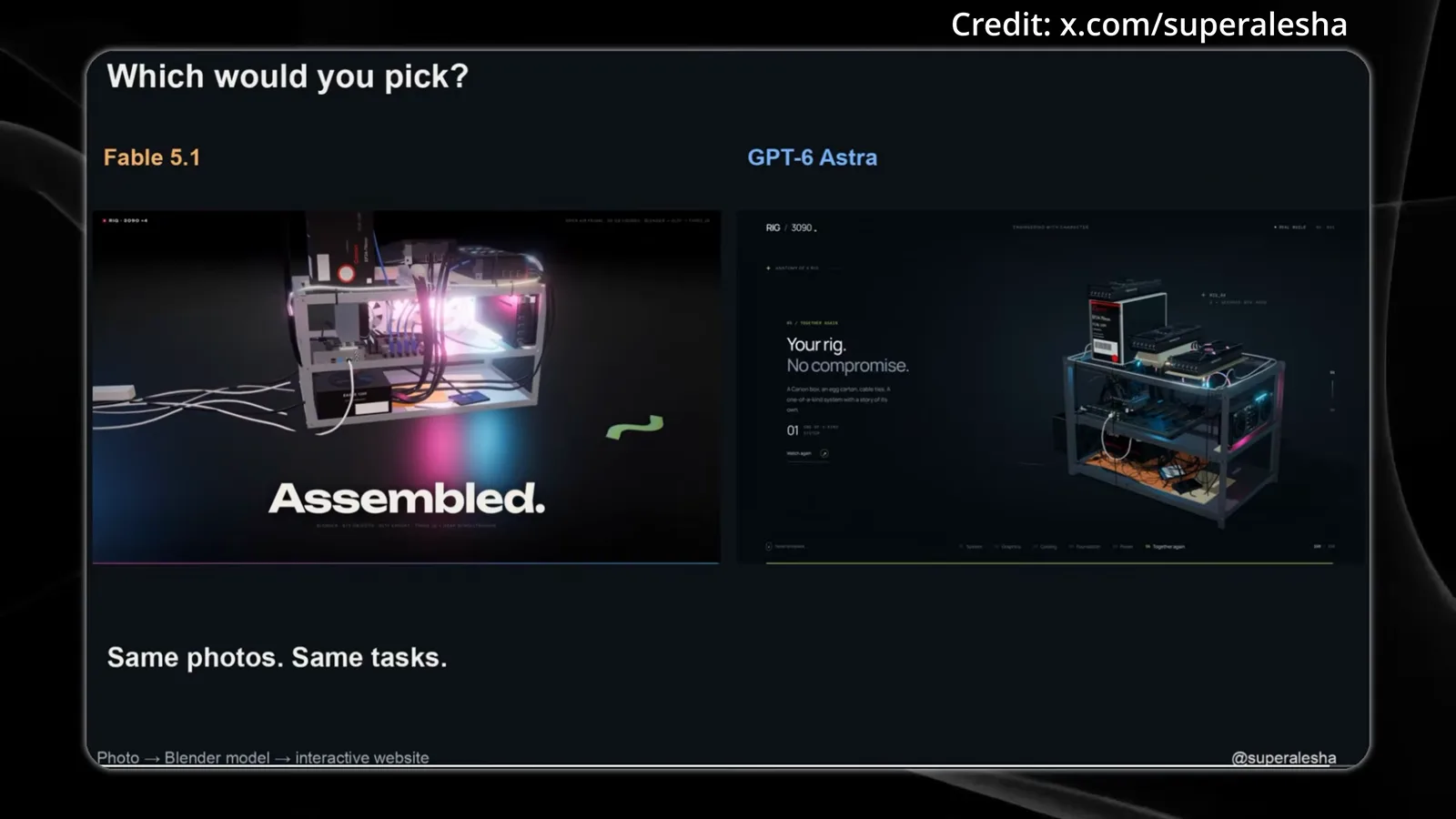
Same photos, same tasks, different prices: the whole decision in one image.Watch at 1:53